Saturday, July 30, 2022

1966: England’s Golden Triumph and the Legacy of a Historic World Cup Victory

56 years ago, the England football team achieved something they have been striving—and often failing—to replicate ever since: winning the FIFA World Cup. On June 30, 1966, in front of a rapturous crowd of 97,000 at Wembley Stadium, including the Queen and the Duke of Edinburgh, England triumphed over West Germany in a match that has become a cornerstone of English sporting folklore. The victory was witnessed by the largest television audience in British history, with 32.3 million viewers glued to their screens, and by an estimated global audience of 400 million. This historic moment remains a defining chapter in football history, not just for the game itself but for its cultural and political resonance.

The Match: A Clash of Titans

Under the astute management of Alf Ramsey and the inspiring captaincy of Bobby Moore, England took to the field with a blend of strategy and determination. The game began with West Germany asserting itself early. After just 12 minutes, a misjudged clearance by Ray Wilson allowed Helmut Haller to capitalize, putting West Germany ahead. England responded swiftly, with Geoff Hurst’s header from a precise Bobby Moore free kick levelling the score six minutes later. By halftime, the match was finely poised at 1-1.

The second half saw England edge ahead in the 77th minute when Martin Peters struck from close range following a deflected effort by Hurst. Yet, as the game neared its conclusion, West Germany’s persistence paid off. In the 89th minute, a chaotic sequence following a free kick saw Wolfgang Weber equalize, forcing the match into extra time.

Extra Time: Controversy and Glory

The extra-time period produced one of football’s most debated moments. Eleven minutes in, Alan Ball’s cross found Geoff Hurst, whose shot ricocheted off the underside of the crossbar and bounced down. The referee, Gottfried Dienst, uncertain whether the ball had crossed the line, consulted his linesman, Tofiq Bahramov. The Azerbaijani official signalled a goal, sparking jubilation among England supporters and controversy that endures to this day. Modern analyses suggest the ball had not fully crossed the line, fueling accusations of bias against Bahramov, whose Soviet Union had been eliminated by West Germany in the semifinals.

With West Germany pressing desperately for an equalizer in the dying moments, Bobby Moore launched a long pass to Geoff Hurst. As fans began invading the pitch, Hurst unleashed a thunderous shot into the top corner, completing his hat-trick and securing a 4-2 victory. The iconic BBC commentary from Kenneth Wolstenholme captured the moment: “Some people are on the pitch, they think it’s all over. It is now!”

Cultural and Historical Impact

The victory transcended football. Bobby Moore’s image holding the Jules Rimet Trophy aloft became a symbol of national pride. The contribution of West Ham United players—Moore, Hurst, and Peters—was immortalized in a bronze statue unveiled in 2003 near the club’s former ground. The triumph also inspired cultural artefacts, from the Royal Mail’s commemorative stamp to the enduring anthem “Three Lions” and the chant “Two World Wars and One World Cup.”

The match ball itself became a contested relic. In a gesture rooted in German tradition, Helmut Haller took the ball after the final whistle. Decades later, in the buildup to Euro 96, a consortium purchased the ball for £80,000, symbolically presenting it to Hurst before it was displayed at the National Football Museum in Manchester.

The Legacy of 1966

For the players, the glory of 1966 was not without its bittersweet elements. Until the 2000s, only those who played in the final received World Cup winners’ medals. FIFA’s decision to retrospectively award medals to squad members and staff led to a 2009 ceremony at 10 Downing Street, where surviving team members and representatives of those who had passed were honoured.

The 1966 victory remains England’s only World Cup win, a fact that underscores its mythic status. The match’s controversies, particularly the “ghost goal,” have kept it alive in global football discourse. For England, it represents both the pinnacle of achievement and a reminder of unfulfilled potential in the decades since. For West Germany, it was a catalyst for their footballing resurgence, culminating in their own triumphs in subsequent tournaments.

In the annals of football history, England’s 1966 World Cup win stands as a testament to resilience, strategy, and the power of sport to unite and inspire. It remains a cherished memory for a nation and a benchmark for generations of players and fans alike.

Thank You

Faisal Caesar  

Thursday, July 28, 2022

Sri Lanka’s Triumph: A Nation’s Smile Amidst Chaos

Sri Lanka, a land of resplendent beauty, now bears the scars of economic despair and political disarray. The streets echo with the chants of protestors, their cries a reflection of a nation grappling with its most trying times. Sadness looms over the island, a pervasive shadow that dims even the brightest corners of its culture and history. In such a moment of collective anguish, the people yearn for a glimmer of hope—a reason to smile, a medium to remind them of their resilience.

And that medium, unexpectedly yet fittingly, has been their cricket team.

A Cricketing Nation in Transition

Sri Lanka’s cricketing journey in recent years has mirrored the nation’s struggles. Once a powerhouse of world cricket, the team has been mired in a seemingly unending transition. The days of Arjuna Ranatunga, Sanath Jayasuriya, Muttiah Muralitharan, and Kumar Sangakkara are now distant memories. In their place, a young and inconsistent side has emerged, often falling short of the high standards set by their predecessors.

Yet, amidst this turbulence, the team has shown glimpses of its fighting spirit—a reflection of the Sri Lankan ethos. It is this spirit that has made them more than just a cricket team; they have become a beacon of hope for a nation in despair.

From Despair to Defiance

The story of Sri Lanka’s recent cricketing resurgence is not merely about runs, wickets, or matches won. It is a tale of defiance, of standing tall when the odds are stacked against you.

The journey began with a victory against Bangladesh—a small but significant step in regaining their confidence. Then came Australia, a formidable opponent. Sri Lanka’s triumph in the ODI series and their spirited draw in the Test series against the mighty Aussies sent a powerful message: this team was not ready to be written off.

Their resilience was further tested against Pakistan. After a hard-fought loss in the first Test, Sri Lanka could have easily crumbled under the weight of expectations. But instead, they rose. In the second Test, they dominated from the outset, refusing to let Pakistan gain a foothold.

This was not just cricket; it was a statement. A nation battered by political corruption, economic collapse, and social unrest found solace in the determination of its cricketers.

Victory Beyond the Boundary

The victory against Pakistan was more than a win on the scoreboard. It was a moment of collective pride for a nation that has been let down by its leaders, neighbors, and allies. While politicians faltered and external help proved inadequate, the cricketers carried the weight of the nation’s hope on their shoulders.

Sri Lanka’s performance was not about individual brilliance but a collective effort, a reflection of what the nation itself aspires to be. The players fought for every run, every wicket, and every session, embodying the resilience and determination that defines Sri Lanka.

The Larger Picture

Sri Lanka’s cricketing resurgence is a reminder of the unifying power of sport. In times of despair, sport can provide a narrative of hope, a reason to believe in better days. For Sri Lanka, cricket has always been more than a game—it is a cultural phenomenon, a source of identity, and a medium of expression.

But this resurgence also underscores the need for the global cricketing community to support nations like Sri Lanka. Cricket cannot afford to lose a team with such rich history and immense potential. The International Cricket Council (ICC) and other powerful cricket boards must ensure that nations like Sri Lanka, grappling with economic and political turmoil, receive the support they need to sustain their cricketing legacy.

A Moment to Cherish

As Sri Lanka celebrated their victory over Pakistan, the nation smiled—a rare and precious moment amidst the chaos. The cricket team, through their grit and determination, reminded their people that even in the darkest times, there is light.

This victory is more than just a result; it is a symbol of hope, a testament to the resilience of a nation that refuses to bow down. Sri Lanka’s cricketers have proven that they are not just players but ambassadors of a fighting spirit that defines their nation.

And for that, the island nation owes them not just applause but gratitude.

Thank You 

Faisal Caesar 

Thank You 

Faisal Caesar 

Monday, July 25, 2022

The Dilemma of Modern Cricket: Ben Stokes, ODIs, and the Slow Death of Tradition

The cricketing world was taken aback when Ben Stokes, at the age of just 31, announced his retirement from One-Day Internationals (ODIs). A World Cup hero in 2019, his exploits in the 50-over format were nothing short of legendary. Stokes was not merely a player; he was a talisman, a cricketer who embodied grit, flair, and an unyielding commitment to his team. Yet, his premature exit from ODIs has left the cricketing fraternity grappling with an uncomfortable question: Is ODI cricket dying a slow death?

The Weight of the Workload

Stokes’ decision to step away from ODIs was as pragmatic as it was poignant. As England’s Test captain, he acknowledged the unsustainable burden of playing all three formats in an era where cricket’s calendar is bursting at the seams. The emergence of domestic T20 leagues, particularly the Indian Premier League (IPL), has further intensified the pressure on players. The allure of financial security, coupled with the shorter duration of T20 matches, has made these leagues irresistible.

Stokes’ rationale was clear: he wanted to give his all to Test cricket while maintaining a foothold in the T20 format. His choice, however, has reignited debates about the relevance of ODIs in the modern era.

The ODI Format: A Legacy Under Threat

One-Day Internationals, once the crown jewel of cricket, now finds itself caught between the timeless elegance of Test cricket and the glitzy spectacle of T20s. The format, which revolutionized cricket in the 1970s, has given fans countless moments of joy. For nations like India, Pakistan, and Sri Lanka, ODI cricket was the platform that propelled them onto the global stage.

Wasim Akram’s recent comments about ODI cricket being “a drag” have added fuel to the fire. Akram, a titan of the format, expressed his belief that ODIs have become monotonous in the T20 era. His critique, while valid in parts, ignores the format’s historical significance and its ability to produce cricketing drama that neither Test cricket nor T20s can replicate.

The Soul of Cricket at Stake

The rise of T20 cricket has undoubtedly brought financial prosperity to the game, but it has come at a cost. The essence of cricket—the ebb and flow, the battle between bat and ball, the moments of strategy and resilience—is being diluted. Franchise leagues have turned cricket into a commodity, prioritizing entertainment over substance.

If ODI cricket is deemed redundant today, what’s to stop similar arguments from being made about Test cricket tomorrow? The notion of “too long” could easily be extended to the five-day format, especially in a world that increasingly values instant gratification.

Former India coach Ravi Shastri has already hinted at a future where Test cricket is restricted to a select few teams. His suggestion of a two-tier system, while controversial, underscores the need to prioritize quality over quantity.

A Case for Reform, Not Abandonment

The survival of ODI cricket depends on thoughtful reform, not abandonment. The format’s unique charm lies in its balance—it offers the strategic depth of Test cricket while maintaining the pace and excitement of T20s. To preserve this balance, cricket administrators must address key issues:

1. Scheduling and Overload: The relentless cricketing calendar needs a reset. Players are human, and the physical and mental toll of nonstop cricket cannot be ignored. A more streamlined schedule would ensure that ODIs retain their relevance without overburdening players.

2. Innovative Formats: Experimentation, such as reducing ODIs to 40 overs per side, could make the format more appealing without compromising its essence.

3. Context and Stakes: The introduction of the ICC Cricket World Cup Super League is a step in the right direction. Every ODI should carry significance, whether as part of qualification for global tournaments or bilateral rivalries.

4. Fan Engagement: Stadiums in countries like India, Pakistan, and Sri Lanka once brimmed with fans during ODIs. Administrators must rekindle this enthusiasm through better marketing and scheduling marquee matches during prime seasons.

The Role of the Big Three

The Big Three—India, Australia, and England—wield enormous influence over cricket’s future. Their decisions often shape the global cricketing landscape. However, their focus on monetary gains, particularly through T20 leagues, has come at the expense of the sport’s broader health.

BCCI, as the most powerful cricketing board, bears a special responsibility. Its obsession with the IPL has overshadowed its commitment to the longer formats. Cricket’s custodians must remember that while money sustains the sport, it is tradition and legacy that give it soul.

The Bigger Picture

Cricket stands at a crossroads. The choices made today will determine whether it remains a sport that values skill, strategy, and resilience or devolves into a series of fleeting spectacles. ODI cricket, much like Test cricket, has a rich history that deserves respect.

Stokes’ retirement should serve as a wake-up call. It is a reminder that players are not machines and that the current system is unsustainable. If cricket is to thrive, it must find a way to balance tradition with modernity, ensuring that all formats coexist harmoniously.

In the end, cricket is more than just a game. It is a reflection of life’s complexities—a dance of patience and aggression, of highs and lows, of triumph and despair. To lose any part of this intricate tapestry would be a tragedy.

As fans, players, and administrators, we owe it to the game to preserve its soul. Let us not sacrifice the beauty of cricket on the altar of convenience and commerce.

Thank You 

Faisal Caesar


Saturday, July 23, 2022

Portugal 1966: The Day Eusébio Dragged a Nation Into Immortality


Some matches are won by teams.

A rare few are seized by individuals.

Portugal’s 5-3 victory over North Korea in the quarter-final of the 1966 FIFA World Cup belongs to that second category. It was not merely a comeback. It was a rescue mission, a psychological resurrection, and one of the greatest individual performances the World Cup has ever witnessed.

For Portugal, new to football’s grandest stage, the match became a founding myth. For Eusébio, it became the afternoon when talent turned into legend.

Portugal Arrive as Debutants, Not Outsiders

Before 1966, Portugal had never played at a World Cup. Their last major international appearance had come at the 1928 Olympics. On paper, they were inexperienced.

But this was no ordinary debutant.

Portugal arrived in England with a squad built around the golden generation of Benfica, the club that had conquered Europe in 1961 and 1962 and reached further finals in the years that followed. Alongside them stood players from Sporting, whose defensive core had also tasted European success.

At the centre of everything was Eusébio.

He was already one of the finest footballers in the world, a forward of frightening power, balance, acceleration, and emotional force. Because of him, Portugal were not treated as tourists. They were seen as dangerous outsiders, a side capable of wounding anyone.

Placed in a brutal group with Brazil, Hungary, and Bulgaria, Portugal were expected to be tested immediately. Instead, they announced themselves with authority.

They beat Hungary 3-1.

They beat Bulgaria 3-0.

Then they defeated Brazil 3-1, sending the reigning champions home in the first round.

The victory over Brazil was seismic. It was not only Portugal’s greatest international result to that point, but also the first time the World Cup holders had been eliminated at the group stage.

By the quarterginals, Portugal were no longer a curiosity.

They were a force.

North Korea and the Shadow of a Miracle

Their opponent at Goodison Park was North Korea, the tournament’s great romantic story.

Only days earlier, the Koreans had stunned Italy 1-0 at Ayresome Park, producing one of the greatest upsets in World Cup history. Their speed, discipline, and fearlessness had captured the imagination of English crowds, especially in Middlesbrough, where they had been adopted as beloved underdogs.

Many expected their fairy tale to end against Portugal.

But football has never obeyed expectation.

Within the opening minute, North Korea scored.

Pak Doo-ik, already immortal after his goal against Italy, moved through the Portuguese defence and helped create the chance for Pak Seung-zin, who finished sharply past José Pereira.

Portugal were stunned.

Then came the second goal. A swift Korean counterattack exposed the Portuguese defence again, and Li Dong-woon arrived to score from close range.

Soon after, Yang Seung-kook added a third.

Twenty-five minutes had passed.

North Korea 3, Portugal 0.

At Wembley, Bobby Charlton reportedly looked at the scoreboard in disbelief during England’s match against Argentina. Surely, he thought, they must have put the score the wrong way around.

They had not.

Portugal were staring into the abyss.

The Anatomy of Panic

Portugal had more possession, but possession meant little against North Korea’s compact defensive shape and electric transitions. The Portuguese backline looked disorganized, slow to react, and mentally unsettled.

North Korea, by contrast, were playing as if lifted by destiny. Their players moved with the courage of men who had already defied history once and believed they could do it again.

The crowd sensed another miracle.

But miracles require protection, and North Korea’s early fury came at a cost. Their running, pressing, and emotional intensity began to drain them. The match was still young, and Portugal still had Eusébio.

That changed everything.

Eusébio Begins the Resurrection

A minute after North Korea’s third goal, Portugal struck back.

José Augusto released Eusébio, and the Benfica forward finished with devastating certainty. There was no theatrical celebration. Eusébio simply ran into the net, grabbed the ball, and carried it back.

It was the gesture of a man who understood the arithmetic of survival.

Before half-time, Portugal won a penalty after José Torres was fouled. Eusébio stepped forward and scored again.

3-2.

The match had transformed.

What had looked like humiliation became possibility. What had seemed like the continuation of North Korea’s fairy tale became the beginning of Portugal’s comeback.

A Dressing Room and a Diagnosis

At half-time, Portugal’s coach Otto Glória understood what had happened.

North Korea had started like a storm, but storms exhaust themselves. Their first-half energy had been breathtaking, yet physically unsustainable. Portugal’s task was now psychological as much as tactical: stay calm, stretch the game, and trust Eusébio.

The opening minutes of the second half were tense rather than explosive. North Korea retreated deeper, protecting their advantage and waiting for counters. Portugal pushed forward, but the decisive spark again had to come from one man.

It did.

In the 56th minute, Eusébio scored his third after a brilliant pass from Jaime Graça.

3-3.

Three minutes later, he surged into the box from the left and was repeatedly fouled before the referee pointed to the spot. In visible pain, Eusébio adjusted himself, composed his body, and fired the penalty into the top corner.

Portugal led 4-3.

From 0-3 down to 4-3 ahead.

All four goals had been scored by Eusébio.

The Making of a World Cup God

There are performances that statistics can describe but not contain.

Eusébio’s four goals tell part of the story, but not all of it. His true greatness that afternoon lay in his refusal to accept the emotional logic of the match.

At 3-0 down, many teams would have collapsed. Many players would have hidden. Eusébio did the opposite. He became larger as the crisis deepened.

His pace frightened North Korea.

His shooting punished them.

His courage reorganized Portugal’s belief.

In just over half an hour, he turned one of Portugal’s darkest moments into one of the country’s defining sporting memories.

José Augusto later added a fifth goal, finishing after Eusébio’s cross and Torres’s header had opened the defence. By then, North Korea were physically and emotionally broken.

They had played beautifully.

They had dreamed bravely.

But they had met Eusébio at the height of his powers.

The Cost of Glory

Portugal reached the semi-finals, where controversy awaited.

Their match against England was originally expected to be played in Liverpool, but it was moved to Wembley. Portugal were forced to travel, losing valuable rest after the exhausting battle with North Korea.

England won 2-1. Eusébio scored from the penalty spot but ended the match in tears.

It was a painful ending to Portugal’s dream of reaching the final. Yet the tournament still became their greatest World Cup campaign. They defeated the Soviet Union in the third-place match, with Eusébio scoring against Lev Yashin to seal Portugal’s bronze medal.

He finished the tournament as top scorer with nine goals.

Portugal had arrived as World Cup debutants.

They left as a football nation.

Why Goodison Park Still Matters

Portugal’s 5-3 victory over North Korea remains one of the World Cup’s most extraordinary matches because it contains two stories at once.

For North Korea, it was the final flight of the Chollima, the mythical winged horse that had already carried them beyond imagination. They were twenty-five minutes from another miracle.

For Portugal, it was the moment when their national team found its heroic identity.

And for Eusébio, it was consecration.

That afternoon at Goodison Park placed him beside the immortals of the sport. Like Garrincha in 1962, Maradona in 1986, and Messi in 2022, he produced a performance that seemed to bend the tournament around his own will.

Football often belongs to systems, tactics, and collective discipline.

But sometimes, when everything appears lost, the game is taken over by one man.

On July 23, 1966, that man was Eusébio.

And Portugal followed him into history.

Thank You 

Faisal Caesar 

1966: Argentina at Wembley - Football, Identity, and the Birth of a National Myth

When Argentine television reporter Enrique Macaya Márquez arrived at Wembley Stadium, one image overshadowed everything else: the repeated chant of “Animals! Animals!” directed at the Argentine players by sections of the English crowd. Having already covered the 1958 World Cup in Sweden and Chile 1962, Macaya immediately sensed that this tournament differed from all that had come before.

Yet the hostility inside Wembley was only one symptom of deeper turmoil. Argentina entered the quarter-final against England divided from within. As Macaya observed:

“This is a very messy World Cup; the players have fallen out with Juan Carlos Lorenzo (the manager), and the AFA president Valentín Suárez has had to travel to England as a matter of urgency.”

Ironically, amid the political tension and sporting pressure, Macaya found himself fascinated by something entirely unrelated to football—the presence of television sets in English hotels. When the players complained about motorway noise and other disturbances outside their rooms, he famously replied:

“Do you have a telly back home? No? Then what are you moaning about!”

The remark reflected another reality of 1966 Argentina. Although Canal 2, launched only weeks before the World Cup, had secured broadcasting rights, the country's technology could not transmit matches live. Film reels were flown back from England and shown days later. For immediate coverage, Argentines relied almost exclusively on radio, gathering around transistor sets to experience the quarter-final in real time.

Football as National Identity

Long before the match began, football already occupied a sacred place within Argentina's cultural imagination.

The late sportswriter Juan Mora y Araujo, who died in January 1966, had expressed this sentiment with remarkable poetic force:

“Forget the Greeks, the Romans, the English even… they may have invented the ball but, old man, it was here that football was re-born.”

His vision transcended sport. Football became a metaphor for the nation itself.

“Football is made up of the dance of our land: it’s tango, chamamé and milonga. A choreography that includes gambetas, elasticity, preciousness. Our whole earth is to be found in fútbol criollo, get inside it and you will see from within; the pampas and the sky, the mountains and the jungle, calm rivers and currents that drag, the music of the accordion on the boat cradling by the wharf.”

For Mora y Araujo, every region contributed to the Argentine footballing soul: the mountains offered strength, the plains serene courage, the jungle cunning, while the city fused these qualities with picardía—cheekiness, mischief, and, when necessary, cruelty.

As he concluded:

“Because in football, as in life, you cannot be good all the time. Now and again you have to open the door to the savage.”

Those words would later acquire an unintended irony.

The Match: A Battle of Contrasting Styles

When the game began, football itself became secondary to conflict.

Argentina defended with discipline and determination, attempting to frustrate England's direct style built around long balls. The visitors spent much of the match deep inside their own half. Luis Artime remained almost invisible in attack, while England steadily increased territorial pressure.

Brief moments hinted at Argentine elegance. Ermindo Onega attempted to nutmeg Geoff Hurst. Silvio Marzolini advanced gracefully from defence. There were audible cries of “Come on Argentina” from the stands, and collective gasps whenever Roberto Mas threatened the English goal.

Yet interruptions constantly broke the rhythm.

German referee Rudolf Kreitlein repeatedly reached for his notebook.

An English commentator joked:

“He’ll have a library before he’s finished.”

Post-match statistics would show England committing 33 fouls compared with Argentina's 19, illustrating that physicality was hardly one-sided.

Meanwhile, captain Antonio Rattín continually challenged the referee's decisions, particularly after receiving a warning following a foul on Geoff Hurst.

The Eleven Minutes that Changed History

The defining moment arrived almost incidentally.

Following a dangerous tackle by Roberto Perfumo on Roger Hunt, goalkeeper Antonio Roma cleared the ball toward Silvio Marzolini, who combined neatly with González. Elsewhere on the pitch, however, play had stopped.

Referee Kreitlein had dismissed Antonio Rattín.

The Argentine captain protested furiously.

“I am the captain,” he attempted to communicate.

According to the Argentine interpretation, Rattín merely wanted an interpreter because he could not understand the referee. Kreitlein apparently interpreted his gestures as insulting defiance.

The result became one of football's most famous confrontations.

For eleven minutes, including six minutes of outright refusal to leave the field, Rattín remained on the pitch while teammates and officials surrounded the referee in protest.

Even journalists struggled to understand the decision.

As observers in the press box reportedly murmured, they could not see why Rattín had been sent off.

A Nation Listening Through the Radio

The drama unfolding at Wembley reached Argentina only through voices on the radio.

One supporter later remembered the experience with painful intimacy:

"My God, Argentina’s elimination at the hands of the English! I still had the letter ‘O’ fresh in my throat from all of Artime’s goals against the Swiss and the Spanish. The radio shook with each goal. I had the radio clamped into the cavity of my ear: you have to understand, Argentina vs England, the hosts, World Cup quarter-finals. Bobby Charlton was a star even when just standing on the grass. When the radio said he had the ball, I would shut my eyes as tight as I could and convince myself that if I kept them shut a spider would rise up from the stadium itself and bite him. It didn’t happen, not that day or any other. When Rattin was sent off I wanted the radio, my friend, to lie to me. Rattin was leaving the pitch amid a scandal, the commentary said. Always with the radio in my hand I would pretend to summon the other kids in the neighbourhood to go and defend him from the bastard English. And even though the radio didn’t say that Rattin was weeping, and it’s true that he didn’t weep, I could see him, literally see him, with the blue and white strip soaked by tears. Later, when Hurst’s goal was scored, the one which made it 1-0 and England won, the one who cried was me."

The account illustrates how radio transformed football into imagination, where listeners completed the unseen drama inside their own minds.

Two Competing Narratives

Macaya never forgot the chant echoing through Wembley.

“It’s not a myth, indeed it went on for quite a while. It hurts, we felt very Argentine.”

For many Argentines, the insults became lasting proof of national humiliation.

Yet not everyone accepted this interpretation.

Football writer Dante Panzeri produced a strikingly different account. Rather than emphasizing English hostility, he criticized Argentina's own behaviour:

“Rattin refused to leave the pitch and the rest of the players started all manner of arguments and play-acting, playing the victim, with the intent of shaping out of it a response of Argentine salvation and heroics.”

Panzeri further documented what he personally witnessed:

“That during and after the match against England Juan Carlos Lorenzo discharged the entirety of his dictionary of insults against the match officials. That once the match was over Pastoriza threw a punch at the referee which, according to my colleague Rodriguez Duval, hit him in the face – I only saw him throw the punch. And that Lorenzo marched alongside the referee and behind his back gave him a series of little kicks.”

His conclusion was uncompromising. Even with ten men, Argentina remained capable of competing, and their defensive effort deserved admiration. But the enduring memory of the match became not their football, but Rattín's rebellion.

Panzeri also foresaw the political symbolism that would follow.

Many voices, he observed, would claim:

“The English have robbed us of this game like they robbed us of the Malvinas.”

From Sporting Defeat to National Myth

England eventually prevailed when Geoff Hurst scored with thirteen minutes remaining.

After the final whistle, manager Alf Ramsey forbade his players from exchanging shirts with the Argentines. In the tunnel and dressing room, tempers continued to flare. FIFA president Stanley Rous and his delegates imposed the maximum fine available and warned Argentina about possible exclusion from future World Cups.

Back home, however, another story rapidly emerged.

The chant of “Animals!” became the dominant symbol of the tournament, reinforcing a narrative of injustice and persecution.

Panzeri regarded this transformation with disbelief.

He wrote:

“The shameless organised lie protecting the business, as the TV cameras register, for the consumption of thousands of journalists, Rattin’s statement that he was merely asking for an interpreter. That this delegation was returning home as one of the most exemplary to emerge from the country.”

His criticism became even sharper:

“No Argentine team would ever dare to conduct themselves in Buenos Aires like this one has in London. The opposing fans would make it impossible and no referee would stand for Rattin’s open rebellion in remaining on the field of play for so many minutes.”

Beyond the Scoreline

The 1966 quarter-final became far more than England's 1–0 victory. It exposed the fragile intersection of football, nationalism, identity, and historical memory.

For some, Wembley represented prejudice, injustice, and the humiliation of Argentina before a hostile world.

For others, particularly Panzeri, it represented a moment when myth overtook reality, allowing national victimhood to obscure uncomfortable truths about Argentina's own conduct.

The match has therefore endured not because of Geoff Hurst's winning goal, but because it became a contested story—one in which football itself was transformed into a battlefield of memory, identity, and competing versions of history.

Thank You 

Faisal Caesar 

Wednesday, July 20, 2022

Abdullah Shafique: The Rise of Pakistan’s Next Test Prodigy?


Knock, knock!

Who’s there?

Abdullah Shafique.

You might not recognize the name instantly. He doesn’t feature in flashy commercials, nor does he dance like a marionette in the carnival of franchise cricket. He’s not a star of the so-called "premier leagues," nor does he flood social media with glitzy highlights. Yet, in the quiet corners of Test cricket, Abdullah Shafique is carving a legacy that demands attention.

In a cricketing world obsessed with spectacle, Shafique is a refreshing anomaly. He is not the result of marketing gimmicks or overnight hype. Instead, he is a testament to old-school grit, patience, and technique—qualities that seem increasingly rare in the age of instant gratification.

The Struggle to Find Stability

Since the iconic partnership of Aamer Sohail and Saeed Anwar faded into history, Pakistan has struggled to find a stable Test opening pair. A revolving door of openers has come and gone, some showing fleeting promise but failing to cement their place. Shafique, too, was initially dismissed as just another experiment—a placeholder in the never-ending quest for consistency at the top of the order.

Shafique’s journey began with a promising first-class debut in 2019, where he scored a century for Central Punjab in the Quaid-e-Azam Trophy. However, his initial foray into international cricket was far from smooth. After a brief and underwhelming stint in T20Is, including two ducks against New Zealand in 2020, he was quickly relegated to the sidelines.

Yet, one man saw potential where others saw failure. Misbah-ul-Haq, Pakistan’s coach at the time, recognized Shafique’s solid technique and mental fortitude. Misbah’s faith proved prophetic. Within a few months, Shafique transformed from a forgotten name into a rising star, earning accolades not just for his runs but for the manner in which he scored them.

A Record-Breaking Start

In just 11 Test innings, Shafique has joined an elite club of cricketers, rubbing shoulders with legends like Sir Don Bradman, George Headley, and Sunil Gavaskar. Averaging a staggering 79.0, his performances have silenced critics and validated Misbah’s belief.

His statistics are remarkable, but they only tell part of the story. Shafique’s runs have come against formidable opponents and in challenging conditions. Against Australia, he averaged 79.40 on home soil, demonstrating his ability to handle high-quality bowling attacks. His true mettle, however, was revealed in Sri Lanka, where he averaged 173.0 in conditions tailor-made for spinners.

The Galle Masterpiece

Shafique’s defining moment came in Galle during the first Test against Sri Lanka. Chasing 342 in the fourth innings—a daunting task on a deteriorating pitch—Shafique played an innings of extraordinary maturity and composure.

Historically, Pakistan’s fourth-innings chases have been fraught with collapses, even with legends like Inzamam-ul-Haq and Younis Khan in their ranks. Memories of the 2009 Galle debacle, where Rangana Herath spun a web around the Pakistani batters, loomed large. But Shafique approached the challenge with a calmness that belied his age.

Prabath Jayasuriya and Ramesh Mendis, armed with turn and bounce, probed relentlessly. They varied their lengths, teased with flight, and exploited every crack on the surface. Shafique, however, was unflinching. He studied the pitch, learned from the mistakes of his teammates, and executed a strategy rooted in caution over aggression.

His defense was immaculate, his footwork precise. He left deliveries with the confidence of a seasoned campaigner and rotated the strike to keep the scoreboard ticking. When opportunities arose, he capitalized with elegance, his backlift and timing a masterclass in Test match batting.

The result? A monumental 160 not out, guiding Pakistan to a historic victory. It was the second-highest successful chase in Pakistan’s Test history and the highest ever at Galle. Among fourth-innings centuries at the venue, Shafique’s stood out as a masterpiece of perseverance and skill.

The Mental Edge

What sets Shafique apart is his mental fortitude. Facing spinners on a crumbling pitch in subcontinental conditions is one of cricket’s toughest assignments. Yet, Shafique’s composure never wavered. He displayed an innate understanding of the game’s rhythms, balancing caution and aggression with the precision of a maestro.

This mental toughness was evident even earlier, during Pakistan’s series against Australia. Facing Nathan Lyon and a high-pressure situation, Shafique absorbed lessons that would later serve him well in Sri Lanka.

A Bright Future

At just 23, Abdullah Shafique is not merely a promising talent; he is a beacon of hope for Pakistan cricket. His technique, temperament, and ability to adapt make him a player for all conditions—a rarity in modern cricket.

But the road ahead is not without challenges. Pakistan’s selectors must resist the urge to tamper with his progress, a mistake that has derailed many careers in the past. Shafique’s journey is still in its infancy, and nurturing his talent with patience and care is essential.

Conclusion

Abdullah Shafique is more than just another name on Pakistan’s long list of openers. He is a symbol of resilience and a reminder of the enduring value of Test cricket. In a world obsessed with instant fame and flashy performances, Shafique’s rise is a story of quiet determination and hard-earned success.

Now, when you hear the name Abdullah Shafique, you’ll know who he is—a cricketer who doesn’t need circus lights to shine. His bat does the talking, and the cricketing world would do well to listen.

Thank You 

Faisal Caesar 

Thank You

Faisal Caesar 

Tuesday, July 19, 2022

North Korea 1966: When the Chollima Took Flight

The 1966 FIFA World Cup is usually remembered as England’s tournament, the summer when Wembley became the stage for the country’s first and only world title. Yet beyond England’s glory, another story gave that World Cup its deepest sense of wonder.

At Ayresome Park in Middlesbrough, North Korea defeated Italy 1-0 and produced one of the greatest shocks in international football history.

It was more than an upset. It was a footballing fairy tale shaped by politics, prejudice, courage, and the mysterious power of the underdog.

A Team Nobody Expected

North Korea arrived in England as outsiders in every possible sense.

They were not expected to qualify. Their route to the World Cup had been dramatically altered by boycotts and withdrawals, leaving them to face Australia in a simplified playoff. They won convincingly and became Asia’s unlikely representatives on the world stage.

But their presence created political discomfort.

The Korean War was still a recent memory. Britain did not formally recognise North Korea, and the idea of flying their flag or playing their anthem caused unease among politicians. Football had once again found itself entangled with history.

Yet once the tournament began, those political anxieties were slowly replaced by something more human.

In Middlesbrough, where North Korea trained and played, the local supporters adopted them. The team were small in stature, tireless in movement, and brave in spirit. The people of the north-east saw not an enemy state, but a group of determined footballers fighting against impossible odds.

The bond was unexpected, but it became one of the most charming subplots of the tournament.

Group Four and the Weight of Expectation

North Korea were placed in a difficult group with Italy, Chile, and the Soviet Union.

Their opening match seemed to confirm expectations. The Soviet Union defeated them 3-0 with superior strength and authority. But against Chile, North Korea revealed their resilience. Trailing late in the game, Pak Seung-zin scored a dramatic equaliser to secure a 1-1 draw.

That goal changed the mood.

Suddenly, their final group match against Italy was not merely ceremonial. It carried the possibility of history.

Italy, on paper, were giants. They had world-class names such as Gianni Rivera, Sandro Mazzola, Giacinto Facchetti, and Enrico Albertosi. Their clubs, especially Inter and Milan, were dominant forces in European football. Their reputation suggested elegance, tactical intelligence, and authority.

But reputation can be a dangerous possession.

Italy arrived with status. North Korea arrived with hunger.

Italy’s Fragility Exposed

Italy needed only a draw to qualify for the quarter-finals. That knowledge should have calmed them. Instead, it seemed to burden them.

They began with chances. Marino Perani wasted an important opportunity, and for a brief spell it looked as though Italian quality might eventually impose itself.

Then came the turning point.

Captain Giacomo Bulgarelli, already carrying a knee problem, aggravated the injury after a challenge involving Pak Seung-zin. In an era before substitutes, Italy were reduced to ten men.

It would be unfair to ignore this. Bulgarelli’s loss deeply affected Italy’s structure and confidence. But it would also be unfair to reduce North Korea’s victory to Italian misfortune.

Great shocks require more than luck. They require the underdog to recognise the moment and seize it.

North Korea did exactly that.

Pak Doo-ik and the Moment of Immortality

Just before half-time, the ball dropped near Pak Doo-ik, a little-known midfielder from North Korea.

He allowed it to move across his body, adjusted himself with calm precision, and struck a low shot beyond Albertosi.

1-0.

In that instant, Pak became immortal.

For Italy, it was a wound.

For North Korea, it was a revelation.

For world football, it was disbelief made real.

BBC commentator Frank Bough captured the shock of the moment:

“The North Koreans take the lead five minutes before the break. What a sensation!”

It was indeed a sensation. But it was also something more meaningful. It was the collapse of footballing hierarchy in front of thousands of stunned spectators.

The famous myth later arose that Pak Doo-ik was a dentist. He was not. But the metaphor endured because it felt perfect. He had performed a clean extraction, removing Italy from the World Cup with clinical precision.

The Defence of a Nation

The second half became a test of nerve.

Italy attacked with urgency. Rivera tried to rescue the match through individual brilliance. Mazzola, Perani, and Barison searched for openings. Yet North Korea defended with extraordinary discipline.

Goalkeeper Ri Chan-myong played with inspired determination. Years later, he described his feeling in words that turned football into national duty:

“Behind me was the goal, which was small, but behind the goal was our nation.”

That sentence explains the emotional power of the match. North Korea were not defending merely a one-goal lead. They were defending dignity, identity, and the possibility that a forgotten team could defeat one of football’s royal houses.

As the minutes passed, the Middlesbrough crowd roared them on.

“Korea! Korea!”

The chant drowned out Italian anxiety. By the final whistle, Ayresome Park sounded less like a neutral venue and more like the home ground of a miracle.

The Fall of the Giants

When the match ended, Italy were out.

The result was humiliating for a team filled with celebrated names. Their return home was famously bitter, marked by anger and ridicule. For Italian football, the defeat became a national embarrassment.

But for North Korea, it was glory.

They had become the first Asian team to reach the quarter-finals of a World Cup. They had defeated a two-time world champion. They had turned anonymity into legend.

Their victory stood beside the United States defeating England in 1950 and later Algeria defeating Germany in 1982 as one of the greatest World Cup shocks ever recorded.

The Fairy Tale Almost Continued

North Korea’s journey did not end immediately.

In the quarter-final against Portugal at Goodison Park, they produced another astonishing act. Goals from Pak Seung-zin, Li Dong-woon, and Yang Seung-kook gave them a 3-0 lead.

For twenty-five minutes, the impossible seemed possible again.

But Portugal had Eusébio.

The great forward led a magnificent comeback, and Portugal eventually won 5-3. North Korea’s adventure was over, but their legend had already been secured.

They had not won the World Cup. They had won something more elusive: immortality.

Why 1966 Still Matters

North Korea’s 1966 campaign remains unforgettable because it contained everything football can offer.

There was politics.

There was romance.

There was fearlessness.

There was injustice, tension, myth, and beauty.

Above all, there was the sight of a little-known Asian debutant standing toe-to-toe with football royalty and refusing to bow.

Their story reminds us that football is not always governed by wealth, pedigree, or reputation. Sometimes, for ninety minutes, history opens a small door and invites the brave to walk through it.

At Ayresome Park, North Korea walked through that door.

And the Chollima, the mythical winged horse of Korean legend, truly took flight. 

Thank You 

Faisal Caesar 

Brazil’s Lost Crown: The Almost Impossible Hat-Trick of 1966

Winning the FIFA World Cup™ once demands excellence; winning it twice requires a rare dynasty. But to lift the trophy three times in succession borders on the impossible, a feat so improbable that no nation has yet achieved it. And yet, twice in history, teams stood on that precipice—Italy in the late 1930s and Brazil in the 1960s—only to fall short. Of the two, it was Brazil, shimmering with brilliance and expectation in 1966, that came closest to turning the impossible into destiny.

The Weight of Legacy

Italy’s bid for immortality perished in the chaos of war. Vittorio Pozzo’s squadra had conquered in 1934 and 1938, only for the Second World War to steal their chance at a third. By 1950, the spell was broken. The torch of history passed to Brazil, who arrived in England in 1966 not merely as champions, but as artists, philosophers, and bearers of a new global footballing gospel.

Having dazzled the world at Sweden 1958 and Chile 1962, Brazil entered England with their aura mythologized. “We thought we could simply arrive and win,” recalled Djalma Santos, the veteran full-back. The Seleção were viewed less as a national team and more as a traveling exhibition of inevitability. That perception, ironically, became their undoing.

A Team Torn Between Generations

Brazil’s preparations betrayed their confusion. Instead of clarity, there was indulgence. A bloated squad of forty was paraded across Brazil in a grand, near-farcical national tour. When Vicente Feola finally named his 22, it was a mix of declining icons—Djalma Santos, Garrincha, Gilmar, Zito—and untested youth. The spine of two world champions was still present, but eroded. The cohesion that had defined Sweden and Chile had dissolved into indecision.

Tostão, the cerebral forward, later observed: “We did not have a settled team. The champions were declining, except for Pelé.” It was a damning epitaph for a side that seemed to rely on myth rather than form.

England 1966: A Tournament of Disillusion

Brazil’s campaign began with deceptive promise. Against Bulgaria, Pelé and Garrincha—football’s twin magicians—scored with free-kicks in what would be their final act together. Across forty games as teammates, Brazil had never lost. That evening at Goodison Park was their last shared triumph.

But victory came at a cost. Pelé was mauled by Bulgarian defenders, sustaining a knee injury. Forced to sit out the second match against Hungary, Brazil wilted. Without their talisman, they looked disjointed, beaten 3–1 by a Hungarian side of fluid movement and icy discipline.

The decider against Portugal carried the weight of fate. Pelé, still limping, was thrown back into the fray. Garrincha was dropped. The result was tragic theater. England’s refereeing decisions, harsh challenges unchecked, and Eusébio’s brilliance combined to extinguish Brazil’s flame. A 3–1 defeat ended their campaign, and with it, the dream of a hat-trick.

Politics, Power, and Paranoia

To many Brazilians, the losses were not merely footballing failures, but evidence of something darker. FIFA, under Sir Stanley Rous, seemed determined to ensure a European triumph on European soil. The referees of Brazil’s matches—German against Bulgaria, English against Hungary, and English again against Portugal—fed suspicions of bias. The pattern was too neat, the brutality too unpunished.

The conspiracy widened in hindsight. Argentina, eliminated by England, saw a German referee dismiss a player for “violence of the tongue,” despite a mutual lack of shared language. Uruguay, undone by West Germany, endured two controversial expulsions under an English referee. The semifinal quartet—England, West Germany, Portugal, Soviet Union—were all European. Coincidence, perhaps. But to South American eyes, collusion seemed more believable.

Pelé’s Wounds and Brazil’s Resurrection

No figure embodied the scars of 1966 more than Pelé. Hacked down, injured twice, and denied his stage, he left England disillusioned. “It was the toughest experience I ever had in football,” he admitted. So bitter was the taste that he vowed never to play for Brazil again. Only his sublime form with Santos in 1970 persuaded him otherwise, and the world was rewarded with his apotheosis in Mexico.

Yet the ghost of 1966 lingered. The tournament revealed that even giants could be undone—not just by tactical missteps or aging legs, but by politics, complacency, and the invisible hand of power. Brazil, the team of inevitability, learned that history never gifts crowns.

Epilogue: The Hat-Trick That Never Was

In the end, Brazil’s failure in 1966 was more than an upset; it was a turning point. They regrouped, redefined themselves, and reemerged in 1970 with perhaps the greatest team ever assembled. But the chance to etch an unassailable record—three consecutive World Cups—was lost forever.

History remembers victors, yet it also lingers on “almosts.” Brazil’s 1966 stands as football’s greatest almost, the closest humanity has come to a feat that remains tantalizing, impossible, and eternal.

Thank You 
Faisal Caesar 

Monday, July 18, 2022

Dinesh Chandimal: The Unsung Warrior of World Cricket

In the grand theater of world cricket, where marquee players from the "Big Three" dominate the spotlight, there exist unsung warriors whose contributions often go unnoticed. Among them is Dinesh Chandimal, a cricketer whose career has been marked by resilience, grit, and a quiet determination to serve his team, even when the odds are stacked against him. Chandimal, much like Larry Gomes of the legendary West Indies side of the 70s and 80s, has been the glue holding his team together when the bigger names falter. Yet, his achievements seldom find the recognition they deserve in a cricketing landscape obsessed with glamour and power.

A Fighter in the Shadows

Chandimal’s career is a testament to perseverance. While the cricketing world showers accolades on players from elite cricketing nations, Chandimal has had to work exponentially harder to earn his place in the conversation. His performances are often overshadowed by the circus-like adulation for players who thrive in the shorter formats. Chandimal, however, belongs to a rare breed of cricketers who prioritize substance over style.

Consider his defiant knocks in Galle against Pakistan, where his innings in both outings showcased his ability to absorb pressure and deliver when his team needed him most. Or his bold century against Australia just weeks prior, a knock that epitomized the kind of steely determination that defines his career. Against Bangladesh, too, Chandimal stood tall, proving once again that he is Sri Lanka’s man for a crisis.

The cricketing archives are replete with Chandimal’s heroics, yet they are often overlooked. His nine-hour marathon 155 against Pakistan in Abu Dhabi in 2017 was a masterclass in endurance and technique. His twin fifties on debut against South Africa in 2011, during a challenging tour, announced his arrival on the international stage. And who can forget his audacious 162 against India in 2015, a knock that showcased his flair and composure against one of the strongest bowling attacks in the world?

But, as history has shown, world cricket has a tendency to forget such feats when they come from players outside the powerhouses of the game.

The Bumpy Road of Leadership

Chandimal’s journey has been far from smooth. Leadership, in particular, has been a double-edged sword for him. At just 23, he was handed the reins of Sri Lanka’s shorter-format side, only to be unceremoniously removed during the World T20, a tournament Sri Lanka went on to win without him. His tenure as Test captain was marred by illness, controversy, and the infamous ball-tampering saga that led to his suspension and eventual removal.

When Dimuth Karunaratne took over the captaincy, leading Sri Lanka to a historic Test series win in South Africa, Chandimal found himself not just stripped of leadership but also dropped from the side. It was a harsh blow, yet he remained undeterred.

Even now, when asked to stand in as captain in Karunaratne’s absence, Chandimal steps up without hesitation. His willingness to serve the team, regardless of personal setbacks, underscores his selflessness and unwavering commitment to Sri Lankan cricket.

A Team Man to the Core

What sets Chandimal apart is his humility. He does not seek headlines or attempt to establish himself as a revolutionary figure. Instead, he focuses on being a team man, giving his all for the betterment of Sri Lankan cricket. In an era where individualism often takes precedence, Chandimal’s quiet dedication is a refreshing anomaly.

Sri Lanka’s cricketing landscape has been fraught with challenges, both on and off the field. Yet, Chandimal has remained a beacon of hope for the island nation, delivering when it matters most and inspiring his teammates with his resilience.

A Legacy Worth Remembering

Dinesh Chandimal may not belong to the pantheon of cricketing superstars, but his contributions to the game are no less significant. He is a reminder that cricket, at its core, is about grit, determination, and the ability to rise above adversity.

As the cricketing world continues to evolve, it is essential to celebrate players like Chandimal, whose journeys embody the spirit of the game. His career may not be adorned with the accolades and recognition reserved for the elite, but for those who have witnessed his brilliance, Dinesh Chandimal will always be remembered as a fighter, a team man, and an unsung hero of Sri Lankan cricket.

Thank You 

Faisal Caesar 

Thank You

Faisal Caesar 

Arthhur Friedenreich: The Forgotten Hero of Brazilian Football

Imagine the Seleção without colour. No golden brilliance of Pelé, no ethereal grace of Garrincha, no samba-footed sorcery of Ronaldinho. Picture a World Cup without Ronaldo’s devastating thrusts or Rivaldo’s angled elegance. To strip Brazil’s football of its Afro-Brazilian core is not merely to revise history — it is to hollow it out. And yet, within living memory of the sport’s birth on Brazilian shores, this improbable vision was not only plausible, but policy.

At the turn of the 20th century, Brazil was navigating the wreckage and reinvention of a society freshly severed from slavery. Abolished only in 1888, it was the final nation in the Americas to legally renounce bondage — a grim distinction considering that Brazil imported more enslaved Africans than any other country, roughly 3.5 million, six times that of the United States.

Freedom, however, did not bring equality. Instead, it gave rise to a racially stratified society in which Black Brazilians remained excluded from nearly every realm of power, culture, and public life. Football, imported by the upper crust and white by design, became yet another stronghold of exclusion.

As Alex Bellos notes in Futebol: The Brazilian Way of Life, the game, introduced in 1894  by Scottish-Brazilian Charles Miller, quickly flourished in popularity. But its early infrastructure — clubs, pitches, tournaments — was the preserve of the affluent and pale. Still, the sport proved infectious. By the 1910s, football had outgrown its aristocratic origins, spreading like wildfire into the working-class neighborhoods, slums, and favelas. It was on these muddy, makeshift pitches that the Brazilian style — fluid, improvisational, audacious —was born.

At the heart of this transformation stood a player as culturally symbolic as he was talented: Arthur Friedenreich, a man whose very existence blurred the racial lines Brazilian football sought to police.

A Son of Two Worlds

Born in 1892, Arthur Friedenreich was the child of Brazil’s contradictions — the son of Oscar, a German merchant, and Maria, an Afro-Brazilian schoolteacher. His light eyes and wiry frame belied a life shaped by prejudice. Despite being the son of a European, his African heritage would mark him throughout his career.

At 17, Friedenreich debuted in amateur football. By 1912, he was the top scorer of the São Paulo league — a feat that would become familiar. Though denied many team honours, his personal accolades soared, particularly during his tenure at Clube Atlético Paulistano, beginning in 1917, where he topped the scoring charts in six of the next twelve years.

His defining moment came at the 1919 Copa América, South America’s first international tournament hosted on Brazilian soil. Friedenreich’s goal in the final against Uruguay won Brazil the title — and the hearts of a newly football-mad nation. He was paraded through Rio by jubilant supporters, his boots displayed as national treasure, and a celebratory song, Um a Zero, was composed in his honour — a symphonic fusion of flutes and saxophones that gave voice to the nation's rapture.

Brazil had found its first footballing hero. But the nation’s racism had not dissolved with victory.

Banned by Color, Bound by Class

In 1921, just two years after his crowning moment, Friedenreich was barred from representing his country. Under the order of President Epitácio Pessoa, non-white players were prohibited from the national team — an edict both shameful and emblematic of the period. No amount of goals, charisma, or national adoration could shield Friedenreich from Brazil’s structural discrimination.

He fought back in the only ways available. Off the pitch, he sought to ‘pass’ as upper-class: straightening his hair with hot towels, donning a hairnet, speaking with measured formality. On the pitch, he did what he always did — score goals. His performances remained irrepressible, a weekly act of resistance through genius.

In 1925, Paulistano took their star on a pioneering European tour. In ten matches, including games in France, Switzerland, and Portugal, the team won nine. Friedenreich scored eleven goals, proving that Brazilian flair could dazzle even in the heartlands of European conservatism.

The Number Debate and the Legacy That Endures

Records of Friedenreich’s career are shrouded in uncertainty. Some claim he scored over 1,000 goals; others suggest closer to 500. The ambiguity is telling — a reflection of the era’s disregard for documenting non-white excellence, and of a legacy marginalized even as it transformed the game.

Still, his impact is undisputed. As Anthony Appiah and Henry Louis Gates write in Africana: The Encyclopedia of the African and African-American Experience:

 “Friedenreich helped the sport move away from a period when clubs were made from the local elite, rejecting black and mulatto players, to a new era where they began drafting working-class players of diverse backgrounds.”

His style, too, was formative. Eduardo Galeano, in Football in Sun and Shadow, evokes Friedenreich not only as a player but as a prophet of flair:

“This green-eyed mulatto founded the Brazilian style of play... He, or the devil who got into him through the soles of his feet, broke all the rules in the English manuals. To the solemn stadium of the whites, Friedenreich brought the irreverence of the brown boys who entertained themselves fighting over a rag ball in the slums.”

In that fusion — of joy, daring, rhythm — was born the jogo bonito, the beautiful game that would, in time, enthrall the world.

Father of a Nation’s Art Form

Before Pelé, before Zico, before Neymar — there was Friedenreich, the uncredited architect of Brazil’s sporting soul. His career bridged the amateur and the professional, the segregated and the integrated, the European template and the Brazilian revolution. He was both excluded  and exalted, a victim of racism and a hero of resistance.

To speak of Brazilian football without Arthur Friedenreich is to erase the soil in which the dream was planted. He was the son of Africa and Europe, the first to marry football’s discipline with Brazil’s improvisational genius — and in doing so, became the father of a national religion.

Thank You

Faisal Caesar


Sunday, July 17, 2022

Babar Azam: Knocking on the Door of Greatness?

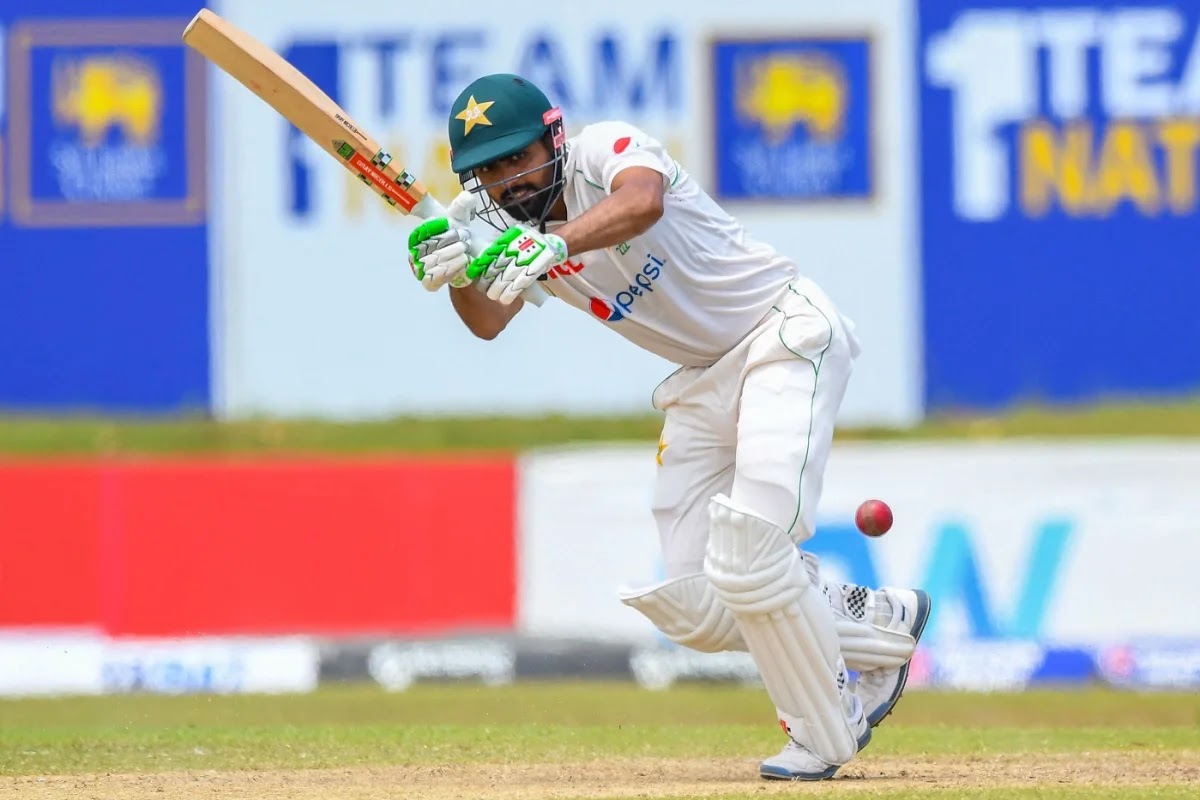
The pantheon of modern cricket’s elite—Steve Smith, Joe Root, Kane Williamson, and Virat Kohli—has long stood unchallenged. These players have defined an era with their consistency, adaptability, and ability to thrive under pressure. For Babar Azam, often heralded as the poster boy of Pakistan cricket, the journey to join this illustrious group has been a tale of brilliance in limited-overs cricket juxtaposed with a lingering question: can he truly excel in the whites of Test cricket?

Babar’s elegance with the bat is undeniable. His drives through the backward point and cover regions are a masterclass in timing, reminiscent of Kohli’s own artistry. The front-foot precision, the late adjustments, and the middle-of-the-bat connection are signatures of a player destined for greatness. Yet, greatness in Test cricket demands more than aesthetic brilliance; it requires an unyielding temperament and the ability to script long, defiant innings under pressure.

For years, this temperament seemed elusive. The Smiths, Roots, and Williamsons of the world have thrived in adversity, while Babar’s Test career often hinted at unfulfilled potential. However, his appointment as captain appears to have unlocked a new dimension to his game. Leadership, it seems, has acted as a jeweler’s chisel, refining the raw diamond into a gem capable of shining on the grandest stage.

The Test of Temperament

The setting was quintessentially Pakistani: 85 for 7 on a treacherous track offering both turn and bounce. The collapse was as familiar as the epic rearguards that have punctuated Pakistan’s cricketing history. As Babar stood at the non-striker’s end, watching his teammates fall like dominoes, the responsibility of salvaging the innings fell squarely on his shoulders.

With the pitch resembling a snake pit, Babar became the snake charmer. His footwork was precise, his timing impeccable, and his execution of the sweep shot a study in calculated risk. Most crucially, he displayed the awareness to shield a fragile tail.

When the score read 112 for 8, hope seemed a distant memory. At 148 for 9, it appeared the game was over. But this was Pakistan—a team that thrives in chaos and finds heroes when the odds are insurmountable.

The Last Stand

Enter Naseem Shah, a bowler with a Test batting average of 3.2. What followed was an extraordinary partnership that defied logic and epitomized the unpredictable spirit of Pakistan cricket. Naseem, like a man possessed, blocked everything hurled at him, while Babar orchestrated the strike rotation with clinical precision.

The 70-run stand for the last wicket was a testament to Babar’s leadership and ability to inspire resilience. Naseem’s contribution of 5 runs off 52 balls may seem meager, but it was invaluable in the context of the innings. Babar shielded his partner, farmed the strike, and shouldered the burden with the poise of a seasoned campaigner.

A Hundred for the Ages

Babar’s seventh Test century was not merely a personal milestone; it was a statement. On 99, he whipped a full toss from Theekshana wide of mid-on with authority. The following delivery saw him inside-edge a ball drifting towards leg, and he scampered through for a single that carried the weight of an entire team’s hopes.

This was not just a hundred; it was an epic vigil that showcased every facet of Babar’s evolution. The innings was marked by discipline, technical mastery, and an unwavering resolve to fight until the very end.

Knocking on the Door of Greatness

Babar’s knock was a reminder of Pakistan’s storied history of producing one-man armies—players who rise when all seems lost. It was also a glimpse into the mind of a player who is no longer content with being a limited-overs maestro.

Greatness in Test cricket is not conferred by a single innings, but by a body of work that reflects sustained excellence and the ability to perform under duress. Babar’s journey is still a work in progress, but this innings was a significant step towards cementing his place among the modern-day greats.

The knock at the door of greatness grows louder. It is not a matter of if, but when, Babar Azam will enter. For now, he stands on the threshold, a symbol of Pakistan’s cricketing resilience and a beacon of its future.

Thank You 

Faisal Caesar 

Tuesday, July 12, 2022

France 1998: The Night a Team Became a Nation

On 12 July 1998, at the Stade de France, football ceased to be merely a sport for France. It became a mirror, a myth, and for one unforgettable night, a national language. When Aimé Jacquet’s side defeated Brazil 3-0 in the World Cup final, France did not simply win its first World Cup. It discovered a new image of itself.

The victory was historic on the pitch, but its deeper meaning lay beyond the white lines. A country divided by politics, immigration debates, class anxieties and questions of identity suddenly found itself united behind a team that represented many versions of Frenchness at once. Black, white, Arab, Basque, Caribbean, Armenian, Portuguese, Spanish, Ghanaian, Senegalese, Algerian and New Caledonian roots came together under one shirt. The team was soon celebrated as la France black-blanc-beur, a phrase that captured both the hope and the symbolism of that summer.

Yet this triumph was not born in comfort. It emerged from humiliation, suspicion and doubt.

The Trauma Before the Glory

To understand France 1998, one must begin not with Zidane’s headers against Brazil, but with the wounds of 1993.

France had needed only one point from their final two home qualifiers to reach the 1994 World Cup in the United States. Instead, they suffered two devastating defeats, first against Israel and then against Bulgaria. Both losses were sealed by late goals. The collapse was not merely sporting failure. It felt like national embarrassment.

From that ruin came Aimé Jacquet.

Jacquet was not glamorous. He was not a philosopher of football in the Cruyffian sense, nor a charismatic revolutionary. He was a builder, a technician, a man of order and discipline. Appointed after serving under Gérard Houllier, he inherited a team in crisis and a public that had lost faith.

Even a semifinal appearance at Euro 1996 did little to change the mood. France had been solid, but not seductive. They had reached the last four without scoring in four hours of knockout football. The country wanted beauty. Jacquet offered structure. The press, especially L’Équipe, turned against him with increasing severity.

The criticism became personal. His selections were questioned, his tactics mocked, his personality dismissed as uninspiring. Yet within the camp, something different was happening. The players saw a coach absorbing the pressure so they would not have to. Jacquet placed his squad inside a protective bubble, first at Clairefontaine and then through carefully managed preparation camps. He gave them clarity, calm and purpose.

One key moment came in December 1997, when Jacquet gathered the players and their families in Tignes, a ski resort in the Alps. Away from the noise of Paris and the hostility of the press, he spoke to his leaders, including Laurent Blanc and Didier Deschamps. He explained his plan, his method, and his belief.

He told them they would do something huge.

At the time, few outside the squad believed him.

A Team Built on Steel

France did not enter the World Cup as a team of dazzling attacking reputation. They were not Brazil. They were not the Netherlands. They were not even Croatia in terms of flair. Their genius lay elsewhere.

Jacquet understood tournament football. He knew that World Cups are rarely won by romance alone. They are won by balance, resilience and defensive authority. France’s foundation was therefore built from the back.

Fabien Barthez brought eccentric confidence in goal. Marcel Desailly and Laurent Blanc formed a commanding central partnership. Lilian Thuram and Bixente Lizarazu gave strength and intelligence at full-back. Didier Deschamps, the captain, acted as the water carrier, the organiser, the quiet general who held the side together. Emmanuel Petit and Christian Karembeu added discipline, running power and tactical security.

Ahead of them, Zinedine Zidane and Youri Djorkaeff provided imagination. Stéphane Guivarc’h, often criticised for his lack of goals, served a more thankless function. He held the ball, occupied defenders and ran channels, even if his finishing became a subject of ridicule.

This was not a perfect attacking machine. It was something more pragmatic and perhaps more suitable for a World Cup. France were difficult to break, difficult to intimidate and increasingly difficult to stop.

The Country Slowly Awakens

France began with a necessary 3-0 victory over South Africa in Marseille. It was not merely a win. It was a release of pressure. The team then moved through the group stage with authority, scoring nine goals and winning all three matches.

Yet the nation did not fall in love instantly.

At first, the stands were too polite, too corporate, too distant. Didier Deschamps reportedly wanted more noise, more shirts, more emotion. France was hosting the World Cup, but the public had not fully surrendered itself to the team.

That changed as the tournament deepened.

The journey to Lens for the last-16 match against Paraguay became a symbolic turning point. As the team bus travelled from Clairefontaine, people lined the roads, waved flags, shouted encouragement and turned the players’ private mission into a public movement. For the first time, the squad felt the country behind them.

Against Paraguay, France needed patience. Laurent Blanc scored the golden goal in extra time. It was the first golden goal in World Cup history. Against Italy in the quarterfinal, France survived the agony of penalties. Against Croatia in the semifinal, they faced their most dramatic test.

Thuram’s Miracle

The semifinal against Croatia produced the most poetic moment of France’s campaign.

Davor Suker gave Croatia the lead after Lilian Thuram had played him onside. For the first and only time in the tournament, France were behind. Thuram, usually the model of defensive concentration, had made the mistake.

Then came the miracle.

Within a minute, Thuram equalised. Later, he curled in a second with his left foot from outside the box. This was a defender who had never scored for France before. He would never score for France again. Yet in a World Cup semifinal, he became the unlikely hero.

Thuram later described it as his “Miles Davis moment,” a moment when instinct, body and mind merged into something beyond calculation. It was football as jazz, sudden and improvised, born from error and transformed into beauty.

France had found another answer. Zidane had been suspended earlier in the tournament. Blanc would be suspended for the final. Desailly would later be sent off in that final. But every time a problem appeared, another player stepped forward.

That was the true strength of Jacquet’s France. It was not one man’s team. It was a collective organism.

Ronaldo, Brazil and the Strange Silence Before the Final

Brazil entered the final as defending champions and favourites. They had Ronaldo, the most explosive forward in the world, a player who seemed to represent the future of attacking football.

Then, on the afternoon of the final, football history took one of its strangest turns.

Ronaldo suffered convulsions while resting. His teammates were shaken. César Sampaio later recalled seeing him struggling to breathe, drooling, his muscles contracted. Brazil’s dressing room descended into confusion. The first team sheet left Ronaldo out and included Edmundo. Later, a revised sheet restored Ronaldo to the starting XI.

He played the full match, but he was not himself. Brazil were not themselves either. Their usual rhythm, music and swagger were replaced by anxiety. The team bus to the stadium was silent.

France, by contrast, were ready. Whether Ronaldo played or not, Jacquet’s side had reached a psychological state where fear had disappeared. They were not merely hoping to win. They believed the night belonged to them.

Zidane’s Redemption

Until the final, Zidane’s tournament had been complicated.

He was already France’s great talent, the heir to Michel Platini, the player expected to give imagination to a disciplined team. But against Saudi Arabia in the group stage, he was sent off for stamping on Fuad Amin. The red card was foolish, and Zidane knew it. He missed two matches and watched as France continued without him.

His return was steady rather than spectacular. Against Italy, he was subdued by Gianluca Pessotto. Against Croatia, he improved. But the final became his stage.

Jacquet had identified a weakness in Brazil’s set-piece defending. The instruction was clear. Zidane was to attack the near post because Brazil’s defenders were vulnerable from corners.

Twice in the first half, he did exactly that.

Two corners. Two headers. Two goals.

For a player not known for his heading, it was almost surreal. But World Cup finals are often decided by unlikely details. Zidane did not dominate the tournament in the way he later would dominate Euro 2000 or moments of the 2006 World Cup. But on the night that mattered most, he became the symbol.

His face was later projected onto the Arc de Triomphe. Crowds chanted “Zidane President.” The son of Algerian immigrants had become the face of France’s greatest sporting night.

The Final as Coronation

France’s 3-0 victory over Brazil was not a match of wild attacking beauty. It was a controlled dismantling. Zidane’s two goals gave France command. Brazil searched for a response, but it never truly came. Even when Desailly was sent off in the second half, the game did not turn.

France remained compact. Brazil remained strangely flat.

In stoppage time, Patrick Vieira released Emmanuel Petit, who scored the third. It was France’s 1,000th goal in national team history and the final note of a perfect night. Petit’s left-footed finish sealed not only the match but the myth.

France had beaten Brazil 3-0. The host nation had conquered the world.

More Than Football

The celebrations were extraordinary. More than a million people filled the Champs-Élysées. Some estimates suggested even more. Across the country, streets became rivers of flags, song and disbelief.

The faces in the crowd reflected the faces in the team. This was the great emotional power of 1998. France saw itself in its footballers. Marcel Desailly was born in Ghana. Patrick Vieira in Senegal. Zidane’s family came from Algeria. Henry’s roots were in Guadeloupe. Karembeu came from New Caledonia. Pires had Portuguese and Spanish heritage. Djorkaeff carried Armenian roots. Lizarazu and Deschamps came from the Basque region.

In a political climate where Jean-Marie Le Pen and the far right had criticised the national team for not being “French” enough, the victory carried immense symbolic force. The answer came not through speeches but through football. These players were French. They wore the same shirt, fought for the same flag and won together.

For a brief period, the World Cup seemed to offer France a vision of unity that politics could not provide. It did not solve racism. It did not erase inequality. It did not permanently heal the fractures of French society. But it created a moment of shared belonging powerful enough to become part of national memory.

The Limits of the Myth

With time, the romantic story of “black-blanc-beur” has also been questioned. The unity of 1998 did not last forever. France’s social tensions returned. The far right did not disappear. The children of immigrant communities continued to face discrimination and exclusion.

Yet the importance of that summer remains.

Its power lies not in the claim that football solved France’s problems, but in the fact that it briefly revealed another possibility. It showed a nation that identity could be plural and still cohesive. It showed that difference could become strength when organised around common purpose.

Jacquet’s team was therefore both a football side and a social metaphor. Its diversity mattered, but so did its discipline. Its symbolism mattered, but so did its tactical structure. The glory of 1998 came from the fusion of both.

Aimé Jacquet’s Quiet Vindication

Perhaps no figure was more vindicated than Aimé Jacquet.

Mocked before the tournament, he ended it as a world champion. He had built a side that was mentally strong, defensively magnificent and emotionally united. He had understood that France did not need a spectacle every night. It needed a team capable of surviving every kind of test.

After the final, Jacquet did not remain in coaching. He stepped away, returning to a technical role. In doing so, he preserved the purity of his achievement. His last match as a coach was a World Cup final victory over Brazil.

Few exits in football history have been more complete.

Legacy: The Night France Believed

France 1998 remains one of the defining World Cup stories because it operates on several levels at once.

Tactically, it was the triumph of defensive organisation and collective balance.

Emotionally, it was the redemption of a team doubted by its own country.

Politically, it was a rebuke to narrow ideas of national identity.

Culturally, it became a symbol of modern France at its most hopeful.

The tournament belonged to Desailly’s strength, Thuram’s miracle, Deschamps’ leadership, Blanc’s golden goal, Petit’s final run and Zidane’s two immortal headers. It belonged to Jacquet, the quiet architect. It belonged to a country that needed joy and found it in a team made from many histories.

When French people remember 1998, they do not remember only a scoreline. They remember streets filled with strangers embracing. They remember flags at windows. They remember Zidane’s face on the Arc de Triomphe. They remember the feeling that, for one night at least, France had become whole.

That is why France 1998 remains more than a football triumph.

It was the night a team became a nation.

Thank You 

Faisal Caesar 

Monday, July 11, 2022

Italy's 1982 World Cup Triumph: A Nation Reborn Through Football

The 1982 FIFA World Cup victory marked a transformative moment in Italy's history, both on and off the pitch. Emerging from the turbulent ‘Years of Lead’—a period of political violence and societal division—Italy was a nation grappling with its identity. The scars of the past decade, marked by bombings, assassinations, and threats to democracy, were still fresh. Yet, by 1982, the country was on the cusp of renewal, poised for economic growth and a cultural renaissance that would see its fashion and football industries redefine global standards. The triumph in Spain symbolized more than just sporting excellence; it was a metaphor for national rejuvenation.

The Shadow of Scandal and Redemption

Italy entered the World Cup under a cloud of scepticism and disgrace, largely due to the Totonero scandal of 1980. The revelations of match-fixing and illegal gambling schemes implicated some of the nation’s most prominent clubs and players. AC Milan and Lazio were relegated to Serie B, while players like Paolo Rossi faced lengthy bans. Although Rossi’s suspension was reduced, allowing him to participate in the tournament, the scandal had left Italian football in disarray, its reputation tarnished.

Enzo Bearzot, Italy’s pipe-smoking coach, inherited a team burdened by divided loyalties and public cynicism. His tenure had shown glimpses of promise, with a fourth-place finish at the 1978 World Cup and Euro 1980. However, the team’s inability to secure silverware cast doubts on Bearzot’s leadership. The press was unrelenting, questioning his tactics, selections, and even his vision for the team. Yet, Bearzot’s unwavering belief in his philosophy and players would prove pivotal.

Tactical Evolution: Beyond Catenaccio

Italian football had long been synonymous with catenaccio, a defensive system prioritizing containment over creativity. Bearzot, while respecting this tradition, sought a more balanced approach. He envisioned a team capable of blending defensive resilience with moments of attacking brilliance. His tactical flexibility was evident in the 1982 World Cup, where he adapted strategies to neutralize formidable opponents while exploiting their weaknesses.

Central to Bearzot’s vision was his faith in Paolo Rossi. Despite Rossi’s lack of form and the controversy surrounding his inclusion, Bearzot recognized his potential to deliver in critical moments. This decision would prove inspired, as Rossi’s transformation from a maligned figure to a national hero became the defining narrative of the tournament.

The Road to Redemption: Group Stage Struggles

Italy’s group stage campaign was anything but convincing. Drawn against Poland, Peru, and Cameroon, the Azzurri managed only three uninspiring draws, advancing to the knockout stages on goal difference. The Italian media’s criticism reached a fever pitch, with calls for Bearzot’s resignation and demands for drastic changes. Yet, Bearzot’s steadfastness in his selections and strategy laid the foundation for what was to come.

The Knockout Stages: Tactical Mastery

The second round saw Italy placed in a daunting group alongside reigning champions Argentina and tournament favourites Brazil. Against Argentina, Bearzot’s tactical acumen shone. Claudio Gentile’s relentless marking of Diego Maradona neutralized the Argentine star, allowing Italy to secure a 2-1 victory. This win set the stage for a legendary encounter with Brazil.

The match against Brazil is often regarded as one of the greatest in World Cup history. Brazil, with their attacking flair led by Zico, Socrates, and Falcão, were overwhelming favourites. Bearzot’s strategy combined defensive discipline with swift counter-attacks, a plan executed to perfection by Paolo Rossi. Rossi’s hat-trick stunned the footballing world, propelling Italy to a 3-2 victory and solidifying his place in World Cup lore.

The Final Steps: Triumph in Madrid

Italy’s semi-final against Poland saw Rossi continue his remarkable form, scoring twice to secure a 2-0 victory. In the final against West Germany, Bearzot’s meticulous preparations paid off. Despite a tense first half, Italy’s attacking prowess emerged in the second half. Rossi opened the scoring, followed by Marco Tardelli’s iconic goal and celebration, and Alessandro Altobelli’s clincher. The 3-1 victory marked Italy’s first World Cup triumph since 1938, a moment of catharsis for a nation yearning for glory.

The Legacy: Beyond the Trophy

The 1982 World Cup victory had far-reaching implications for Italian football and society. Bearzot’s triumph was not just tactical but symbolic, representing the triumph of resilience and unity over adversity. The players’ decision to hoist Bearzot onto their shoulders in celebration underscored the respect and admiration he had earned.

Off the pitch, the victory catalyzed a golden era for Serie A. The league became the epicentre of world football, attracting stars like Michel Platini, Zico, and Diego Maradona. The tactical innovations and confidence born from the 1982 triumph influenced a generation of Italian football, culminating in Arrigo Sacchi’s revolutionary Milan side of the late 1980s.

The “Pertini effect,” named after Italy’s exuberant President Sandro Pertini, encapsulated the national mood. His visible joy during the final symbolized a collective pride and optimism that transcended sport. The victory provided a unifying moment for a nation emerging from a decade of turmoil, instilling a renewed sense of identity and purpose.

Conclusion: A Turning Point

The 1982 FIFA World Cup was more than a sporting achievement for Italy; it was a cultural and emotional watershed. Bearzot’s vision, resilience, and tactical ingenuity turned a beleaguered team into world champions, restoring pride to Italian football. The tournament’s impact extended beyond the pitch, influencing the nation’s cultural and economic trajectory. It was a moment that celebrated not just victory but renewal, a testament to the enduring power of sport to inspire and transform.

Thank You

Faisal Caesar