Sunday, July 17, 2022

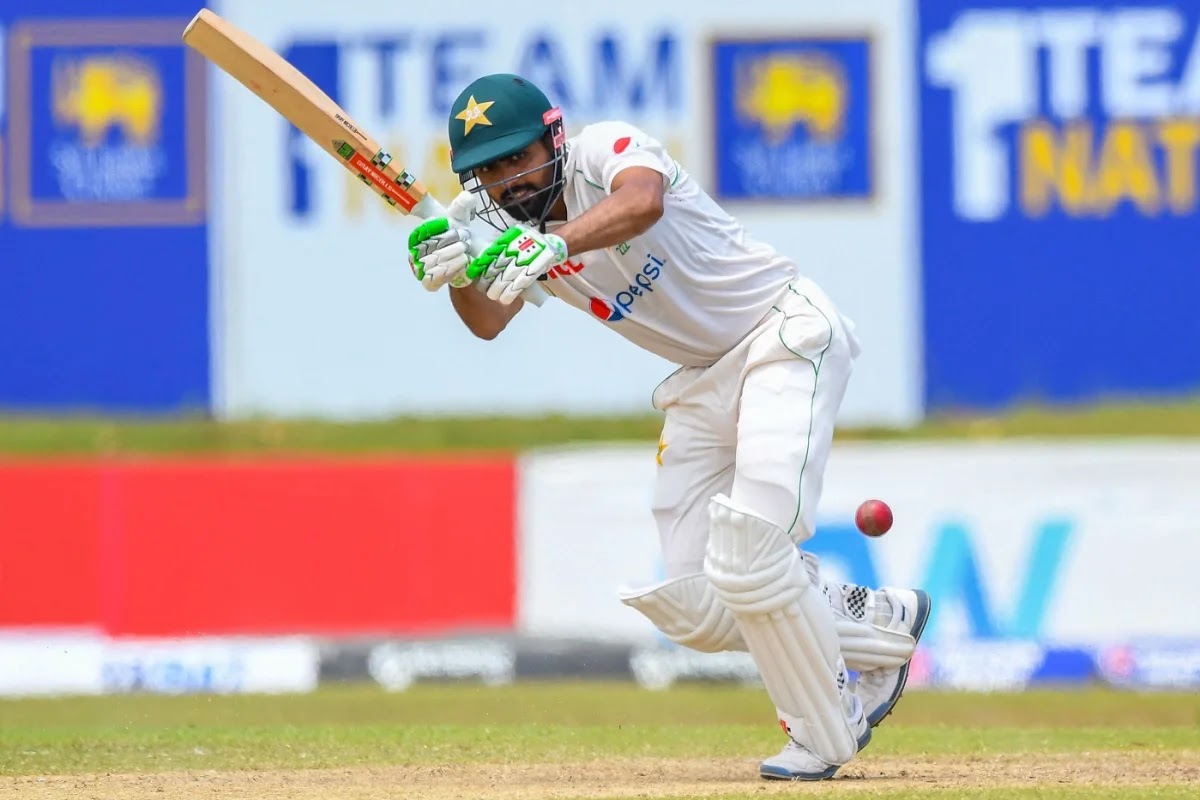
Babar Azam: Knocking on the Door of Greatness?

The pantheon of modern cricket’s elite—Steve Smith, Joe Root, Kane Williamson, and Virat Kohli—has long stood unchallenged. These players have defined an era with their consistency, adaptability, and ability to thrive under pressure. For Babar Azam, often heralded as the poster boy of Pakistan cricket, the journey to join this illustrious group has been a tale of brilliance in limited-overs cricket juxtaposed with a lingering question: can he truly excel in the whites of Test cricket?

Babar’s elegance with the bat is undeniable. His drives through the backward point and cover regions are a masterclass in timing, reminiscent of Kohli’s own artistry. The front-foot precision, the late adjustments, and the middle-of-the-bat connection are signatures of a player destined for greatness. Yet, greatness in Test cricket demands more than aesthetic brilliance; it requires an unyielding temperament and the ability to script long, defiant innings under pressure.

For years, this temperament seemed elusive. The Smiths, Roots, and Williamsons of the world have thrived in adversity, while Babar’s Test career often hinted at unfulfilled potential. However, his appointment as captain appears to have unlocked a new dimension to his game. Leadership, it seems, has acted as a jeweler’s chisel, refining the raw diamond into a gem capable of shining on the grandest stage.

The Test of Temperament

The setting was quintessentially Pakistani: 85 for 7 on a treacherous track offering both turn and bounce. The collapse was as familiar as the epic rearguards that have punctuated Pakistan’s cricketing history. As Babar stood at the non-striker’s end, watching his teammates fall like dominoes, the responsibility of salvaging the innings fell squarely on his shoulders.

With the pitch resembling a snake pit, Babar became the snake charmer. His footwork was precise, his timing impeccable, and his execution of the sweep shot a study in calculated risk. Most crucially, he displayed the awareness to shield a fragile tail.

When the score read 112 for 8, hope seemed a distant memory. At 148 for 9, it appeared the game was over. But this was Pakistan—a team that thrives in chaos and finds heroes when the odds are insurmountable.

The Last Stand

Enter Naseem Shah, a bowler with a Test batting average of 3.2. What followed was an extraordinary partnership that defied logic and epitomized the unpredictable spirit of Pakistan cricket. Naseem, like a man possessed, blocked everything hurled at him, while Babar orchestrated the strike rotation with clinical precision.

The 70-run stand for the last wicket was a testament to Babar’s leadership and ability to inspire resilience. Naseem’s contribution of 5 runs off 52 balls may seem meager, but it was invaluable in the context of the innings. Babar shielded his partner, farmed the strike, and shouldered the burden with the poise of a seasoned campaigner.

A Hundred for the Ages

Babar’s seventh Test century was not merely a personal milestone; it was a statement. On 99, he whipped a full toss from Theekshana wide of mid-on with authority. The following delivery saw him inside-edge a ball drifting towards leg, and he scampered through for a single that carried the weight of an entire team’s hopes.

This was not just a hundred; it was an epic vigil that showcased every facet of Babar’s evolution. The innings was marked by discipline, technical mastery, and an unwavering resolve to fight until the very end.

Knocking on the Door of Greatness

Babar’s knock was a reminder of Pakistan’s storied history of producing one-man armies—players who rise when all seems lost. It was also a glimpse into the mind of a player who is no longer content with being a limited-overs maestro.

Greatness in Test cricket is not conferred by a single innings, but by a body of work that reflects sustained excellence and the ability to perform under duress. Babar’s journey is still a work in progress, but this innings was a significant step towards cementing his place among the modern-day greats.

The knock at the door of greatness grows louder. It is not a matter of if, but when, Babar Azam will enter. For now, he stands on the threshold, a symbol of Pakistan’s cricketing resilience and a beacon of its future.

Thank You 

Faisal Caesar 

Monday, July 11, 2022

Italy's 1982 World Cup Triumph: A Nation Reborn Through Football

The 1982 FIFA World Cup victory marked a transformative moment in Italy's history, both on and off the pitch. Emerging from the turbulent ‘Years of Lead’—a period of political violence and societal division—Italy was a nation grappling with its identity. The scars of the past decade, marked by bombings, assassinations, and threats to democracy, were still fresh. Yet, by 1982, the country was on the cusp of renewal, poised for economic growth and a cultural renaissance that would see its fashion and football industries redefine global standards. The triumph in Spain symbolized more than just sporting excellence; it was a metaphor for national rejuvenation.

The Shadow of Scandal and Redemption

Italy entered the World Cup under a cloud of scepticism and disgrace, largely due to the Totonero scandal of 1980. The revelations of match-fixing and illegal gambling schemes implicated some of the nation’s most prominent clubs and players. AC Milan and Lazio were relegated to Serie B, while players like Paolo Rossi faced lengthy bans. Although Rossi’s suspension was reduced, allowing him to participate in the tournament, the scandal had left Italian football in disarray, its reputation tarnished.

Enzo Bearzot, Italy’s pipe-smoking coach, inherited a team burdened by divided loyalties and public cynicism. His tenure had shown glimpses of promise, with a fourth-place finish at the 1978 World Cup and Euro 1980. However, the team’s inability to secure silverware cast doubts on Bearzot’s leadership. The press was unrelenting, questioning his tactics, selections, and even his vision for the team. Yet, Bearzot’s unwavering belief in his philosophy and players would prove pivotal.

Tactical Evolution: Beyond Catenaccio

Italian football had long been synonymous with catenaccio, a defensive system prioritizing containment over creativity. Bearzot, while respecting this tradition, sought a more balanced approach. He envisioned a team capable of blending defensive resilience with moments of attacking brilliance. His tactical flexibility was evident in the 1982 World Cup, where he adapted strategies to neutralize formidable opponents while exploiting their weaknesses.

Central to Bearzot’s vision was his faith in Paolo Rossi. Despite Rossi’s lack of form and the controversy surrounding his inclusion, Bearzot recognized his potential to deliver in critical moments. This decision would prove inspired, as Rossi’s transformation from a maligned figure to a national hero became the defining narrative of the tournament.

The Road to Redemption: Group Stage Struggles

Italy’s group stage campaign was anything but convincing. Drawn against Poland, Peru, and Cameroon, the Azzurri managed only three uninspiring draws, advancing to the knockout stages on goal difference. The Italian media’s criticism reached a fever pitch, with calls for Bearzot’s resignation and demands for drastic changes. Yet, Bearzot’s steadfastness in his selections and strategy laid the foundation for what was to come.

The Knockout Stages: Tactical Mastery

The second round saw Italy placed in a daunting group alongside reigning champions Argentina and tournament favourites Brazil. Against Argentina, Bearzot’s tactical acumen shone. Claudio Gentile’s relentless marking of Diego Maradona neutralized the Argentine star, allowing Italy to secure a 2-1 victory. This win set the stage for a legendary encounter with Brazil.

The match against Brazil is often regarded as one of the greatest in World Cup history. Brazil, with their attacking flair led by Zico, Socrates, and Falcão, were overwhelming favourites. Bearzot’s strategy combined defensive discipline with swift counter-attacks, a plan executed to perfection by Paolo Rossi. Rossi’s hat-trick stunned the footballing world, propelling Italy to a 3-2 victory and solidifying his place in World Cup lore.

The Final Steps: Triumph in Madrid

Italy’s semi-final against Poland saw Rossi continue his remarkable form, scoring twice to secure a 2-0 victory. In the final against West Germany, Bearzot’s meticulous preparations paid off. Despite a tense first half, Italy’s attacking prowess emerged in the second half. Rossi opened the scoring, followed by Marco Tardelli’s iconic goal and celebration, and Alessandro Altobelli’s clincher. The 3-1 victory marked Italy’s first World Cup triumph since 1938, a moment of catharsis for a nation yearning for glory.

The Legacy: Beyond the Trophy

The 1982 World Cup victory had far-reaching implications for Italian football and society. Bearzot’s triumph was not just tactical but symbolic, representing the triumph of resilience and unity over adversity. The players’ decision to hoist Bearzot onto their shoulders in celebration underscored the respect and admiration he had earned.

Off the pitch, the victory catalyzed a golden era for Serie A. The league became the epicentre of world football, attracting stars like Michel Platini, Zico, and Diego Maradona. The tactical innovations and confidence born from the 1982 triumph influenced a generation of Italian football, culminating in Arrigo Sacchi’s revolutionary Milan side of the late 1980s.

The “Pertini effect,” named after Italy’s exuberant President Sandro Pertini, encapsulated the national mood. His visible joy during the final symbolized a collective pride and optimism that transcended sport. The victory provided a unifying moment for a nation emerging from a decade of turmoil, instilling a renewed sense of identity and purpose.

Conclusion: A Turning Point

The 1982 FIFA World Cup was more than a sporting achievement for Italy; it was a cultural and emotional watershed. Bearzot’s vision, resilience, and tactical ingenuity turned a beleaguered team into world champions, restoring pride to Italian football. The tournament’s impact extended beyond the pitch, influencing the nation’s cultural and economic trajectory. It was a moment that celebrated not just victory but renewal, a testament to the enduring power of sport to inspire and transform.

Thank You

Faisal Caesar

Friday, July 8, 2022

The Chessboard of Berlin: A Tactical and Emotional Epic

The 2006 FIFA World Cup final in Berlin remains one of the most dramatic climaxes in football history—an evening where legends took their final bow, new stars emerged, and a moment of madness overshadowed a tactical masterclass. It was the last stand of icons like Zidane, Figo, Totti, and Beckham, yet also the global stage’s introduction to the likes of Torres, Ribéry, and a young Lionel Messi. 

For Italy, it was a campaign clouded by the Serie A scandal, scepticism, and internal doubts. For France, it was a resurrection, a final march of a golden generation led by their captain Zidane, seeking redemption after years in the wilderness. 

The two sides took different paths to the Olympiastadion, yet their destinies collided in a match that was less a spectacle of free-flowing football and more a chess match—one of strategy, resilience, and ultimately, human emotion. 

Italy: A Team Greater Than the Sum of Its Parts

Marcelo Lippi’s Italy was a team built not just on talent, but on cohesion. “To this day I am not convinced I took the technically best players to Germany,” Lippi later admitted, “but I was firmly convinced I called the ones that could create a team.” 

Their campaign began with caution. The group-stage draw against the United States exposed their vulnerabilities, while the controversial penalty against Australia in the Round of 16 cast them as villains in the eyes of neutrals. Yet, amid the uncertainty, Italy's strength lay in its collective spirit. They did not rely on a single talismanic figure; their 14 goals in the tournament were scored by 12 different players, showcasing a depth that few teams could match. 

Against Ukraine in the quarterfinals, their defensive resilience and clinical finishing saw them ease to a 3-0 victory. But it was the semi-final against Germany that became their masterpiece—an exhibition of counterattacking brilliance that saw Fabio Grosso and Alessandro Del Piero deliver a stunning last-gasp triumph against the host nation. 

Italy’s journey to the final was one of perseverance and pragmatism, with a defensive line led by Cannavaro and Buffon forming an impenetrable wall. And yet, for all their steel, their most defining moment in Berlin would not come from strategy or structure, but from an unpredictable act of passion. 

France: The Last Dance of a Maestro

France arrived in Germany as a shadow of their former selves. Their golden era of 1998-2000 had faded, their group-stage performances uninspiring, and their talisman Zidane contemplating retirement. But as the tournament progressed, something stirred in Les Bleus—a resurgence led by their veteran captain. 

Spain fell first in the knockout stage, undone by the craft of Zidane and the resilience of Vieira. Then came the masterpiece against Brazil, where Zidane orchestrated the match with a grace and control that left even the reigning champions powerless. Against Portugal in the semi-final, his penalty sent France to the final, and suddenly, what had seemed an improbable farewell became a potential coronation. 

For Zidane, this was not just a World Cup final—it was the last chapter of his career, the final strokes on a canvas he had painted with elegance for over a decade. But fate had one last twist. 

The Final: A Game of Strategy and Emotion

The final in Berlin began like a script written for Zidane. In just the seventh minute, he stepped up for a penalty and, with audacity befitting a legend, executed a Panenka—his chipped shot striking the crossbar before crossing the line. The world held its breath. This was not just a goal; it was a statement. 

But if France’s artistry was led by Zidane, Italy’s response came through a different figure—Marco Materazzi. A player who started the tournament as a reserve, he rose to the occasion, heading in the equalizer just 12 minutes later. 

The remainder of the game was a battle of wits. Lippi’s Italy, disciplined and structured, absorbed France’s attacks. Domenech’s France, fluid but fragile, searched for openings. The chess match unfolded: Vieira left the field injured, Toni had a goal disallowed for offside, and Buffon denied Zidane a moment of glory with a stunning save in extra time. 

Then, in the 110th minute, the final’s defining moment arrived. As Zidane and Materazzi exchanged words, the Italian tugged at Zidane’s jersey. What followed was not part of any tactical script—it was pure, unfiltered emotion. Zidane turned and drove his head into Materazzi’s chest. The stadium fell silent. The referee, after consulting his assistant, raised the red card. The maestro had played his final note, and it was one of self-destruction. 

Without their captain in the penalty shootout, France’s spirit faltered. David Trezeguet struck the crossbar, and Italy converted all five of their penalties with precision. Fabio Grosso, the unexpected hero of the semi-final, struck the winning penalty. As the ball hit the net, Italian commentator Marco Civoli delivered the immortal words: “Il cielo è azzurro sopra Berlino.” The sky was blue over Berlin. 

Legacy: A Triumph, A Tragedy, and an Eternal Memory

Italy’s fourth World Cup triumph was one of resilience and unity, a victory crafted not by individual brilliance but by a collective will. Cannavaro lifted the trophy, Lippi’s tactics were vindicated, and the Azzurri returned home as champions. 

But the night also belonged to Zidane—not for his Panenka, not for his elegance, but for his fall. The image of him walking past the trophy, head lowered, into the tunnel is one of football’s most haunting images. Greatness and human frailty, are bound together in a single moment. 

Football, like chess, is a game of precision, planning, and execution. But unlike chess, it is also a game of emotion, of unpredictability. The 2006 final was all of that and more—a night where tactics and passion collided, where history was made, and where, in the end, the game itself remained the greatest winner of all.

Thank You

Faisal Caesar 

Sourav Ganguly: The Prince, the Provocateur, and the Paradigm-Shift

In the epic theatre of Indian cricket, few characters have inspired as much polarisation, reverence, and scrutiny as Sourav Ganguly. He was not merely a cricketer; he was a disruptor — a man who challenged orthodoxy with a rakish smile and wielded leadership like a rapier. You could not be indifferent to him. He provoked passion, adulation, and fury in equal measure. He was either your prince or your pariah. There was no middle ground.

The Making of a Prince

The Ganguly saga began, fittingly, in the grandeur of a Ranji Trophy final. At 17, thrust into Bengal's XI by Sambaran Banerjee — replacing his elder brother no less — Ganguly arrived not merely as a player but as a symbol of bold intent. That he bowled only six overs and scored 22 runs mattered little. His strokes between point and cover shimmered with promise. A new star had whispered its arrival.

In the years that followed, Ganguly's legend took root not through consistent public appearances but through whispers, stories, and anecdotes from Park Street to St. Xavier’s — of regal arrogance, monstrous sixes, and unbowed defiance. The nickname "Maharaj" was not without cause.

From Promising Talent to Exile

His initial foray into international cricket was ignominious — a forgettable Gabba ODI and tales of insubordination. He returned home, branded spoilt and overhyped. It would be four years before redemption came — and when it did, it came at Lord's, the very cathedral of cricket, in the form of an immaculate 131 on debut. The off-side was his kingdom, and he ruled it like a monarch. Then came a second hundred at Trent Bridge. Indian cricket, long steeped in hierarchy and restraint, had found a left-handed counterpoint to its classical right-handed maestros.

The Great Partnership and the Rise of a Modern India

Ganguly’s alliance with Tendulkar in ODIs became the stuff of legend. Together, they rewrote the language of opening partnerships — not through brute force, but through elegance and calculated aggression. Their 8,000+ runs as a pair remain unmatched. While Tendulkar was the stoic monk, Ganguly was the passionate warrior — unafraid to dance down the pitch or pick fights with the world's fiercest bowlers.

This new Indian side — loud, fearless, confrontational — was moulded in Ganguly’s image. He made Steve Waugh wait at the toss, bared his chest at Lord’s, and batted with a flourish that could be both reckless and regal. His leadership wasn’t just strategic; it was symbolic. India was no longer submissive. Under him, they went toe-to-toe with Australia, dominated Pakistan, and believed they could win overseas.

The Stylistic Soul of Sourav Ganguly: A Study in Contrasts and Conviction

Sourav Ganguly’s love affair with cricket was born not from brute force or volume of statistics, but from the seduction of style. It began with a televised vision — the elegant, nonchalant strokeplay of David Gower, whose artistry first drew the young boy from Behala into the game. Ganguly confessed to watching Gower’s videos repeatedly, mesmerised by the left-hander’s grace — the soft tap of willow on leather, the flourish of a cover drive. The image lingered, and it shaped the aesthetic foundations of his own game.

But Gower was not alone in that pantheon of early influences. From the gritty defiance of David Boon, the enduring composure of Mohinder Amarnath, the lion-hearted swagger of Kapil Dev, to the pragmatic resilience of Allan Border, Ganguly absorbed a composite cricketing philosophy — one that prized flair but was grounded in fight. It would serve him well in the turbulent years to come.

The Monarch of the Off-Side

To call Ganguly merely a left-handed batsman is to do a disservice to the poetry he could script through the off-side. His batting, particularly in his prime, was an ode to precision and timing. Debashish Dutta, in his biography Sourav Ganguly: The Maharaja of Cricket, captured it succinctly: Ganguly’s dominion was the off-side — the square cut, the square drive, and the imperious cover drive were weapons he wielded with imperial command. Few field settings could stifle him; fewer bowlers could contain him once he found his rhythm.

Rahul Dravid, never one to bestow praise lightly, famously remarked that Ganguly was “next to God on the off-side.” It wasn’t hyperbole — Ganguly’s ability to carve boundaries through packed covers or pierce backward point with minimal backlift made him one of the most dangerous stroke-makers of his era. His balance allowed him to play those shots both off the front and back foot, and when in flow, he looked as if he were sketching his strokes onto the canvas of a summer afternoon.

Yet for all his elegance on one flank, demons were lurking on the other.

The Flaws That Humanised the Hero

The hook and pull — those necessary tools against the hostile fast bowling of Australia and South Africa — remained Ganguly’s Achilles heel, particularly in the early stages of his career. His attempts at horizontal-batted counterpunches often resulted in mistimed misadventures, and his vulnerability against the short-pitched ball became a well-documented tactic for opponents. But to his credit, Ganguly never allowed pride to cloud learning. After his much-publicised exile and subsequent comeback in 2007, he consciously worked on these deficiencies. While he never quite mastered the short ball, he certainly became more measured in how he addressed it.

Another flaw, less technical and more instinctive, was his running between the wickets. Amrita Daityari, in Sourav Ganguly: The Fire Within, described him as “notorious” for erratic calling — a trait that often endangered, and occasionally sacrificed, his partners. The most infamous of these mishaps came when Ganguly, on 99 in an ODI against Australia, failed to ground his bat despite having crossed the crease, resulting in a run-out that was equal parts tragic and telling. Ganguly would later admit, with characteristic candour, “I love to watch myself hit a cover drive, to watch myself hit a hundred.” That admission encapsulates the paradox of the man — an aesthete chasing milestones, sometimes at the cost of the mundane but essential details.

The Science of Aggression and the Dance Against Spin

In limited-overs cricket, Ganguly transformed his aestheticism into aggression. As an opener, he sought to dominate the bowlers during fielding restrictions, often using his feet to loft fast bowlers over extra cover and mid-off — a rare and audacious choice for his era. Against spin, particularly **left-arm orthodox**, he was a force of nature. His sharp eye and quick feet allowed him to dance down the pitch and deposit the ball — with a high, disdainful flourish — deep into the stands over mid-on or midwicket. His battles with the likes of Ashley Giles and Daniel Vettori became compelling subplots in India’s batting narrative.

Still, for all his elegance, he was never a complete athlete in the modern sense. While he took 100 catches in ODIs — a feat many athletic fielders have not achieved — his ground fielding was often sluggish. **Vinod Tiwari**, in his biography of Ganguly, admired his catching tally but lamented his lack of agility and his tendency to succumb to minor injuries during fielding stints. This duality summed up Ganguly well: spectacular in moments, flawed in motion.

The Wright Partnership: A Symbiosis that Reshaped Indian Cricket

Perhaps one of the most critical partnerships in Ganguly’s journey came not with bat in hand, but through strategy and structure — his alliance with **John Wright**, India’s first foreign coach. Their relationship, often described as “symbiotic,” changed the culture of Indian cricket. Together they recognised that talent alone was insufficient. They championed fitness, discipline, and scientific preparation, building a system that could endure beyond brilliance.

Dubeyin his assessment of the era, credited Ganguly and Wright — alongside veterans like Tendulkar and Dravid — with ushering in a revolution. For the first time, India acknowledged the limitations of its domestic coaching model and embraced global best practices. Wright's method and Ganguly’s aggression coalesced into a vision — one where young players were nurtured, expectations were raised, and mediocrity was no longer acceptable.

Sourav Ganguly was never perfect — and that was precisely what made him magnetic. His career was a mosaic of contradictions: regal and rustic, poetic and political, flamboyant and flawed. He brought artistry to aggression and rebellion to a game long ruled by silence. Through every cover drive, every misjudged single, every captains’ toss mind-game, he shaped modern Indian cricket not just through numbers, but through narrative.

The Swinging Arm of a Part-Time Disruptor

As a bowler, Ganguly was an opportunist. His right-arm medium pace wasn’t intimidating, but it was useful — particularly when breaking partnerships or drying up runs. He could swing the ball both ways, often outwitting batsmen with his subtle variations and surprising movement. While his bowling average never entered the realm of the elite, his knack for timely wickets often changed the course of games.

Captaincy and the Transformation of Indian Cricket

It is here that Ganguly's true legacy lies. He took over a side reeling from match-fixing scandals and rebuilt it brick by gritty brick. He backed young, unproven talents — Harbhajan, Sehwag, Yuvraj, Dhoni, Zaheer — and gave them long ropes. He wasn’t afraid to defy the seniority-based culture. His biggest achievement was cultural: he made India believe that victory abroad was not a dream but a demand.

Yet, his captaincy was often defined more by symbolism than statistics. Only one Test series win outside Asia — in Bangladesh. A 2003 World Cup final, but no title. His sides often rose to the occasion but faltered at the final hurdle. Still, in the broader canvas of Indian cricketing history, Ganguly was the Renaissance king — not the one who finished the masterpiece, but the one who brought the brush and shattered the old frame.

The Fall, and the Chappell War

Every icon meets a nemesis. For Ganguly, it was Greg Chappell — an austere Australian with little room for sentiment. The battle was not just personal; it was philosophical. Ganguly, by then insecure in form and influence, found himself under siege. Chappell’s leaked email to the BCCI, scathing in tone and damning in content, portrayed a captain who had lost the dressing room.

What followed was theatre — injuries real and imagined, threats of withdrawal, dressing room intrigues, and nationwide protests. Kolkata erupted. Chappell became a villain, Dravid was seen as the silent enabler, and Ganguly was cast in the tragic role of the ousted king.

The Resurrection: One Last Roar

But Ganguly was never one to fade quietly. He clawed his way back, remoulded his technique, and reasserted himself in 2006–07. He scored over 1,100 Test runs in 2007 — his finest year — including a double hundred against Pakistan and impactful tours of England and Australia. His 87 at Kanpur against a red-hot South African pace battery was a vintage exhibition of grit and class.

Then, as all great tales demand, he bowed out on his own terms in 2008 — with a century against Australia and a farewell befitting a warrior-turned-elder statesman.

Legacy of a Contradictory Giant

Statistically, Ganguly sits comfortably among Indian cricket’s elite: 11,000+ ODI runs, over 7,000 in Tests, and countless memorable moments. But his greatness transcends numbers. He was India’s attitude shift. He made the team walk with shoulders squared, eyes levelled. He challenged traditions, poked the bear, and made pride a weapon.

But he was also flawed — politically reactive, sometimes insecure, and prone to vanity. His battles with coaches and teammates, his public jabs at Dravid, his alleged favouritism — these are scars on an otherwise glittering career.

Yet, even in those contradictions lies his greatness. He was not a cardboard hero. He was human — passionate, emotional, and fiercely devoted to Indian cricket’s growth.

Coda: The Maharaj Remains

Today, as a commentator and administrator, Ganguly continues to provoke, entertain, and lead. His voice — blunt, bold, and free from diplomatic varnish — remains relevant in an age of media-trained dullness.

To quote Boycott, he was indeed the "Prince of Calcutta" — not merely for where he came from, but for how he ruled the narrative. For better or worse, he brought fire to Indian cricket. And for that alone, his place in history is secure — not as the perfect cricketer, but as the irreplaceable one.

Thank You

Faisal Caesar 


Clash of the Tians: France vs. Germany 1982 World Cup - Lights. Camera. Action….Heartbreak. Joy. Thriller….


 If your grandfather is still with us, ask him what happened on July 8, 1982. Or turn to your father and mention that sultry evening in Seville. Watch their reaction closely—see how their eyes brighten with the flicker of distant memories, only to be shadowed by a feeling of deep, unspoken sorrow. That evening bore witness to more than a football match; it was a drama of human spirit and frailty, a collision of brilliance and brutality. It remains etched in the hearts of many, particularly in France, as a moment of both triumph and tragedy—a memory that stirs pride and anguish in equal measure.

The match was not just played; it was lived. It was fought. It was survived.

The pitch that evening bore more than cleat marks—it bore blood.

One player came perilously close to death.

A goalkeeper, haunted by a fateful misstep, could only stand silent as the weight of his error bore down on him.

A referee, forever tainted by his decisions, would never regain the respect of the game he was meant to uphold.

One team, once dismissed as unremarkable, became a symbol of grit and defiance, their performance sparking a quiet revolution in European football over the next half-decade.

The other team, victorious yet vilified, became a paradox—celebrated for their resilience yet condemned for the violence that marred their journey.

That evening in Seville was more than a contest of skill; it was a crucible of emotions. It transcended sport, becoming a metaphor for the duality of human nature: the capacity for both beauty and brutality, for grace and error. It was a match that, even decades later, continues to echo in the corridors of football history, whispering tales of joy, pain, and the enduring complexity of the beautiful game.

A World Cup of Thrill and Excitement - Conquest at Seville

 Seville, July 8, 1982—an evening when the winds of sadness and fury swept through the footballing world, leaving a trail of anger and disbelief. That night, Germany once again found itself the target of global ire, not just for their earlier disgrace at Gijón but for the dramatic and contentious semifinal clash at the Ramón Sánchez Pizjuán Stadium. It was a match that transcended the boundaries of sport, evolving into a theatre of high drama, tragedy, and controversy. 

The spectators in the packed stadium were left stunned, their cheers and gasps interwoven with disbelief at what they were witnessing. Commentators struggled to find their voices, their words faltering as the match unfolded like a masterfully chaotic script, a plot worthy of Hitchcock's suspense or Kubrick’s intensity. 

This was not just a game; it was a saga. 

The match had its villain, the controversial Harald Schumacher, and its accomplice, the Dutch referee Charles Corver. It had a victim in Patrick Battiston, whose life was nearly taken by a reckless challenge. It had tragic heroes like Maxime Bossis and undeniable protagonists like Karl-Heinz Rummenigge and Klaus Fischer. For the Germans, Schumacher emerged as a hero, but for the rest of the world, he was a symbol of cruelty, his actions casting a shadow over the game. 

The Road to Seville

The twelfth FIFA World Cup in Spain had already delivered its share of shocks and scandals. The tournament opened with Belgium stunning defending champions Argentina, followed by Algeria humbling European champions West Germany in Gijón—a humiliation so profound it left German supporters, their wives, and even their dogs mourning, as one German player had mockingly predicted. 

Germany's response to their defeat was equally infamous. Against Austria, in a match that came to be known as "The Disgrace of Gijón," the two teams conspired to eliminate Algeria by playing out a farcical game devoid of competition. The ball was merely rolled around the pitch for the final 80 minutes, prompting outrage from Algerian fans and neutrals alike. Banknotes were waved in the stands as a symbol of alleged corruption, and the scandal forced FIFA to change its rules, mandating simultaneous final group-stage matches in future tournaments. 

Having survived the scandal, Germany advanced to face Spain and an in-form England in the second round. A draw with England and a victory over Spain set up their semifinal clash with France, a team that had captured the world’s imagination with their fluid, artistic football under Michel Hidalgo. 

A Clash of Styles 

Under Hidalgo’s guidance, France had become a symphony of skill and creativity, a team that played with the elegance of artists and the precision of master craftsmen. The midfield quartet of Michel Platini, Alain Giresse, Jean Tigana, and Dominique Rocheteau was often compared to Brazil's magical midfield of Zico, Socrates, and Falcão. Yet, like Brazil, France lacked a clinical striker, a flaw Hidalgo later lamented: “If we had Jean-Pierre Papin up front, we would have won the World Cup in 1982.” 

Germany, on the other hand, were a machine of discipline and resilience, though they lacked the flair of their opponents. Missing their talismanic captain Karl-Heinz Rummenigge, benched due to a hamstring injury, they relied on veterans like Paul Breitner and a formidable defensive unit led by Manfred Kaltz and Uli Stielike. 

The Match Begins

As the referee’s whistle pierced the humid Seville night, the match began before a capacity crowd of 70,000. The oppressive heat, even at 9 p.m., hung over the pitch like a heavy curtain, testing the endurance of both teams. 

The Germans struck first. In the 18th minute, Breitner surged forward, shrugging off challenges and delivering a deft flick that unsettled the French defence. The ball fell to Pierre Littbarski, who rifled a shot through a tangle of legs to give Germany the lead. 

France responded with urgency. Tresor, stepping out of his defensive role, joined the midfield battle, creating numerical superiority and opening spaces for Platini to orchestrate the attack. A foul by Kaltz on Genghini earned France a free kick, which Giresse floated into the box with precision. Platini rose above the German defenders, nodding the ball across the goal where Rocheteau was brought down. The referee pointed to the spot, and Platini calmly converted the penalty to level the score. 

A Storm Brews

The match grew increasingly combative. Didier Six collided with Schumacher in a fiery exchange, with the German goalkeeper shoving Six aside in a display of raw aggression. Moments later, Kaltz, marauding down the right flank, was clattered by Genghini, earning the Frenchman a booking. 

France’s counterattacks, led by Giresse and Tigana, were breathtaking. In one sequence, Tigana and Giresse combined deep in their own half to launch a rapid counter. Six sprinted forward, threading a pass to Rocheteau, who danced past his marker before setting up Platini. The French maestro unleashed a swerving shot from 20 yards, narrowly missing the target. 

 After the break, the match descended into a whirlwind of chaos and controversy, with drama unfolding at every turn.

Kaltz, positioned just inside his own half, hesitated as the ball rolled into no man’s land. Briegel, standing nearby, looked on in confusion, seemingly expecting someone else to intervene. This moment of indecision was all Tigana needed. Like a predator sensing vulnerability, he pounced, intercepting the ball and threading a perfectly weighted through-pass to Platini. The French captain, poised to seize the opportunity, found himself flagged offside—an agonizingly close call. Had he delayed his run by a heartbeat, he would have been through on goal, with the German defence in tatters.

Moments later, Giresse unleashed a long, angled pass from the left flank, a delivery that cut through the humid Seville air with precision. Rocheteau leapt to meet it, clashing mid-air with Bernd Förster. The ball spilt loose, and Rocheteau, with Schumacher rushing toward him, calmly dragged it past the keeper and into the net. But the celebrations were short-lived. The referee had already blown his whistle, penalizing Rocheteau for a foul on Förster in the buildup.

Then came the 57th minute—a moment that would forever mark this match as one of football’s most tragic episodes.

The crime of Schumacher

As the second half unfolded, the match spiralled into a vortex of high-stakes drama, teetering on the edge of chaos.

Patrick Battiston, poised to seize glory for France, instead became the tragic centrepiece of an unforgettable moment. Bossis, stationed just inside the German half, won the ball and deftly played it short to Platini. Ever the orchestrator, Platini turned with grace, spotting Battiston sprinting through the German defensive line like a bullet. With a measured flick, Platini sent a perfectly weighted pass slicing between Kaltz and Stielike, setting Battiston free.

Sensing imminent danger, Schumacher bolted off his line, a figure of raw aggression. Battiston, calm under pressure, met the ball on the edge of the box and struck it first time, his shot drifting agonizingly wide of the far post. But as the ball sailed harmlessly away, Schumacher collided with Battiston in a moment of shocking violence.

The scene was harrowing. Schumacher, twisting mid-air, smashed his elbow into Battiston’s face with brutal force. The Frenchman crumpled to the ground, lifelessly rolling onto his back. The collision, horrific in its timing and ferocity, left spectators and players alike stunned. The ball had travelled several yards before Schumacher’s impact—a tackle as late as it was reckless.

Battiston lay motionless, his teammates gathering around him in alarm. Platini, visibly shaken, knelt beside him, grasping his limp hand. The stretcher arrived after an agonizing delay, and Battiston was carried off, his injuries severe: three broken teeth cracked ribs, and damaged vertebrae. The French captain later described the scene with chilling clarity: “He had no pulse. He looked so pale.”

Schumacher, meanwhile, stood unfazed, chewing gum and preparing for a goal kick as though nothing had happened. His indifference was as shocking as the act itself. No penalty was awarded. No red card. Not even a yellow. The referee’s decision—or lack thereof—was a profound injustice, etched into football’s darkest annals.

The French players, visibly shaken, struggled to refocus. Yet they pressed on, their artistry clashing against Germany’s rugged defence. Moments of brilliance punctuated the game: Amoros sprinted 60 yards down the left, weaving past Kaltz to set up Six, whose feeble shot was easily saved by Schumacher. Platini, combining with Lopez, found Six again, who delivered a tantalizing cross that nearly culminated in a goal, only for Schumacher to deny Rocheteau’s header with his chest.

As the clock ticked into added time, Amoros almost etched his name into history. Charging forward, he unleashed a stunning 30-yard strike that swerved past Schumacher, only to rattle the crossbar with a deafening thud. The Germans responded with their own moments of menace. Breitner dispossessed Tigana and unleashed a low shot that Ettori struggled to control. A frantic race for the loose ball ensued, with Ettori barely managing to punch it away before Fischer could pounce.

The whistle blew, signalling the end of normal time. Both teams drained yet undeterred, braced for another thirty minutes of battle to determine their fate.

Drama in Extra-time 

The French carried their momentum into extra time, displaying cohesion and purpose in their play. Their efforts bore fruit when Tresor etched his name into the annals of World Cup history with a moment of brilliance.

A foul on Platini by Briegel near the right wing presented an opportunity. Giresse, ever the tactician, delivered a smart free-kick that deflected off Dremmler in the wall, the ball looping unpredictably into the box. Tresor, inexplicably unmarked near the penalty spot, seized the moment. With time to control the ball, he opted instead for audacity, unleashing a searing volley on the half-turn. The ball rocketed past Schumacher, igniting the French contingent with hope and euphoria.

The French weren’t done. Rocheteau and Platini orchestrated another flowing move, passing deftly across the German area to find Six on the left. Six, with a touch of flair, teased Kaltz before laying off a delicate pass to Giresse. The maestro approached with measured precision, striking the ball with flawless technique. It swerved elegantly, kissed the inside of the near post, and nestled into the net.

France 3, Germany 1. The path to Madrid seemed clear, and the French appeared destined for a final showdown with Italy.

But the Germans, masters of defying the inevitable, had other plans.

The unfit yet indefatigable Karl-Heinz Rummenigge entered the fray, injecting renewed vigor into his side. The sequence began with Stielike, who escaped punishment for a reckless challenge on Bossis at midfield. He threaded the ball out to the left, where Rummenigge and Littbarski combined seamlessly. Littbarski curled a low cross into the box, finding Rummenigge near the near post. Under immense pressure from Janvion, Rummenigge twisted his body with uncanny ingenuity, flicking the ball past Ettori and into the net.

The score tightened: France 3, Germany 2.

The Germans pressed relentlessly. In the second half of extra time, Rummenigge, operating from deep, swung a square pass to Bernd Förster. Förster advanced with purpose, locating Littbarski in space on the left. Littbarski, confronted by Bossis, delivered a lofted cross to the far post. Hrubesch, towering above Janvion, executed a commanding header back across the six-yard box.

What followed was pure instinct and artistry. Fischer, falling backwards and seemingly off balance, extended a telescopic leg and executed a stunning overhead kick. The ball sailed gracefully past Ettori and nestled just inside the post.

France 3, Germany 3.

With two minutes left, the tension reached its zenith. Tigana, visibly fatigued, attempted a pass inside the German box, but the Germans seized the opportunity to counter. Rummenigge, swaggering forward with composure, clipped a delicate through ball towards Fischer with the outside of his right foot.

Tresor, scrambling back, reached the ball first but inadvertently stabbed it toward Ettori, unaware the goalkeeper had advanced to intercept. For a split second, disaster loomed for France. Ettori, however, reacted swiftly, diving to his right to collect the ball just in time.

The moment was almost a tragicomic own-goal, encapsulating the razor-thin margins of this epic encounter.

Germany win, France lose

The game, which had already been fraught with tension, would now be decided by the cruel lottery of spot kicks—a recent addition to the tournament's format.

Stielike, with France leading 3-2, stepped up to take his penalty, only to miss. But his agony was momentarily alleviated when Six, the French goalkeeper, also failed to score, with his effort being saved by Schumacher. The score now stood at 4-4, and the weight of history seemed to hang on every subsequent kick. Bossis, France's last hope, faced the daunting task of converting his penalty. But once again, Schumacher, the villain of the night, emerged as the impenetrable wall, saving the shot and sending the German side to the brink of glory.

It was now Hrubesch's turn, and with unflinching composure, he slotted the ball home, securing Germany's passage to the final. The French players, overcome with emotion, were left in tears, their dreams shattered in the most agonizing of fashions. Once more, Germany had defied the odds, rising from the ashes of despair to claim a place in the tournament's pinnacle match.

However, it was Italy who would ultimately lift the cup in Madrid, a victory that seemed to provide a sense of justice to those who harboured a lingering animosity towards Germany following the events of Seville. The controversy surrounding Schumacher's actions had cast a long shadow over the tournament, and in the aftermath, the goalkeeper became a symbol of the deep-seated anti-German sentiment that had gripped France. In a poll conducted by a French newspaper, Schumacher was even voted as a greater enemy than Adolf Hitler, a staggering indictment of the hatred he had inadvertently stirred.

The political ramifications of the incident were not lost on Germany's leadership. Chancellor Helmut Schmidt, recognizing the growing tensions, felt compelled to send a telegram to French President François Mitterrand. Together, they issued a joint statement in an attempt to quell the rising animosity between their nations.

Schumacher, in an attempt to make amends, reflected on the situation with a sense of bewilderment. "I could not understand the scope of it," he confessed. "I was a totally apolitical person, but suddenly I was responsible for anti-German resentment flaring up in France. It sounded like I was going to trigger the next war. So much hatred I had never felt before."

To reconcile, Schumacher was invited to a private gathering in Metz, arranged by Battiston's friend, just before the latter's wedding. Armed with a gift and a heartfelt apology, Schumacher arrived, only to be met with an unexpected and somewhat uncomfortable situation. As he opened the door to the room, he was greeted not by the warmth of personal dialogue, but by the glaring presence of journalists. The meeting, intended as a moment of private contrition, had been transformed into a media spectacle. Schumacher, though offering his apology, could not mask his discomfort with the situation. "I was not happy with the way the meeting was organized," he admitted. "It showed on my face."

The events of July 8, 1982, in Seville, have lingered in the collective memory of the French, leaving a deep scar that has yet to fully heal. The match, more than just a game, had become a symbol of national humiliation, a moment that would be revisited in French discourse for years to come, forever entwined with the legacy of a bitter rivalry.

Thank You

Faisal Caesar