Monday, July 18, 2022

Arthhur Friedenreich: The Forgotten Hero of Brazilian Football

Imagine the Seleção without colour. No golden brilliance of Pelé, no ethereal grace of Garrincha, no samba-footed sorcery of Ronaldinho. Picture a World Cup without Ronaldo’s devastating thrusts or Rivaldo’s angled elegance. To strip Brazil’s football of its Afro-Brazilian core is not merely to revise history — it is to hollow it out. And yet, within living memory of the sport’s birth on Brazilian shores, this improbable vision was not only plausible, but policy.

At the turn of the 20th century, Brazil was navigating the wreckage and reinvention of a society freshly severed from slavery. Abolished only in 1888, it was the final nation in the Americas to legally renounce bondage — a grim distinction considering that Brazil imported more enslaved Africans than any other country, roughly 3.5 million, six times that of the United States.

Freedom, however, did not bring equality. Instead, it gave rise to a racially stratified society in which Black Brazilians remained excluded from nearly every realm of power, culture, and public life. Football, imported by the upper crust and white by design, became yet another stronghold of exclusion.

As Alex Bellos notes in Futebol: The Brazilian Way of Life, the game, introduced in 1894  by Scottish-Brazilian Charles Miller, quickly flourished in popularity. But its early infrastructure — clubs, pitches, tournaments — was the preserve of the affluent and pale. Still, the sport proved infectious. By the 1910s, football had outgrown its aristocratic origins, spreading like wildfire into the working-class neighborhoods, slums, and favelas. It was on these muddy, makeshift pitches that the Brazilian style — fluid, improvisational, audacious —was born.

At the heart of this transformation stood a player as culturally symbolic as he was talented: Arthur Friedenreich, a man whose very existence blurred the racial lines Brazilian football sought to police.

A Son of Two Worlds

Born in 1892, Arthur Friedenreich was the child of Brazil’s contradictions — the son of Oscar, a German merchant, and Maria, an Afro-Brazilian schoolteacher. His light eyes and wiry frame belied a life shaped by prejudice. Despite being the son of a European, his African heritage would mark him throughout his career.

At 17, Friedenreich debuted in amateur football. By 1912, he was the top scorer of the São Paulo league — a feat that would become familiar. Though denied many team honours, his personal accolades soared, particularly during his tenure at Clube Atlético Paulistano, beginning in 1917, where he topped the scoring charts in six of the next twelve years.

His defining moment came at the 1919 Copa América, South America’s first international tournament hosted on Brazilian soil. Friedenreich’s goal in the final against Uruguay won Brazil the title — and the hearts of a newly football-mad nation. He was paraded through Rio by jubilant supporters, his boots displayed as national treasure, and a celebratory song, Um a Zero, was composed in his honour — a symphonic fusion of flutes and saxophones that gave voice to the nation's rapture.

Brazil had found its first footballing hero. But the nation’s racism had not dissolved with victory.

Banned by Color, Bound by Class

In 1921, just two years after his crowning moment, Friedenreich was barred from representing his country. Under the order of President Epitácio Pessoa, non-white players were prohibited from the national team — an edict both shameful and emblematic of the period. No amount of goals, charisma, or national adoration could shield Friedenreich from Brazil’s structural discrimination.

He fought back in the only ways available. Off the pitch, he sought to ‘pass’ as upper-class: straightening his hair with hot towels, donning a hairnet, speaking with measured formality. On the pitch, he did what he always did — score goals. His performances remained irrepressible, a weekly act of resistance through genius.

In 1925, Paulistano took their star on a pioneering European tour. In ten matches, including games in France, Switzerland, and Portugal, the team won nine. Friedenreich scored eleven goals, proving that Brazilian flair could dazzle even in the heartlands of European conservatism.

The Number Debate and the Legacy That Endures

Records of Friedenreich’s career are shrouded in uncertainty. Some claim he scored over 1,000 goals; others suggest closer to 500. The ambiguity is telling — a reflection of the era’s disregard for documenting non-white excellence, and of a legacy marginalized even as it transformed the game.

Still, his impact is undisputed. As Anthony Appiah and Henry Louis Gates write in Africana: The Encyclopedia of the African and African-American Experience:

 “Friedenreich helped the sport move away from a period when clubs were made from the local elite, rejecting black and mulatto players, to a new era where they began drafting working-class players of diverse backgrounds.”

His style, too, was formative. Eduardo Galeano, in Football in Sun and Shadow, evokes Friedenreich not only as a player but as a prophet of flair:

“This green-eyed mulatto founded the Brazilian style of play... He, or the devil who got into him through the soles of his feet, broke all the rules in the English manuals. To the solemn stadium of the whites, Friedenreich brought the irreverence of the brown boys who entertained themselves fighting over a rag ball in the slums.”

In that fusion — of joy, daring, rhythm — was born the jogo bonito, the beautiful game that would, in time, enthrall the world.

Father of a Nation’s Art Form

Before Pelé, before Zico, before Neymar — there was Friedenreich, the uncredited architect of Brazil’s sporting soul. His career bridged the amateur and the professional, the segregated and the integrated, the European template and the Brazilian revolution. He was both excluded  and exalted, a victim of racism and a hero of resistance.

To speak of Brazilian football without Arthur Friedenreich is to erase the soil in which the dream was planted. He was the son of Africa and Europe, the first to marry football’s discipline with Brazil’s improvisational genius — and in doing so, became the father of a national religion.

Thank You

Faisal Caesar


Sunday, July 17, 2022

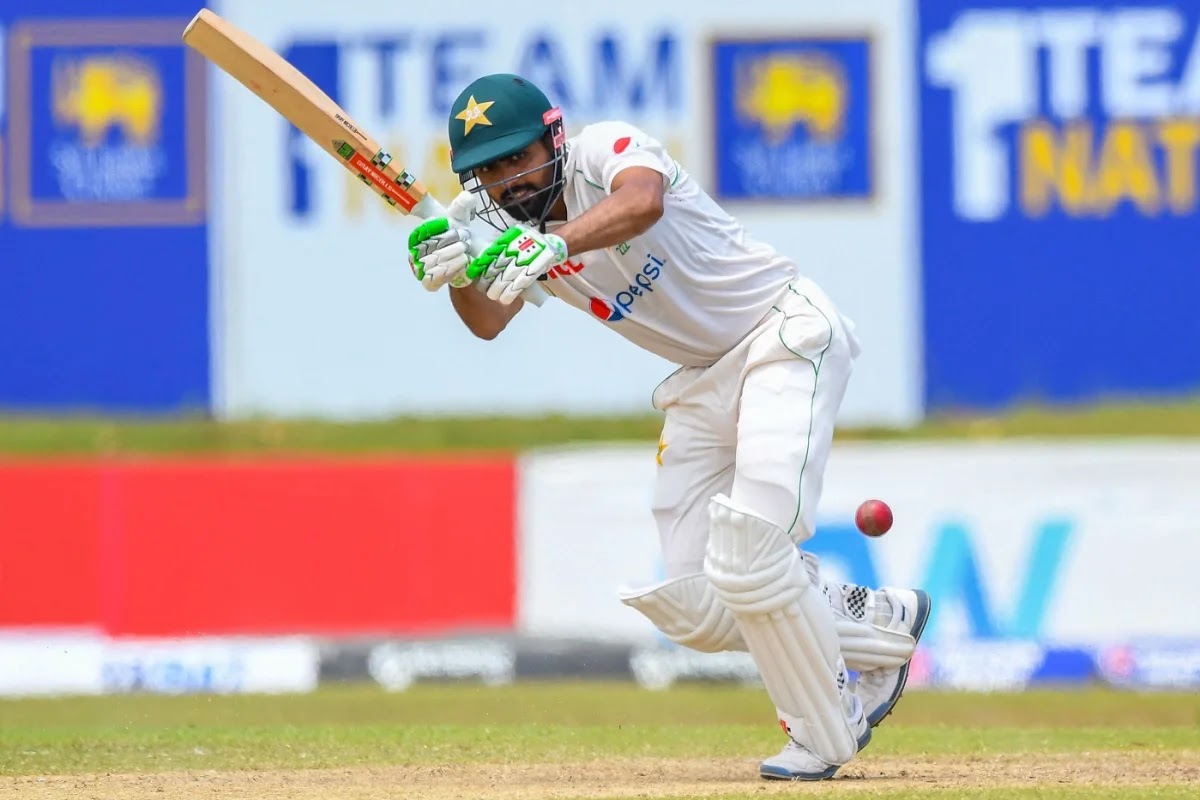
Babar Azam: Knocking on the Door of Greatness?

The pantheon of modern cricket’s elite—Steve Smith, Joe Root, Kane Williamson, and Virat Kohli—has long stood unchallenged. These players have defined an era with their consistency, adaptability, and ability to thrive under pressure. For Babar Azam, often heralded as the poster boy of Pakistan cricket, the journey to join this illustrious group has been a tale of brilliance in limited-overs cricket juxtaposed with a lingering question: can he truly excel in the whites of Test cricket?

Babar’s elegance with the bat is undeniable. His drives through the backward point and cover regions are a masterclass in timing, reminiscent of Kohli’s own artistry. The front-foot precision, the late adjustments, and the middle-of-the-bat connection are signatures of a player destined for greatness. Yet, greatness in Test cricket demands more than aesthetic brilliance; it requires an unyielding temperament and the ability to script long, defiant innings under pressure.

For years, this temperament seemed elusive. The Smiths, Roots, and Williamsons of the world have thrived in adversity, while Babar’s Test career often hinted at unfulfilled potential. However, his appointment as captain appears to have unlocked a new dimension to his game. Leadership, it seems, has acted as a jeweler’s chisel, refining the raw diamond into a gem capable of shining on the grandest stage.

The Test of Temperament

The setting was quintessentially Pakistani: 85 for 7 on a treacherous track offering both turn and bounce. The collapse was as familiar as the epic rearguards that have punctuated Pakistan’s cricketing history. As Babar stood at the non-striker’s end, watching his teammates fall like dominoes, the responsibility of salvaging the innings fell squarely on his shoulders.

With the pitch resembling a snake pit, Babar became the snake charmer. His footwork was precise, his timing impeccable, and his execution of the sweep shot a study in calculated risk. Most crucially, he displayed the awareness to shield a fragile tail.

When the score read 112 for 8, hope seemed a distant memory. At 148 for 9, it appeared the game was over. But this was Pakistan—a team that thrives in chaos and finds heroes when the odds are insurmountable.

The Last Stand

Enter Naseem Shah, a bowler with a Test batting average of 3.2. What followed was an extraordinary partnership that defied logic and epitomized the unpredictable spirit of Pakistan cricket. Naseem, like a man possessed, blocked everything hurled at him, while Babar orchestrated the strike rotation with clinical precision.

The 70-run stand for the last wicket was a testament to Babar’s leadership and ability to inspire resilience. Naseem’s contribution of 5 runs off 52 balls may seem meager, but it was invaluable in the context of the innings. Babar shielded his partner, farmed the strike, and shouldered the burden with the poise of a seasoned campaigner.

A Hundred for the Ages

Babar’s seventh Test century was not merely a personal milestone; it was a statement. On 99, he whipped a full toss from Theekshana wide of mid-on with authority. The following delivery saw him inside-edge a ball drifting towards leg, and he scampered through for a single that carried the weight of an entire team’s hopes.

This was not just a hundred; it was an epic vigil that showcased every facet of Babar’s evolution. The innings was marked by discipline, technical mastery, and an unwavering resolve to fight until the very end.

Knocking on the Door of Greatness

Babar’s knock was a reminder of Pakistan’s storied history of producing one-man armies—players who rise when all seems lost. It was also a glimpse into the mind of a player who is no longer content with being a limited-overs maestro.

Greatness in Test cricket is not conferred by a single innings, but by a body of work that reflects sustained excellence and the ability to perform under duress. Babar’s journey is still a work in progress, but this innings was a significant step towards cementing his place among the modern-day greats.

The knock at the door of greatness grows louder. It is not a matter of if, but when, Babar Azam will enter. For now, he stands on the threshold, a symbol of Pakistan’s cricketing resilience and a beacon of its future.

Thank You 

Faisal Caesar 

Monday, July 11, 2022

Italy's 1982 World Cup Triumph: A Nation Reborn Through Football

The 1982 FIFA World Cup victory marked a transformative moment in Italy's history, both on and off the pitch. Emerging from the turbulent ‘Years of Lead’—a period of political violence and societal division—Italy was a nation grappling with its identity. The scars of the past decade, marked by bombings, assassinations, and threats to democracy, were still fresh. Yet, by 1982, the country was on the cusp of renewal, poised for economic growth and a cultural renaissance that would see its fashion and football industries redefine global standards. The triumph in Spain symbolized more than just sporting excellence; it was a metaphor for national rejuvenation.

The Shadow of Scandal and Redemption

Italy entered the World Cup under a cloud of scepticism and disgrace, largely due to the Totonero scandal of 1980. The revelations of match-fixing and illegal gambling schemes implicated some of the nation’s most prominent clubs and players. AC Milan and Lazio were relegated to Serie B, while players like Paolo Rossi faced lengthy bans. Although Rossi’s suspension was reduced, allowing him to participate in the tournament, the scandal had left Italian football in disarray, its reputation tarnished.

Enzo Bearzot, Italy’s pipe-smoking coach, inherited a team burdened by divided loyalties and public cynicism. His tenure had shown glimpses of promise, with a fourth-place finish at the 1978 World Cup and Euro 1980. However, the team’s inability to secure silverware cast doubts on Bearzot’s leadership. The press was unrelenting, questioning his tactics, selections, and even his vision for the team. Yet, Bearzot’s unwavering belief in his philosophy and players would prove pivotal.

Tactical Evolution: Beyond Catenaccio

Italian football had long been synonymous with catenaccio, a defensive system prioritizing containment over creativity. Bearzot, while respecting this tradition, sought a more balanced approach. He envisioned a team capable of blending defensive resilience with moments of attacking brilliance. His tactical flexibility was evident in the 1982 World Cup, where he adapted strategies to neutralize formidable opponents while exploiting their weaknesses.

Central to Bearzot’s vision was his faith in Paolo Rossi. Despite Rossi’s lack of form and the controversy surrounding his inclusion, Bearzot recognized his potential to deliver in critical moments. This decision would prove inspired, as Rossi’s transformation from a maligned figure to a national hero became the defining narrative of the tournament.

The Road to Redemption: Group Stage Struggles

Italy’s group stage campaign was anything but convincing. Drawn against Poland, Peru, and Cameroon, the Azzurri managed only three uninspiring draws, advancing to the knockout stages on goal difference. The Italian media’s criticism reached a fever pitch, with calls for Bearzot’s resignation and demands for drastic changes. Yet, Bearzot’s steadfastness in his selections and strategy laid the foundation for what was to come.

The Knockout Stages: Tactical Mastery

The second round saw Italy placed in a daunting group alongside reigning champions Argentina and tournament favourites Brazil. Against Argentina, Bearzot’s tactical acumen shone. Claudio Gentile’s relentless marking of Diego Maradona neutralized the Argentine star, allowing Italy to secure a 2-1 victory. This win set the stage for a legendary encounter with Brazil.

The match against Brazil is often regarded as one of the greatest in World Cup history. Brazil, with their attacking flair led by Zico, Socrates, and Falcão, were overwhelming favourites. Bearzot’s strategy combined defensive discipline with swift counter-attacks, a plan executed to perfection by Paolo Rossi. Rossi’s hat-trick stunned the footballing world, propelling Italy to a 3-2 victory and solidifying his place in World Cup lore.

The Final Steps: Triumph in Madrid

Italy’s semi-final against Poland saw Rossi continue his remarkable form, scoring twice to secure a 2-0 victory. In the final against West Germany, Bearzot’s meticulous preparations paid off. Despite a tense first half, Italy’s attacking prowess emerged in the second half. Rossi opened the scoring, followed by Marco Tardelli’s iconic goal and celebration, and Alessandro Altobelli’s clincher. The 3-1 victory marked Italy’s first World Cup triumph since 1938, a moment of catharsis for a nation yearning for glory.

The Legacy: Beyond the Trophy

The 1982 World Cup victory had far-reaching implications for Italian football and society. Bearzot’s triumph was not just tactical but symbolic, representing the triumph of resilience and unity over adversity. The players’ decision to hoist Bearzot onto their shoulders in celebration underscored the respect and admiration he had earned.

Off the pitch, the victory catalyzed a golden era for Serie A. The league became the epicentre of world football, attracting stars like Michel Platini, Zico, and Diego Maradona. The tactical innovations and confidence born from the 1982 triumph influenced a generation of Italian football, culminating in Arrigo Sacchi’s revolutionary Milan side of the late 1980s.

The “Pertini effect,” named after Italy’s exuberant President Sandro Pertini, encapsulated the national mood. His visible joy during the final symbolized a collective pride and optimism that transcended sport. The victory provided a unifying moment for a nation emerging from a decade of turmoil, instilling a renewed sense of identity and purpose.

Conclusion: A Turning Point

The 1982 FIFA World Cup was more than a sporting achievement for Italy; it was a cultural and emotional watershed. Bearzot’s vision, resilience, and tactical ingenuity turned a beleaguered team into world champions, restoring pride to Italian football. The tournament’s impact extended beyond the pitch, influencing the nation’s cultural and economic trajectory. It was a moment that celebrated not just victory but renewal, a testament to the enduring power of sport to inspire and transform.

Thank You

Faisal Caesar

Friday, July 8, 2022

The Chessboard of Berlin: A Tactical and Emotional Epic

The 2006 FIFA World Cup final in Berlin remains one of the most dramatic climaxes in football history—an evening where legends took their final bow, new stars emerged, and a moment of madness overshadowed a tactical masterclass. It was the last stand of icons like Zidane, Figo, Totti, and Beckham, yet also the global stage’s introduction to the likes of Torres, Ribéry, and a young Lionel Messi. 

For Italy, it was a campaign clouded by the Serie A scandal, scepticism, and internal doubts. For France, it was a resurrection, a final march of a golden generation led by their captain Zidane, seeking redemption after years in the wilderness. 

The two sides took different paths to the Olympiastadion, yet their destinies collided in a match that was less a spectacle of free-flowing football and more a chess match—one of strategy, resilience, and ultimately, human emotion. 

Italy: A Team Greater Than the Sum of Its Parts

Marcelo Lippi’s Italy was a team built not just on talent, but on cohesion. “To this day I am not convinced I took the technically best players to Germany,” Lippi later admitted, “but I was firmly convinced I called the ones that could create a team.” 

Their campaign began with caution. The group-stage draw against the United States exposed their vulnerabilities, while the controversial penalty against Australia in the Round of 16 cast them as villains in the eyes of neutrals. Yet, amid the uncertainty, Italy's strength lay in its collective spirit. They did not rely on a single talismanic figure; their 14 goals in the tournament were scored by 12 different players, showcasing a depth that few teams could match. 

Against Ukraine in the quarterfinals, their defensive resilience and clinical finishing saw them ease to a 3-0 victory. But it was the semi-final against Germany that became their masterpiece—an exhibition of counterattacking brilliance that saw Fabio Grosso and Alessandro Del Piero deliver a stunning last-gasp triumph against the host nation. 

Italy’s journey to the final was one of perseverance and pragmatism, with a defensive line led by Cannavaro and Buffon forming an impenetrable wall. And yet, for all their steel, their most defining moment in Berlin would not come from strategy or structure, but from an unpredictable act of passion. 

France: The Last Dance of a Maestro

France arrived in Germany as a shadow of their former selves. Their golden era of 1998-2000 had faded, their group-stage performances uninspiring, and their talisman Zidane contemplating retirement. But as the tournament progressed, something stirred in Les Bleus—a resurgence led by their veteran captain. 

Spain fell first in the knockout stage, undone by the craft of Zidane and the resilience of Vieira. Then came the masterpiece against Brazil, where Zidane orchestrated the match with a grace and control that left even the reigning champions powerless. Against Portugal in the semi-final, his penalty sent France to the final, and suddenly, what had seemed an improbable farewell became a potential coronation. 

For Zidane, this was not just a World Cup final—it was the last chapter of his career, the final strokes on a canvas he had painted with elegance for over a decade. But fate had one last twist. 

The Final: A Game of Strategy and Emotion

The final in Berlin began like a script written for Zidane. In just the seventh minute, he stepped up for a penalty and, with audacity befitting a legend, executed a Panenka—his chipped shot striking the crossbar before crossing the line. The world held its breath. This was not just a goal; it was a statement. 

But if France’s artistry was led by Zidane, Italy’s response came through a different figure—Marco Materazzi. A player who started the tournament as a reserve, he rose to the occasion, heading in the equalizer just 12 minutes later. 

The remainder of the game was a battle of wits. Lippi’s Italy, disciplined and structured, absorbed France’s attacks. Domenech’s France, fluid but fragile, searched for openings. The chess match unfolded: Vieira left the field injured, Toni had a goal disallowed for offside, and Buffon denied Zidane a moment of glory with a stunning save in extra time. 

Then, in the 110th minute, the final’s defining moment arrived. As Zidane and Materazzi exchanged words, the Italian tugged at Zidane’s jersey. What followed was not part of any tactical script—it was pure, unfiltered emotion. Zidane turned and drove his head into Materazzi’s chest. The stadium fell silent. The referee, after consulting his assistant, raised the red card. The maestro had played his final note, and it was one of self-destruction. 

Without their captain in the penalty shootout, France’s spirit faltered. David Trezeguet struck the crossbar, and Italy converted all five of their penalties with precision. Fabio Grosso, the unexpected hero of the semi-final, struck the winning penalty. As the ball hit the net, Italian commentator Marco Civoli delivered the immortal words: “Il cielo è azzurro sopra Berlino.” The sky was blue over Berlin. 

Legacy: A Triumph, A Tragedy, and an Eternal Memory

Italy’s fourth World Cup triumph was one of resilience and unity, a victory crafted not by individual brilliance but by a collective will. Cannavaro lifted the trophy, Lippi’s tactics were vindicated, and the Azzurri returned home as champions. 

But the night also belonged to Zidane—not for his Panenka, not for his elegance, but for his fall. The image of him walking past the trophy, head lowered, into the tunnel is one of football’s most haunting images. Greatness and human frailty, are bound together in a single moment. 

Football, like chess, is a game of precision, planning, and execution. But unlike chess, it is also a game of emotion, of unpredictability. The 2006 final was all of that and more—a night where tactics and passion collided, where history was made, and where, in the end, the game itself remained the greatest winner of all.

Thank You

Faisal Caesar 

Sourav Ganguly: The Prince, the Provocateur, and the Paradigm-Shift

In the epic theatre of Indian cricket, few characters have inspired as much polarisation, reverence, and scrutiny as Sourav Ganguly. He was not merely a cricketer; he was a disruptor — a man who challenged orthodoxy with a rakish smile and wielded leadership like a rapier. You could not be indifferent to him. He provoked passion, adulation, and fury in equal measure. He was either your prince or your pariah. There was no middle ground.

The Making of a Prince

The Ganguly saga began, fittingly, in the grandeur of a Ranji Trophy final. At 17, thrust into Bengal's XI by Sambaran Banerjee — replacing his elder brother no less — Ganguly arrived not merely as a player but as a symbol of bold intent. That he bowled only six overs and scored 22 runs mattered little. His strokes between point and cover shimmered with promise. A new star had whispered its arrival.

In the years that followed, Ganguly's legend took root not through consistent public appearances but through whispers, stories, and anecdotes from Park Street to St. Xavier’s — of regal arrogance, monstrous sixes, and unbowed defiance. The nickname "Maharaj" was not without cause.

From Promising Talent to Exile

His initial foray into international cricket was ignominious — a forgettable Gabba ODI and tales of insubordination. He returned home, branded spoilt and overhyped. It would be four years before redemption came — and when it did, it came at Lord's, the very cathedral of cricket, in the form of an immaculate 131 on debut. The off-side was his kingdom, and he ruled it like a monarch. Then came a second hundred at Trent Bridge. Indian cricket, long steeped in hierarchy and restraint, had found a left-handed counterpoint to its classical right-handed maestros.

The Great Partnership and the Rise of a Modern India

Ganguly’s alliance with Tendulkar in ODIs became the stuff of legend. Together, they rewrote the language of opening partnerships — not through brute force, but through elegance and calculated aggression. Their 8,000+ runs as a pair remain unmatched. While Tendulkar was the stoic monk, Ganguly was the passionate warrior — unafraid to dance down the pitch or pick fights with the world's fiercest bowlers.

This new Indian side — loud, fearless, confrontational — was moulded in Ganguly’s image. He made Steve Waugh wait at the toss, bared his chest at Lord’s, and batted with a flourish that could be both reckless and regal. His leadership wasn’t just strategic; it was symbolic. India was no longer submissive. Under him, they went toe-to-toe with Australia, dominated Pakistan, and believed they could win overseas.

The Stylistic Soul of Sourav Ganguly: A Study in Contrasts and Conviction

Sourav Ganguly’s love affair with cricket was born not from brute force or volume of statistics, but from the seduction of style. It began with a televised vision — the elegant, nonchalant strokeplay of David Gower, whose artistry first drew the young boy from Behala into the game. Ganguly confessed to watching Gower’s videos repeatedly, mesmerised by the left-hander’s grace — the soft tap of willow on leather, the flourish of a cover drive. The image lingered, and it shaped the aesthetic foundations of his own game.

But Gower was not alone in that pantheon of early influences. From the gritty defiance of David Boon, the enduring composure of Mohinder Amarnath, the lion-hearted swagger of Kapil Dev, to the pragmatic resilience of Allan Border, Ganguly absorbed a composite cricketing philosophy — one that prized flair but was grounded in fight. It would serve him well in the turbulent years to come.

The Monarch of the Off-Side

To call Ganguly merely a left-handed batsman is to do a disservice to the poetry he could script through the off-side. His batting, particularly in his prime, was an ode to precision and timing. Debashish Dutta, in his biography Sourav Ganguly: The Maharaja of Cricket, captured it succinctly: Ganguly’s dominion was the off-side — the square cut, the square drive, and the imperious cover drive were weapons he wielded with imperial command. Few field settings could stifle him; fewer bowlers could contain him once he found his rhythm.

Rahul Dravid, never one to bestow praise lightly, famously remarked that Ganguly was “next to God on the off-side.” It wasn’t hyperbole — Ganguly’s ability to carve boundaries through packed covers or pierce backward point with minimal backlift made him one of the most dangerous stroke-makers of his era. His balance allowed him to play those shots both off the front and back foot, and when in flow, he looked as if he were sketching his strokes onto the canvas of a summer afternoon.

Yet for all his elegance on one flank, demons were lurking on the other.

The Flaws That Humanised the Hero

The hook and pull — those necessary tools against the hostile fast bowling of Australia and South Africa — remained Ganguly’s Achilles heel, particularly in the early stages of his career. His attempts at horizontal-batted counterpunches often resulted in mistimed misadventures, and his vulnerability against the short-pitched ball became a well-documented tactic for opponents. But to his credit, Ganguly never allowed pride to cloud learning. After his much-publicised exile and subsequent comeback in 2007, he consciously worked on these deficiencies. While he never quite mastered the short ball, he certainly became more measured in how he addressed it.

Another flaw, less technical and more instinctive, was his running between the wickets. Amrita Daityari, in Sourav Ganguly: The Fire Within, described him as “notorious” for erratic calling — a trait that often endangered, and occasionally sacrificed, his partners. The most infamous of these mishaps came when Ganguly, on 99 in an ODI against Australia, failed to ground his bat despite having crossed the crease, resulting in a run-out that was equal parts tragic and telling. Ganguly would later admit, with characteristic candour, “I love to watch myself hit a cover drive, to watch myself hit a hundred.” That admission encapsulates the paradox of the man — an aesthete chasing milestones, sometimes at the cost of the mundane but essential details.

The Science of Aggression and the Dance Against Spin

In limited-overs cricket, Ganguly transformed his aestheticism into aggression. As an opener, he sought to dominate the bowlers during fielding restrictions, often using his feet to loft fast bowlers over extra cover and mid-off — a rare and audacious choice for his era. Against spin, particularly **left-arm orthodox**, he was a force of nature. His sharp eye and quick feet allowed him to dance down the pitch and deposit the ball — with a high, disdainful flourish — deep into the stands over mid-on or midwicket. His battles with the likes of Ashley Giles and Daniel Vettori became compelling subplots in India’s batting narrative.

Still, for all his elegance, he was never a complete athlete in the modern sense. While he took 100 catches in ODIs — a feat many athletic fielders have not achieved — his ground fielding was often sluggish. **Vinod Tiwari**, in his biography of Ganguly, admired his catching tally but lamented his lack of agility and his tendency to succumb to minor injuries during fielding stints. This duality summed up Ganguly well: spectacular in moments, flawed in motion.

The Wright Partnership: A Symbiosis that Reshaped Indian Cricket

Perhaps one of the most critical partnerships in Ganguly’s journey came not with bat in hand, but through strategy and structure — his alliance with **John Wright**, India’s first foreign coach. Their relationship, often described as “symbiotic,” changed the culture of Indian cricket. Together they recognised that talent alone was insufficient. They championed fitness, discipline, and scientific preparation, building a system that could endure beyond brilliance.

Dubeyin his assessment of the era, credited Ganguly and Wright — alongside veterans like Tendulkar and Dravid — with ushering in a revolution. For the first time, India acknowledged the limitations of its domestic coaching model and embraced global best practices. Wright's method and Ganguly’s aggression coalesced into a vision — one where young players were nurtured, expectations were raised, and mediocrity was no longer acceptable.

Sourav Ganguly was never perfect — and that was precisely what made him magnetic. His career was a mosaic of contradictions: regal and rustic, poetic and political, flamboyant and flawed. He brought artistry to aggression and rebellion to a game long ruled by silence. Through every cover drive, every misjudged single, every captains’ toss mind-game, he shaped modern Indian cricket not just through numbers, but through narrative.

The Swinging Arm of a Part-Time Disruptor

As a bowler, Ganguly was an opportunist. His right-arm medium pace wasn’t intimidating, but it was useful — particularly when breaking partnerships or drying up runs. He could swing the ball both ways, often outwitting batsmen with his subtle variations and surprising movement. While his bowling average never entered the realm of the elite, his knack for timely wickets often changed the course of games.

Captaincy and the Transformation of Indian Cricket

It is here that Ganguly's true legacy lies. He took over a side reeling from match-fixing scandals and rebuilt it brick by gritty brick. He backed young, unproven talents — Harbhajan, Sehwag, Yuvraj, Dhoni, Zaheer — and gave them long ropes. He wasn’t afraid to defy the seniority-based culture. His biggest achievement was cultural: he made India believe that victory abroad was not a dream but a demand.

Yet, his captaincy was often defined more by symbolism than statistics. Only one Test series win outside Asia — in Bangladesh. A 2003 World Cup final, but no title. His sides often rose to the occasion but faltered at the final hurdle. Still, in the broader canvas of Indian cricketing history, Ganguly was the Renaissance king — not the one who finished the masterpiece, but the one who brought the brush and shattered the old frame.

The Fall, and the Chappell War

Every icon meets a nemesis. For Ganguly, it was Greg Chappell — an austere Australian with little room for sentiment. The battle was not just personal; it was philosophical. Ganguly, by then insecure in form and influence, found himself under siege. Chappell’s leaked email to the BCCI, scathing in tone and damning in content, portrayed a captain who had lost the dressing room.

What followed was theatre — injuries real and imagined, threats of withdrawal, dressing room intrigues, and nationwide protests. Kolkata erupted. Chappell became a villain, Dravid was seen as the silent enabler, and Ganguly was cast in the tragic role of the ousted king.

The Resurrection: One Last Roar

But Ganguly was never one to fade quietly. He clawed his way back, remoulded his technique, and reasserted himself in 2006–07. He scored over 1,100 Test runs in 2007 — his finest year — including a double hundred against Pakistan and impactful tours of England and Australia. His 87 at Kanpur against a red-hot South African pace battery was a vintage exhibition of grit and class.

Then, as all great tales demand, he bowed out on his own terms in 2008 — with a century against Australia and a farewell befitting a warrior-turned-elder statesman.

Legacy of a Contradictory Giant

Statistically, Ganguly sits comfortably among Indian cricket’s elite: 11,000+ ODI runs, over 7,000 in Tests, and countless memorable moments. But his greatness transcends numbers. He was India’s attitude shift. He made the team walk with shoulders squared, eyes levelled. He challenged traditions, poked the bear, and made pride a weapon.

But he was also flawed — politically reactive, sometimes insecure, and prone to vanity. His battles with coaches and teammates, his public jabs at Dravid, his alleged favouritism — these are scars on an otherwise glittering career.

Yet, even in those contradictions lies his greatness. He was not a cardboard hero. He was human — passionate, emotional, and fiercely devoted to Indian cricket’s growth.

Coda: The Maharaj Remains

Today, as a commentator and administrator, Ganguly continues to provoke, entertain, and lead. His voice — blunt, bold, and free from diplomatic varnish — remains relevant in an age of media-trained dullness.

To quote Boycott, he was indeed the "Prince of Calcutta" — not merely for where he came from, but for how he ruled the narrative. For better or worse, he brought fire to Indian cricket. And for that alone, his place in history is secure — not as the perfect cricketer, but as the irreplaceable one.

Thank You

Faisal Caesar