Sunday, July 17, 2022

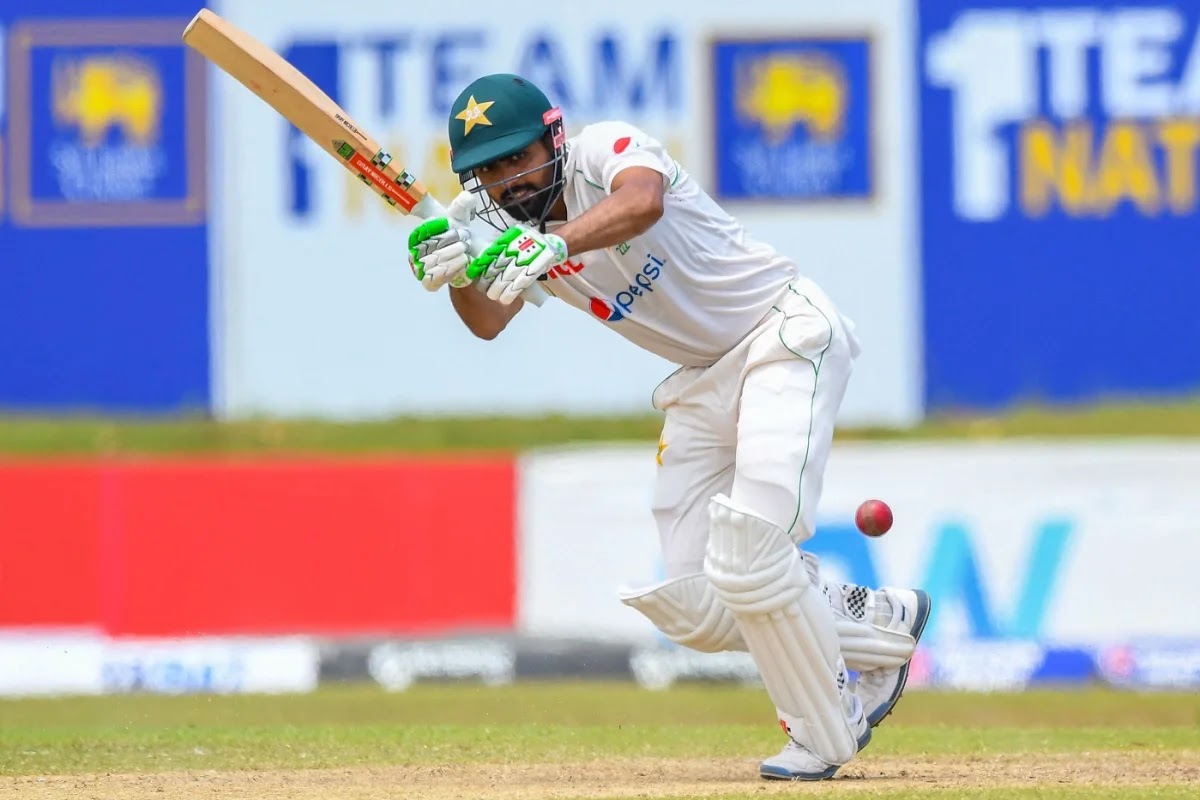
Babar Azam: Knocking on the Door of Greatness?

The pantheon of modern cricket’s elite—Steve Smith, Joe Root, Kane Williamson, and Virat Kohli—has long stood unchallenged. These players have defined an era with their consistency, adaptability, and ability to thrive under pressure. For Babar Azam, often heralded as the poster boy of Pakistan cricket, the journey to join this illustrious group has been a tale of brilliance in limited-overs cricket juxtaposed with a lingering question: can he truly excel in the whites of Test cricket?

Babar’s elegance with the bat is undeniable. His drives through the backward point and cover regions are a masterclass in timing, reminiscent of Kohli’s own artistry. The front-foot precision, the late adjustments, and the middle-of-the-bat connection are signatures of a player destined for greatness. Yet, greatness in Test cricket demands more than aesthetic brilliance; it requires an unyielding temperament and the ability to script long, defiant innings under pressure.

For years, this temperament seemed elusive. The Smiths, Roots, and Williamsons of the world have thrived in adversity, while Babar’s Test career often hinted at unfulfilled potential. However, his appointment as captain appears to have unlocked a new dimension to his game. Leadership, it seems, has acted as a jeweler’s chisel, refining the raw diamond into a gem capable of shining on the grandest stage.

The Test of Temperament

The setting was quintessentially Pakistani: 85 for 7 on a treacherous track offering both turn and bounce. The collapse was as familiar as the epic rearguards that have punctuated Pakistan’s cricketing history. As Babar stood at the non-striker’s end, watching his teammates fall like dominoes, the responsibility of salvaging the innings fell squarely on his shoulders.

With the pitch resembling a snake pit, Babar became the snake charmer. His footwork was precise, his timing impeccable, and his execution of the sweep shot a study in calculated risk. Most crucially, he displayed the awareness to shield a fragile tail.

When the score read 112 for 8, hope seemed a distant memory. At 148 for 9, it appeared the game was over. But this was Pakistan—a team that thrives in chaos and finds heroes when the odds are insurmountable.

The Last Stand

Enter Naseem Shah, a bowler with a Test batting average of 3.2. What followed was an extraordinary partnership that defied logic and epitomized the unpredictable spirit of Pakistan cricket. Naseem, like a man possessed, blocked everything hurled at him, while Babar orchestrated the strike rotation with clinical precision.

The 70-run stand for the last wicket was a testament to Babar’s leadership and ability to inspire resilience. Naseem’s contribution of 5 runs off 52 balls may seem meager, but it was invaluable in the context of the innings. Babar shielded his partner, farmed the strike, and shouldered the burden with the poise of a seasoned campaigner.

A Hundred for the Ages

Babar’s seventh Test century was not merely a personal milestone; it was a statement. On 99, he whipped a full toss from Theekshana wide of mid-on with authority. The following delivery saw him inside-edge a ball drifting towards leg, and he scampered through for a single that carried the weight of an entire team’s hopes.

This was not just a hundred; it was an epic vigil that showcased every facet of Babar’s evolution. The innings was marked by discipline, technical mastery, and an unwavering resolve to fight until the very end.

Knocking on the Door of Greatness

Babar’s knock was a reminder of Pakistan’s storied history of producing one-man armies—players who rise when all seems lost. It was also a glimpse into the mind of a player who is no longer content with being a limited-overs maestro.

Greatness in Test cricket is not conferred by a single innings, but by a body of work that reflects sustained excellence and the ability to perform under duress. Babar’s journey is still a work in progress, but this innings was a significant step towards cementing his place among the modern-day greats.

The knock at the door of greatness grows louder. It is not a matter of if, but when, Babar Azam will enter. For now, he stands on the threshold, a symbol of Pakistan’s cricketing resilience and a beacon of its future.

Thank You 

Faisal Caesar 

Tuesday, July 12, 2022

The Phoenix in the Penalty Box: Paolo Rossi and the Art of Redemption

The Exile and the Ghost

Two years before Spain, Italian football fractured under the weight of the Totonero match-fixing scandal. Rossi—once the golden child of the 1978 World Cup in Argentina—was ensnared in its web. Accused of agreeing to a pre-arranged draw against Avellino while on loan at Perugia, Rossi maintained his innocence, claiming naive exposure rather than complicity.

The tribunal was unyielding, delivering a ban that severed him from the game for two full years.

During his banishment, the Italian press transformed their former favourite into a national pariah. Deprived of competition, Rossi lost weight, rhythm, and identity. When Italy manager Enzo Bearzot called him into the national squad just weeks after his suspension ended—after Rossi had played merely three matches for Juventus—the Italian public erupted in anger. Journalists dismissed him as an ectoplasm, a hollow shell of his former self requiring late-night pastries and milk from the team chef to maintain basic physical mass.

The Architect and the Canvas

In an era governed by public outrage, Enzo Bearzot operated with stubborn, philosophical conviction. Where the nation saw an unfit outcast, Bearzot recognized an irreplaceable tactical intellect.

Through the opening group stage, Bearzot’s insistence seemed disastrous. Italy stumbled into the second round without winning a single match, advancing ahead of Cameroon solely on goals scored. Rossi fired blanks across three matches, extending a national goal drought that stretched nearly fifteen hours of play. Press calls to replace him with Roberto Pruzzo or Alessandro Altobelli grew deafening.

Yet Bearzot refused to break. The night before their crucial second-round match against Brazil, Bearzot knocked on Rossi’s hotel door. Rather than dropping the striker, the manager spent 40 minutes discussing Picasso, Dalí, and Cubist art. It was an act of tactical de-escalation—reframing football not as a national trial, but as an expressive, artistic endeavor to relieve the young striker's volcanic anxiety.

The Physics of the Tenth of a Second

Rossi was rarely the fastest man on the pitch, nor the most physically imposing. His brilliance lay in an uncanny economy of movement—what teammate Fulvio Collovati termed "pure phosphorus."

"That goal had the distinctive feel of being my kind of goal... It was mine, because I stole that 10th of a second from the defender. I went before he did and I knew he would not be able to catch me."

Paolo Rossi

His genius was predictive, relying on spatial awareness and micro-anticipation. While defenders waited for deliveries to materialize, Rossi started his runs a frame or two early, building velocity and stealing fractions of a second inside the six-yard box before his markers even realized he was gone.

The Sarrià Catharsis

The reckoning arrived at the Estadio Sarrià in Barcelona against Brazil—a side universally adored for their fluid, majestic joga bonito.

Italy required an outright victory against the tournament favorites. Within five minutes, Rossi struck, converting a header to break his long exile. He added a second following a defensive error, and in the 74th minute, completed a historic hat-trick to seal a 3–2 victory, shattering Brazil's 24-game unbeaten run.

The momentum was unstoppable from that moment forward:

Semifinal (Poland): Rossi scored both goals in a clinical 2–0 victory.

Final (Germany): Rossi scored the crucial opening goal in a 3–1 triumph, securing Italy’s third World Cup title.

Legacy: The Absolute Sweep

Going into Italy’s fifth game in Spain, players like Zbigniew Boniek, Karl-Heinz Rummenigge, and Zico had each scored four goals to Rossi’s zero. By the end of the final in Madrid, Rossi stood alone as the tournament's top scorer with six goals.

At the close of 1982, Rossi completed a clean sweep of football's highest individual and collective honours. He walked away with the FIFA World Cup Trophy, the Adidas Golden Boot as top scorer, the Adidas Golden Ball as the tournament's best player, and the Ballon d’Or** as European Footballer of the Year. To this day, he remains the only player in history to win all four of these accolades in the exact same year.

Paolo Rossi’s 1982 campaign endures not merely as a statistical anomaly, but as a narrative of human endurance: the story of a man stripped of his dignity, preserved by a mentor's belief, who reclaimed his life in the span of six crucial matches.

Thank You

Faisal Caesar 

France 1998: The Night a Team Became a Nation

On 12 July 1998, at the Stade de France, football ceased to be merely a sport for France. It became a mirror, a myth, and for one unforgettable night, a national language. When Aimé Jacquet’s side defeated Brazil 3-0 in the World Cup final, France did not simply win its first World Cup. It discovered a new image of itself.

The victory was historic on the pitch, but its deeper meaning lay beyond the white lines. A country divided by politics, immigration debates, class anxieties and questions of identity suddenly found itself united behind a team that represented many versions of Frenchness at once. Black, white, Arab, Basque, Caribbean, Armenian, Portuguese, Spanish, Ghanaian, Senegalese, Algerian and New Caledonian roots came together under one shirt. The team was soon celebrated as la France black-blanc-beur, a phrase that captured both the hope and the symbolism of that summer.

Yet this triumph was not born in comfort. It emerged from humiliation, suspicion and doubt.

The Trauma Before the Glory

To understand France 1998, one must begin not with Zidane’s headers against Brazil, but with the wounds of 1993.

France had needed only one point from their final two home qualifiers to reach the 1994 World Cup in the United States. Instead, they suffered two devastating defeats, first against Israel and then against Bulgaria. Both losses were sealed by late goals. The collapse was not merely sporting failure. It felt like national embarrassment.

From that ruin came Aimé Jacquet.

Jacquet was not glamorous. He was not a philosopher of football in the Cruyffian sense, nor a charismatic revolutionary. He was a builder, a technician, a man of order and discipline. Appointed after serving under Gérard Houllier, he inherited a team in crisis and a public that had lost faith.

Even a semifinal appearance at Euro 1996 did little to change the mood. France had been solid, but not seductive. They had reached the last four without scoring in four hours of knockout football. The country wanted beauty. Jacquet offered structure. The press, especially L’Équipe, turned against him with increasing severity.

The criticism became personal. His selections were questioned, his tactics mocked, his personality dismissed as uninspiring. Yet within the camp, something different was happening. The players saw a coach absorbing the pressure so they would not have to. Jacquet placed his squad inside a protective bubble, first at Clairefontaine and then through carefully managed preparation camps. He gave them clarity, calm and purpose.

One key moment came in December 1997, when Jacquet gathered the players and their families in Tignes, a ski resort in the Alps. Away from the noise of Paris and the hostility of the press, he spoke to his leaders, including Laurent Blanc and Didier Deschamps. He explained his plan, his method, and his belief.

He told them they would do something huge.

At the time, few outside the squad believed him.

A Team Built on Steel

France did not enter the World Cup as a team of dazzling attacking reputation. They were not Brazil. They were not the Netherlands. They were not even Croatia in terms of flair. Their genius lay elsewhere.

Jacquet understood tournament football. He knew that World Cups are rarely won by romance alone. They are won by balance, resilience and defensive authority. France’s foundation was therefore built from the back.

Fabien Barthez brought eccentric confidence in goal. Marcel Desailly and Laurent Blanc formed a commanding central partnership. Lilian Thuram and Bixente Lizarazu gave strength and intelligence at full-back. Didier Deschamps, the captain, acted as the water carrier, the organiser, the quiet general who held the side together. Emmanuel Petit and Christian Karembeu added discipline, running power and tactical security.

Ahead of them, Zinedine Zidane and Youri Djorkaeff provided imagination. Stéphane Guivarc’h, often criticised for his lack of goals, served a more thankless function. He held the ball, occupied defenders and ran channels, even if his finishing became a subject of ridicule.

This was not a perfect attacking machine. It was something more pragmatic and perhaps more suitable for a World Cup. France were difficult to break, difficult to intimidate and increasingly difficult to stop.

The Country Slowly Awakens

France began with a necessary 3-0 victory over South Africa in Marseille. It was not merely a win. It was a release of pressure. The team then moved through the group stage with authority, scoring nine goals and winning all three matches.

Yet the nation did not fall in love instantly.

At first, the stands were too polite, too corporate, too distant. Didier Deschamps reportedly wanted more noise, more shirts, more emotion. France was hosting the World Cup, but the public had not fully surrendered itself to the team.

That changed as the tournament deepened.

The journey to Lens for the last-16 match against Paraguay became a symbolic turning point. As the team bus travelled from Clairefontaine, people lined the roads, waved flags, shouted encouragement and turned the players’ private mission into a public movement. For the first time, the squad felt the country behind them.

Against Paraguay, France needed patience. Laurent Blanc scored the golden goal in extra time. It was the first golden goal in World Cup history. Against Italy in the quarterfinal, France survived the agony of penalties. Against Croatia in the semifinal, they faced their most dramatic test.

Thuram’s Miracle

The semifinal against Croatia produced the most poetic moment of France’s campaign.

Davor Suker gave Croatia the lead after Lilian Thuram had played him onside. For the first and only time in the tournament, France were behind. Thuram, usually the model of defensive concentration, had made the mistake.

Then came the miracle.

Within a minute, Thuram equalised. Later, he curled in a second with his left foot from outside the box. This was a defender who had never scored for France before. He would never score for France again. Yet in a World Cup semifinal, he became the unlikely hero.

Thuram later described it as his “Miles Davis moment,” a moment when instinct, body and mind merged into something beyond calculation. It was football as jazz, sudden and improvised, born from error and transformed into beauty.

France had found another answer. Zidane had been suspended earlier in the tournament. Blanc would be suspended for the final. Desailly would later be sent off in that final. But every time a problem appeared, another player stepped forward.

That was the true strength of Jacquet’s France. It was not one man’s team. It was a collective organism.

Ronaldo, Brazil and the Strange Silence Before the Final

Brazil entered the final as defending champions and favourites. They had Ronaldo, the most explosive forward in the world, a player who seemed to represent the future of attacking football.

Then, on the afternoon of the final, football history took one of its strangest turns.

Ronaldo suffered convulsions while resting. His teammates were shaken. César Sampaio later recalled seeing him struggling to breathe, drooling, his muscles contracted. Brazil’s dressing room descended into confusion. The first team sheet left Ronaldo out and included Edmundo. Later, a revised sheet restored Ronaldo to the starting XI.

He played the full match, but he was not himself. Brazil were not themselves either. Their usual rhythm, music and swagger were replaced by anxiety. The team bus to the stadium was silent.

France, by contrast, were ready. Whether Ronaldo played or not, Jacquet’s side had reached a psychological state where fear had disappeared. They were not merely hoping to win. They believed the night belonged to them.

Zidane’s Redemption

Until the final, Zidane’s tournament had been complicated.

He was already France’s great talent, the heir to Michel Platini, the player expected to give imagination to a disciplined team. But against Saudi Arabia in the group stage, he was sent off for stamping on Fuad Amin. The red card was foolish, and Zidane knew it. He missed two matches and watched as France continued without him.

His return was steady rather than spectacular. Against Italy, he was subdued by Gianluca Pessotto. Against Croatia, he improved. But the final became his stage.

Jacquet had identified a weakness in Brazil’s set-piece defending. The instruction was clear. Zidane was to attack the near post because Brazil’s defenders were vulnerable from corners.

Twice in the first half, he did exactly that.

Two corners. Two headers. Two goals.

For a player not known for his heading, it was almost surreal. But World Cup finals are often decided by unlikely details. Zidane did not dominate the tournament in the way he later would dominate Euro 2000 or moments of the 2006 World Cup. But on the night that mattered most, he became the symbol.

His face was later projected onto the Arc de Triomphe. Crowds chanted “Zidane President.” The son of Algerian immigrants had become the face of France’s greatest sporting night.

The Final as Coronation

France’s 3-0 victory over Brazil was not a match of wild attacking beauty. It was a controlled dismantling. Zidane’s two goals gave France command. Brazil searched for a response, but it never truly came. Even when Desailly was sent off in the second half, the game did not turn.

France remained compact. Brazil remained strangely flat.

In stoppage time, Patrick Vieira released Emmanuel Petit, who scored the third. It was France’s 1,000th goal in national team history and the final note of a perfect night. Petit’s left-footed finish sealed not only the match but the myth.

France had beaten Brazil 3-0. The host nation had conquered the world.

More Than Football

The celebrations were extraordinary. More than a million people filled the Champs-Élysées. Some estimates suggested even more. Across the country, streets became rivers of flags, song and disbelief.

The faces in the crowd reflected the faces in the team. This was the great emotional power of 1998. France saw itself in its footballers. Marcel Desailly was born in Ghana. Patrick Vieira in Senegal. Zidane’s family came from Algeria. Henry’s roots were in Guadeloupe. Karembeu came from New Caledonia. Pires had Portuguese and Spanish heritage. Djorkaeff carried Armenian roots. Lizarazu and Deschamps came from the Basque region.

In a political climate where Jean-Marie Le Pen and the far right had criticised the national team for not being “French” enough, the victory carried immense symbolic force. The answer came not through speeches but through football. These players were French. They wore the same shirt, fought for the same flag and won together.

For a brief period, the World Cup seemed to offer France a vision of unity that politics could not provide. It did not solve racism. It did not erase inequality. It did not permanently heal the fractures of French society. But it created a moment of shared belonging powerful enough to become part of national memory.

The Limits of the Myth

With time, the romantic story of “black-blanc-beur” has also been questioned. The unity of 1998 did not last forever. France’s social tensions returned. The far right did not disappear. The children of immigrant communities continued to face discrimination and exclusion.

Yet the importance of that summer remains.

Its power lies not in the claim that football solved France’s problems, but in the fact that it briefly revealed another possibility. It showed a nation that identity could be plural and still cohesive. It showed that difference could become strength when organised around common purpose.

Jacquet’s team was therefore both a football side and a social metaphor. Its diversity mattered, but so did its discipline. Its symbolism mattered, but so did its tactical structure. The glory of 1998 came from the fusion of both.

Aimé Jacquet’s Quiet Vindication

Perhaps no figure was more vindicated than Aimé Jacquet.

Mocked before the tournament, he ended it as a world champion. He had built a side that was mentally strong, defensively magnificent and emotionally united. He had understood that France did not need a spectacle every night. It needed a team capable of surviving every kind of test.

After the final, Jacquet did not remain in coaching. He stepped away, returning to a technical role. In doing so, he preserved the purity of his achievement. His last match as a coach was a World Cup final victory over Brazil.

Few exits in football history have been more complete.

Legacy: The Night France Believed

France 1998 remains one of the defining World Cup stories because it operates on several levels at once.

Tactically, it was the triumph of defensive organisation and collective balance.

Emotionally, it was the redemption of a team doubted by its own country.

Politically, it was a rebuke to narrow ideas of national identity.

Culturally, it became a symbol of modern France at its most hopeful.

The tournament belonged to Desailly’s strength, Thuram’s miracle, Deschamps’ leadership, Blanc’s golden goal, Petit’s final run and Zidane’s two immortal headers. It belonged to Jacquet, the quiet architect. It belonged to a country that needed joy and found it in a team made from many histories.

When French people remember 1998, they do not remember only a scoreline. They remember streets filled with strangers embracing. They remember flags at windows. They remember Zidane’s face on the Arc de Triomphe. They remember the feeling that, for one night at least, France had become whole.

That is why France 1998 remains more than a football triumph.

It was the night a team became a nation.

Thank You 

Faisal Caesar 
Monday, July 11, 2022

Italy's 1982 World Cup Triumph: A Nation Reborn Through Football

The 1982 FIFA World Cup victory marked a transformative moment in Italy's history, both on and off the pitch. Emerging from the turbulent ‘Years of Lead’—a period of political violence and societal division—Italy was a nation grappling with its identity. The scars of the past decade, marked by bombings, assassinations, and threats to democracy, were still fresh. Yet, by 1982, the country was on the cusp of renewal, poised for economic growth and a cultural renaissance that would see its fashion and football industries redefine global standards. The triumph in Spain symbolized more than just sporting excellence; it was a metaphor for national rejuvenation.

The Shadow of Scandal and Redemption

Italy entered the World Cup under a cloud of scepticism and disgrace, largely due to the Totonero scandal of 1980. The revelations of match-fixing and illegal gambling schemes implicated some of the nation’s most prominent clubs and players. AC Milan and Lazio were relegated to Serie B, while players like Paolo Rossi faced lengthy bans. Although Rossi’s suspension was reduced, allowing him to participate in the tournament, the scandal had left Italian football in disarray, its reputation tarnished.

Enzo Bearzot, Italy’s pipe-smoking coach, inherited a team burdened by divided loyalties and public cynicism. His tenure had shown glimpses of promise, with a fourth-place finish at the 1978 World Cup and Euro 1980. However, the team’s inability to secure silverware cast doubts on Bearzot’s leadership. The press was unrelenting, questioning his tactics, selections, and even his vision for the team. Yet, Bearzot’s unwavering belief in his philosophy and players would prove pivotal.

Tactical Evolution: Beyond Catenaccio

Italian football had long been synonymous with catenaccio, a defensive system prioritizing containment over creativity. Bearzot, while respecting this tradition, sought a more balanced approach. He envisioned a team capable of blending defensive resilience with moments of attacking brilliance. His tactical flexibility was evident in the 1982 World Cup, where he adapted strategies to neutralize formidable opponents while exploiting their weaknesses.

Central to Bearzot’s vision was his faith in Paolo Rossi. Despite Rossi’s lack of form and the controversy surrounding his inclusion, Bearzot recognized his potential to deliver in critical moments. This decision would prove inspired, as Rossi’s transformation from a maligned figure to a national hero became the defining narrative of the tournament.

The Road to Redemption: Group Stage Struggles

Italy’s group stage campaign was anything but convincing. Drawn against Poland, Peru, and Cameroon, the Azzurri managed only three uninspiring draws, advancing to the knockout stages on goal difference. The Italian media’s criticism reached a fever pitch, with calls for Bearzot’s resignation and demands for drastic changes. Yet, Bearzot’s steadfastness in his selections and strategy laid the foundation for what was to come.

The Knockout Stages: Tactical Mastery

The second round saw Italy placed in a daunting group alongside reigning champions Argentina and tournament favourites Brazil. Against Argentina, Bearzot’s tactical acumen shone. Claudio Gentile’s relentless marking of Diego Maradona neutralized the Argentine star, allowing Italy to secure a 2-1 victory. This win set the stage for a legendary encounter with Brazil.

The match against Brazil is often regarded as one of the greatest in World Cup history. Brazil, with their attacking flair led by Zico, Socrates, and Falcão, were overwhelming favourites. Bearzot’s strategy combined defensive discipline with swift counter-attacks, a plan executed to perfection by Paolo Rossi. Rossi’s hat-trick stunned the footballing world, propelling Italy to a 3-2 victory and solidifying his place in World Cup lore.

The Final Steps: Triumph in Madrid

Italy’s semi-final against Poland saw Rossi continue his remarkable form, scoring twice to secure a 2-0 victory. In the final against West Germany, Bearzot’s meticulous preparations paid off. Despite a tense first half, Italy’s attacking prowess emerged in the second half. Rossi opened the scoring, followed by Marco Tardelli’s iconic goal and celebration, and Alessandro Altobelli’s clincher. The 3-1 victory marked Italy’s first World Cup triumph since 1938, a moment of catharsis for a nation yearning for glory.

The Legacy: Beyond the Trophy

The 1982 World Cup victory had far-reaching implications for Italian football and society. Bearzot’s triumph was not just tactical but symbolic, representing the triumph of resilience and unity over adversity. The players’ decision to hoist Bearzot onto their shoulders in celebration underscored the respect and admiration he had earned.

Off the pitch, the victory catalyzed a golden era for Serie A. The league became the epicentre of world football, attracting stars like Michel Platini, Zico, and Diego Maradona. The tactical innovations and confidence born from the 1982 triumph influenced a generation of Italian football, culminating in Arrigo Sacchi’s revolutionary Milan side of the late 1980s.

The “Pertini effect,” named after Italy’s exuberant President Sandro Pertini, encapsulated the national mood. His visible joy during the final symbolized a collective pride and optimism that transcended sport. The victory provided a unifying moment for a nation emerging from a decade of turmoil, instilling a renewed sense of identity and purpose.

Conclusion: A Turning Point

The 1982 FIFA World Cup was more than a sporting achievement for Italy; it was a cultural and emotional watershed. Bearzot’s vision, resilience, and tactical ingenuity turned a beleaguered team into world champions, restoring pride to Italian football. The tournament’s impact extended beyond the pitch, influencing the nation’s cultural and economic trajectory. It was a moment that celebrated not just victory but renewal, a testament to the enduring power of sport to inspire and transform.

Thank You

Faisal Caesar

Friday, July 8, 2022

The Chessboard of Berlin: A Tactical and Emotional Epic

The 2006 FIFA World Cup final in Berlin remains one of the most dramatic climaxes in football history—an evening where legends took their final bow, new stars emerged, and a moment of madness overshadowed a tactical masterclass. It was the last stand of icons like Zidane, Figo, Totti, and Beckham, yet also the global stage’s introduction to the likes of Torres, Ribéry, and a young Lionel Messi. 

For Italy, it was a campaign clouded by the Serie A scandal, scepticism, and internal doubts. For France, it was a resurrection, a final march of a golden generation led by their captain Zidane, seeking redemption after years in the wilderness. 

The two sides took different paths to the Olympiastadion, yet their destinies collided in a match that was less a spectacle of free-flowing football and more a chess match—one of strategy, resilience, and ultimately, human emotion. 

Italy: A Team Greater Than the Sum of Its Parts

Marcelo Lippi’s Italy was a team built not just on talent, but on cohesion. “To this day I am not convinced I took the technically best players to Germany,” Lippi later admitted, “but I was firmly convinced I called the ones that could create a team.” 

Their campaign began with caution. The group-stage draw against the United States exposed their vulnerabilities, while the controversial penalty against Australia in the Round of 16 cast them as villains in the eyes of neutrals. Yet, amid the uncertainty, Italy's strength lay in its collective spirit. They did not rely on a single talismanic figure; their 14 goals in the tournament were scored by 12 different players, showcasing a depth that few teams could match. 

Against Ukraine in the quarterfinals, their defensive resilience and clinical finishing saw them ease to a 3-0 victory. But it was the semi-final against Germany that became their masterpiece—an exhibition of counterattacking brilliance that saw Fabio Grosso and Alessandro Del Piero deliver a stunning last-gasp triumph against the host nation. 

Italy’s journey to the final was one of perseverance and pragmatism, with a defensive line led by Cannavaro and Buffon forming an impenetrable wall. And yet, for all their steel, their most defining moment in Berlin would not come from strategy or structure, but from an unpredictable act of passion. 

France: The Last Dance of a Maestro

France arrived in Germany as a shadow of their former selves. Their golden era of 1998-2000 had faded, their group-stage performances uninspiring, and their talisman Zidane contemplating retirement. But as the tournament progressed, something stirred in Les Bleus—a resurgence led by their veteran captain. 

Spain fell first in the knockout stage, undone by the craft of Zidane and the resilience of Vieira. Then came the masterpiece against Brazil, where Zidane orchestrated the match with a grace and control that left even the reigning champions powerless. Against Portugal in the semi-final, his penalty sent France to the final, and suddenly, what had seemed an improbable farewell became a potential coronation. 

For Zidane, this was not just a World Cup final—it was the last chapter of his career, the final strokes on a canvas he had painted with elegance for over a decade. But fate had one last twist. 

The Final: A Game of Strategy and Emotion

The final in Berlin began like a script written for Zidane. In just the seventh minute, he stepped up for a penalty and, with audacity befitting a legend, executed a Panenka—his chipped shot striking the crossbar before crossing the line. The world held its breath. This was not just a goal; it was a statement. 

But if France’s artistry was led by Zidane, Italy’s response came through a different figure—Marco Materazzi. A player who started the tournament as a reserve, he rose to the occasion, heading in the equalizer just 12 minutes later. 

The remainder of the game was a battle of wits. Lippi’s Italy, disciplined and structured, absorbed France’s attacks. Domenech’s France, fluid but fragile, searched for openings. The chess match unfolded: Vieira left the field injured, Toni had a goal disallowed for offside, and Buffon denied Zidane a moment of glory with a stunning save in extra time. 

Then, in the 110th minute, the final’s defining moment arrived. As Zidane and Materazzi exchanged words, the Italian tugged at Zidane’s jersey. What followed was not part of any tactical script—it was pure, unfiltered emotion. Zidane turned and drove his head into Materazzi’s chest. The stadium fell silent. The referee, after consulting his assistant, raised the red card. The maestro had played his final note, and it was one of self-destruction. 

Without their captain in the penalty shootout, France’s spirit faltered. David Trezeguet struck the crossbar, and Italy converted all five of their penalties with precision. Fabio Grosso, the unexpected hero of the semi-final, struck the winning penalty. As the ball hit the net, Italian commentator Marco Civoli delivered the immortal words: “Il cielo è azzurro sopra Berlino.” The sky was blue over Berlin. 

Legacy: A Triumph, A Tragedy, and an Eternal Memory

Italy’s fourth World Cup triumph was one of resilience and unity, a victory crafted not by individual brilliance but by a collective will. Cannavaro lifted the trophy, Lippi’s tactics were vindicated, and the Azzurri returned home as champions. 

But the night also belonged to Zidane—not for his Panenka, not for his elegance, but for his fall. The image of him walking past the trophy, head lowered, into the tunnel is one of football’s most haunting images. Greatness and human frailty, are bound together in a single moment. 

Football, like chess, is a game of precision, planning, and execution. But unlike chess, it is also a game of emotion, of unpredictability. The 2006 final was all of that and more—a night where tactics and passion collided, where history was made, and where, in the end, the game itself remained the greatest winner of all.

Thank You

Faisal Caesar