Showing posts with label Babar Azam. Show all posts

Sunday, October 13, 2024

Pakistan Change Its Colour: Bold Selection Shake-up

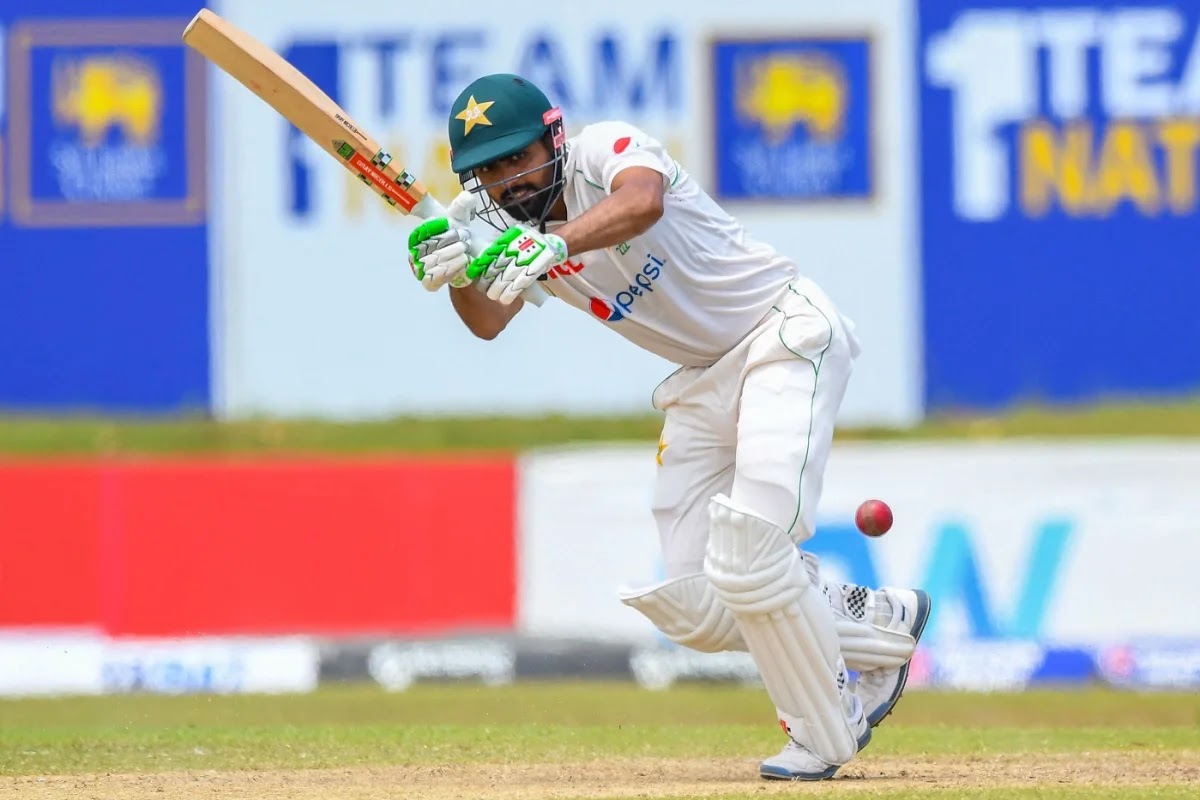
In a surprising and decisive move, Pakistan's cricket hierarchy has opted to drop star players Babar Azam, Shaheen Shah Afridi, and Naseem Shah from the remaining Test matches against England. This decision signals a significant shift in selection philosophy, one that challenges the notion that individual stardom guarantees a permanent spot in the Test lineup.

The message is clear: wearing the Pakistan Test jersey demands more than talent—it requires unwavering commitment, respect for the five-day grind, and alignment with the broader team vision. While this move may seem drastic, it reflects an underlying recognition that Test cricket requires not just brilliance but consistency, intent, and long-term investment from its players.

In the short term, this decision could result in further setbacks on the field. Pakistan, already trailing in the series, may still struggle to match England’s intensity. However, the significance of this shake-up extends beyond immediate results. It hints at a larger cultural shift - one where reputations are no longer immune to scrutiny, and selection is rooted in merit rather than name recognition.

If managed well, this new approach could reshape Pakistan’s cricketing fundamentals, emphasizing quality over sentiment. It also suggests a commitment to building a sustainable production chain of cricketers, where emerging talents are rewarded, and complacency is no longer tolerated. The long road ahead may be fraught with challenges, but a future where the Test side reflects Pakistan’s best - both in skill and in attitude- appears more attainable than ever.

In a sport often resistant to change, such bold decisions require conviction and a willingness to bear short-term pain for long-term gain. Only time will tell whether this gamble pays off, but it undeniably marks a step towards accountability in Pakistan’s cricketing structure—a reminder that the Test shirt must be earned, not inherited.

Thank You 

Faisal Caesar 

Monday, October 7, 2024

The Illusion of Stardom: Is Babar Azam Truly a Test Cricket Great?


Cricket, especially the longest format, has a way of separating the sublime from the ordinary, exposing the cracks that might remain hidden in the flashier formats of the game. In recent years, Babar Azam, Pakistan’s captain and premier batsman, has found himself at the crossroads of hype and reality, with a growing critique of his performance, particularly in Test cricket. 

Despite the glittering reputation built on his exploits in limited-overs cricket, Babar’s Test career, spanning almost a decade, leaves much to be desired when placed alongside the modern-day greats of the game.

In the first Test against England at Multan, on a dead pitch that offered no demons, Babar Azam’s dismissal—trapped LBW for the 13th time—exposed deeper vulnerabilities in his technique and mental approach. It marked another chapter in his ongoing lean patch, a barren stretch of 651 days without the spark of brilliance expected from someone frequently compared to Virat Kohli, Kane Williamson, and Joe Root. Yet, Babar’s stardom often appears to exist without substance, with his Test performances crumbling under the weight of those lofty comparisons.

Technically, Babar has always shown promise but never reached the levels of his contemporaries. Where Kohli, Williamson, and Root have mastered their craft across conditions, often carrying their teams on their shoulders, Babar’s performances have been inconsistent, especially when the stakes are highest. His dismissals often betray a lack of mental fortitude, exposing a batsman who wilts under pressure rather than thriving in it.

Against Bangladesh, Pakistan faced the embarrassment of a whitewash at home, and Babar’s inability to anchor his side only deepened the question marks over his status as a great in the making. The test against England offered a golden opportunity for redemption, especially on familiar, flat tracks where runs should come easily. Yet, once again, Babar faltered, leaving behind a trail of missed opportunities that now define his Test career.

It is one thing to score heavily at home, but the true test of greatness is the ability to dominate away from the comforts of home turf. In Pakistan, Babar averages over 60, a figure that flatters but also misleads. His numbers plummet in more challenging conditions—Australia, South Africa, and New Zealand being particularly unkind. In Australia, a country where the best rise to the occasion, Babar averages a mere 29.50. South Africa and New Zealand haven’t been much kinder, with his averages there languishing below 35.

This struggle against seam, swing, and pace underscores a critical gap in Babar’s technical proficiency. His footwork, particularly against quality fast bowling, appears hesitant, and his decision-making outside the off-stump has often led to his undoing. For a player lauded as Pakistan’s best since Younis Khan, such vulnerabilities are alarming, especially when placed against the consistent dominance of the likes of Steve Smith or Kane Williamson in these same conditions.

The hallmark of greatness is not just consistency but also the ability to deliver iconic innings in pressure-cooker situations. Think of Brian Lara’s unforgettable 400*, or Steve Smith’s Ashes heroics. Kohli has multiple defining performances in hostile territories, with hundreds in South Africa and England that cement his legacy. Unfortunately, Babar has no such innings to his name.

Even Babar’s highest Test score—196 against Australia in Karachi in 2022—was played on a placid surface, devoid of any real challenges for the batsmen. While it was an admirable innings, it came in a drawn game, failing to shift the tide in Pakistan’s favor. The lack of a series-defining knock in his near-decade-long Test career is telling, especially for a player hailed as a superstar.

In cricket-mad Pakistan, where stars are often made before they are truly tested, Babar Azam’s stardom seems to have outpaced his actual accomplishments. 

His home performances have given fans glimpses of brilliance, but the same cannot be said about his encounters with top-tier teams under tougher conditions. This creates a dissonance between the reality of Babar’s achievements and the inflated expectations surrounding him.

The comparisons with Kohli, Williamson, and Root, though flattering, often serve to highlight the gap between Babar and the truly elite batsmen of his generation. These comparisons, while providing Pakistan fans with hope, also risk making a mockery of Babar’s true standing in the game. 

His overseas record, lack of landmark innings, and continued failures against world-class opposition paint a picture of a batsman still searching for his place among the greats.

At 29, Babar still has time to course-correct, but time alone cannot heal the technical and mental shortcomings that continue to plague his Test career. If he hopes to silence his critics and justify the immense faith placed in him, Babar must adapt, showing resilience in foreign conditions, tightening his technique, and producing the kinds of innings that define careers.

His story is not yet fully written, but as things stand, Babar risks joining the long list of Pakistani cricketers who dazzled with talent but fell short due to poor mental strength, mismanagement, and an over-hyped stardom built on inconsistent foundations.

For Babar, the next chapter of his career will be crucial, for it will determine whether he remains an overrated star or ascends to the heights that his fans desperately wish for him to reach.

Thank You 

Faisal Caesar 

Sunday, July 17, 2022

Babar Azam: Knocking on the Door of Greatness?

The pantheon of modern cricket’s elite—Steve Smith, Joe Root, Kane Williamson, and Virat Kohli—has long stood unchallenged. These players have defined an era with their consistency, adaptability, and ability to thrive under pressure. For Babar Azam, often heralded as the poster boy of Pakistan cricket, the journey to join this illustrious group has been a tale of brilliance in limited-overs cricket juxtaposed with a lingering question: can he truly excel in the whites of Test cricket?

Babar’s elegance with the bat is undeniable. His drives through the backward point and cover regions are a masterclass in timing, reminiscent of Kohli’s own artistry. The front-foot precision, the late adjustments, and the middle-of-the-bat connection are signatures of a player destined for greatness. Yet, greatness in Test cricket demands more than aesthetic brilliance; it requires an unyielding temperament and the ability to script long, defiant innings under pressure.

For years, this temperament seemed elusive. The Smiths, Roots, and Williamsons of the world have thrived in adversity, while Babar’s Test career often hinted at unfulfilled potential. However, his appointment as captain appears to have unlocked a new dimension to his game. Leadership, it seems, has acted as a jeweler’s chisel, refining the raw diamond into a gem capable of shining on the grandest stage.

The Test of Temperament

The setting was quintessentially Pakistani: 85 for 7 on a treacherous track offering both turn and bounce. The collapse was as familiar as the epic rearguards that have punctuated Pakistan’s cricketing history. As Babar stood at the non-striker’s end, watching his teammates fall like dominoes, the responsibility of salvaging the innings fell squarely on his shoulders.

With the pitch resembling a snake pit, Babar became the snake charmer. His footwork was precise, his timing impeccable, and his execution of the sweep shot a study in calculated risk. Most crucially, he displayed the awareness to shield a fragile tail.

When the score read 112 for 8, hope seemed a distant memory. At 148 for 9, it appeared the game was over. But this was Pakistan—a team that thrives in chaos and finds heroes when the odds are insurmountable.

The Last Stand

Enter Naseem Shah, a bowler with a Test batting average of 3.2. What followed was an extraordinary partnership that defied logic and epitomized the unpredictable spirit of Pakistan cricket. Naseem, like a man possessed, blocked everything hurled at him, while Babar orchestrated the strike rotation with clinical precision.

The 70-run stand for the last wicket was a testament to Babar’s leadership and ability to inspire resilience. Naseem’s contribution of 5 runs off 52 balls may seem meager, but it was invaluable in the context of the innings. Babar shielded his partner, farmed the strike, and shouldered the burden with the poise of a seasoned campaigner.

A Hundred for the Ages

Babar’s seventh Test century was not merely a personal milestone; it was a statement. On 99, he whipped a full toss from Theekshana wide of mid-on with authority. The following delivery saw him inside-edge a ball drifting towards leg, and he scampered through for a single that carried the weight of an entire team’s hopes.

This was not just a hundred; it was an epic vigil that showcased every facet of Babar’s evolution. The innings was marked by discipline, technical mastery, and an unwavering resolve to fight until the very end.

Knocking on the Door of Greatness

Babar’s knock was a reminder of Pakistan’s storied history of producing one-man armies—players who rise when all seems lost. It was also a glimpse into the mind of a player who is no longer content with being a limited-overs maestro.

Greatness in Test cricket is not conferred by a single innings, but by a body of work that reflects sustained excellence and the ability to perform under duress. Babar’s journey is still a work in progress, but this innings was a significant step towards cementing his place among the modern-day greats.

The knock at the door of greatness grows louder. It is not a matter of if, but when, Babar Azam will enter. For now, he stands on the threshold, a symbol of Pakistan’s cricketing resilience and a beacon of its future.

Thank You 

Faisal Caesar 

Wednesday, March 16, 2022

Babar Azam and the Art of Resistance


Cricket, at its most poetic, is not about victory or defeat—it is about defiance, about holding one’s ground when the tide has already announced its destination. In Karachi, Babar Azam authored such defiance, chiselling 196 runs of rare beauty and fortitude, and in doing so, he held up a mirror to the essence of Test cricket: survival as triumph.

The Weight of a Captaincy and a Century Drought

For two years, Babar’s bat had been silent on the matter of centuries. Silence, however, is not absence—it is incubation. When he arrived at the crease with Pakistan trembling at 21 for 2, destiny seemed to invite yet another collapse. Instead, what unfolded was an innings that transcended numbers. Yes, it was the highest fourth-innings score by a captain in Test history. Yes, it spanned 425 balls, more than some entire teams survive in a match. But to reduce it to statistics is to ignore its greater resonance: it was an act of reclamation. Babar reclaimed his narrative, and with it, Pakistan’s pride.

The Mirage of Victory, the Substance of Survival

There was a moment—brief, intoxicating—when the impossible shimmered on the horizon. With Rizwan settling into rhythm and the partnership swelling, Pakistan flirted with the idea of chasing down the record 506. For a people who live perpetually at the edge of dreams, the suggestion was irresistible. The crowd did its arithmetic, its feverish brains running faster than the scoreboard. For a fleeting hour, victory seemed to slip into the realm of possibility.

But cricket, like life, punishes audacity when it is misplaced. The ball grew old, the runs dried up, and Lyon—Australia’s much-maligned spinner—found sudden vindication. Babar fell, Rizwan resisted, and the contest retreated from conquest to preservation. And yet, what preservation it was: 171.4 overs faced, second only to the timeless Test of 1939. Pakistan had not won, but they had endured—and endurance, in Test cricket, is often more eternal than victory.

The Theatre of Tension

In those final overs, with seven Australians swarming the bat and every delivery heavy with menace, the National Stadium transformed into a theatre of nerves. Every forward defence by Nauman Ali was applauded as though it were a cover drive. Every Rizwan single became a hymn of resistance. And when Rizwan finally reached his century, not as a marauder but as a sentinel, the ground exhaled. This was not the rapture of victory—it was the relief of survival, which in cricket can feel just as sweet.

Australia’s Frustration, Pakistan’s Redemption

Australia will curse their drops, rue their fatigue, and wonder how once again they let a fourth innings slip through their grasp. They will count the missed chances—Smith’s spill in the slips, Khawaja’s drop at extra cover—as squandered opportunities. But Test cricket has never been about the chances you create; it is about the ones you take. And Pakistan, battered in the first innings, humiliated at 148, took their chance to rewrite the narrative.

For them, this was no draw. It was a reclamation of dignity, a reminder that Karachi is not to be conquered lightly, and that cricket’s beauty lies as much in what is denied as in what is achieved.

The Lasting Memory

When Babar walked back four short of 200, Karachi stood in ovation not for the runs but for the spirit. It was a century that will be told not as a scorecard entry but as a story of how Pakistan, against logic and precedent, survived.

The man at the gate, smiling wryly, asked at the end: *“What happened today, huh?”*

The answer is simple yet profound: Pakistan remembered how to fight. And in Test cricket, sometimes that is victory enough.

 Thank You

Faisal Caesar


Saturday, February 8, 2020

Rawalpindi Test: A Tough Day for Bangladesh


Bangladesh had their moments on the field today, but crucial lapses proved costly. Two missed opportunities stood out like sore thumbs: the dropped catch of Babar Azam when he was on just 1 and the unclaimed edge of Shan Masood in the 44th over. The latter, confirmed by Snicko, was a glaring oversight as none of the fielders appealed. These errors allowed the duo to forge a century stand that drained Bangladesh under the unforgiving Rawalpindi sun.

Rubel Hossain showed glimpses of his old self in the 47th over, moving the old ball late both in the air and off the pitch. However, the lack of pace to complement that movement was evident. Whether it is age or a decline in form, Rubel no longer appears to possess the sharpness required at the Test level. This raises questions about team selection—why was someone like Al-Amin Hossain overlooked? Al-Amin impressed in India, offering a decent pace if not express speed, and might have been a more potent option in these conditions.

Taijul Islam, tasked with holding one end, toiled hard but was over-bowled. His consistent length often forced the Pakistani batsmen into risky aerial strokes early on. However, as the innings progressed, they adjusted comfortably. This shift could be attributed to a lack of tactical innovation from the captain. A change in ends or angles might have kept the batters guessing and prolonged Taijul’s effectiveness. Instead, his predictability played into the opposition’s hands.

Amid the struggles, Abu Jayed emerged as a bright spot. His discipline with both the new and old ball was commendable. The fuller length with the new ball troubled the Pakistani openers, and his adherence to a tight line-and-length with the old ball posed a constant threat. Jayed’s performance highlighted the importance of precision on a pitch offering little assistance.

The Pakistani batting lineup, for all its eventual success, showed vulnerabilities. Their top order was shaky, their defence fragile, and they displayed a propensity to throw away wickets—traits strikingly similar to Bangladesh’s own batting woes. Yet, it was the partnership between Babar Azam and Asad Shafiq that turned the tide. Their fluent stand not only steadied the innings but also sapped the energy and ideas of the Bangladeshi bowlers and captains alike.

This day could have unfolded differently for Bangladesh with sharper fielding, better utilization of bowling resources, and more imaginative captaincy. Instead, the missed opportunities and lack of tactical acumen allowed Pakistan to wrest control. It was a reminder that in Test cricket, the smallest lapses can snowball into significant consequences.


Thank You
Faisal Caesar  

Thursday, June 27, 2019

Pakistan’s Prowess: A Symphony of Resurgence in World Cup 2019

Pakistan’s cricketing ethos thrives on improbability. Labeled a spent force barely a week ago, languishing in ninth place with a solitary win in five games, they have engineered a remarkable turnaround. Chasing their first victory in a daunting World Cup campaign, Pakistan faced New Zealand with the odds stacked high against them. The contest in Birmingham showcased not just their resilience but a masterclass in adaptability, flair, and raw determination.

New Zealand’s Oscillating Fortunes 

New Zealand, cruising at 83 for 5 by the 27th over, appeared destined for a sub-200 total. Yet Colin de Grandhomme and James Neesham defied the script, orchestrating their side’s best-ever sixth-wicket World Cup stand. Neesham’s unbeaten 97 was a testament to discipline under duress, while de Grandhomme's brisk 64 injected much-needed tempo. Their partnership was an exercise in controlled aggression, lifting New Zealand to 237, a score that would test Pakistan’s fragile batting against a potent Kiwi bowling arsenal.

The Chase: Chaos and Composure 

Pakistan’s response began inauspiciously, losing openers Fakhar Zaman and Imam-ul-Haq cheaply. Facing Trent Boult’s swing and Lockie Ferguson’s blistering pace, the situation demanded nerves of steel. Mohammad Hafeez, embodying the dichotomy of genius and folly, played and missed repeatedly, before being struck on the helmet.

Enter Babar Azam—the epitome of elegance and control. His innings was a study in batting as an art form, blending patience with precision. Navigating through probing short-pitched deliveries and relentless pressure, he crafted an unbeaten 101, punctuated by strokes of sublime beauty. Ably supported by Haris Sohail’s enterprising 68, the pair constructed a 126-run partnership that wrested the match from New Zealand’s grasp.

A Tactical Chess Game 

New Zealand's strategy hinged on relentless wicket-taking. Kane Williamson’s decision to introduce Mitchell Santner’s left-arm spin early seemed astute as the ball gripped and turned. Yet, the absence of a specialist leg-spinner, Ish Sodhi, loomed large. Williamson himself struck to dismiss Hafeez, capitalizing on a lapse in judgment, but the lack of depth in the spin department allowed Haris to unleash calculated aggression.

The chase’s critical phase came in the middle overs, where Babar and Haris rotated the strike and punished loose deliveries. By the final 20 overs, the equation—110 runs with wickets in hand—was a mere formality for a team now brimming with belief.

Shaheen Afridi’s Fireworks 

Earlier, Shaheen Afridi delivered a spell for the ages. His first spell—4-2-8-2—obliterated New Zealand’s top order. His dismissal of Ross Taylor, an angled delivery that swung late, was a symphony of skill and strategy. Sarfaraz Ahmed’s diving one-handed catch, a moment of brilliance, underscored Pakistan’s heightened intensity in the field.

Afridi's youthful exuberance and Mohammad Amir’s precision were pivotal in pegging back New Zealand. Amir, who struck early to remove Martin Guptill, set the tone. Shadab Khan’s dismissal of Williamson, exploiting drift and bounce, was another masterstroke in Pakistan’s defensive tapestry.

Redemption for Sarfaraz 

Sarfaraz Ahmed’s leadership came under intense scrutiny following Pakistan’s early tournament woes. His tactical nous in persisting with Afridi and his own brilliance behind the stumps silenced critics. The skipper’s resolve, tested by off-field controversies, shone as he marshalled his troops with aplomb.

The Broader Canvas 

This victory drew inevitable comparisons to Pakistan’s storied 1992 World Cup campaign. The parallels—struggles in the group stage, a resurgence against formidable opponents, and a charismatic leader—were uncanny. For Pakistan fans, the echoes of that fabled triumph stirred hope.

In the end, Babar’s century stood as the defining image of a contest that encapsulated the tournament’s unpredictability. His innings was not just a statistical milestone but a narrative of grit, grace, and unyielding belief. As the semi-finals loomed, Pakistan had transformed from also-rans to legitimate contenders, epitomizing cricket’s power to inspire and astonish.

Thank You

Faisal Caesar 

Monday, November 21, 2016

Composure Under Fire: How Pakistan Succumbed to Wagner’s Wrath


When Kane Williamson won the toss at Hagley Oval, it was a moment of quiet triumph. After enduring a streak of bad luck during the Test series against India, he finally got a chance to dictate terms. The conditions, ripe for swing and seam, made bowling first an obvious choice, and New Zealand’s pacers wasted no time in exploiting the opportunity. 

A Debut to Remember 

Tim Southee and Trent Boult, New Zealand’s trusted new-ball pair, began with probing lines and lengths, testing Sami Aslam and Azhar Ali’s technique. But it was the introduction of debutant Colin de Grandhomme that swung the game decisively. Utilizing a three-quarter length to perfection, de Grandhomme extracted movement that the Pakistani batsmen found unplayable. 

From a steady 31 for no loss, Pakistan imploded to 88 for 5, eventually folding for a paltry 133. Yet, the contest remained alive as Pakistan’s bowlers responded with equal venom, reducing New Zealand to 200, despite the dogged resistance of Jeet Raval and Henry Nicholls. 

With a lead of just 67, the match hung in the balance. As the pitch eased out by the third day, Pakistan had a golden opportunity to rewrite the script. 

A Chance at Redemption 

Azhar Ali and Babar Azam walked out with a clear mandate: bat time and nullify New Zealand’s advantage. They adhered to the time-honoured principles of Test batting, resisting the urge to chase runs and focusing instead on survival. Boundaries were forsaken for blocks and leaves, the scoring rate sacrificed at the altar of stability. 

Their stoic approach frustrated Williamson, who turned to Neil Wagner, his warrior of attrition, to break the deadlock. 

Wagner Unleashes Chaos 

Wagner’s name has become synonymous with relentless aggression. His short-pitched, ribcage-hunting deliveries are designed to unsettle even the most composed batsmen. Against Pakistan, he delivered a spell that will be etched in memory for its sheer ferocity and effectiveness. 

Babar Azam, having weathered so much, fell to a leg-side strangle—a lapse in judgment that he could ill afford. Azhar Ali, a picture of determination until then, also succumbed to Wagner’s unyielding attack. Younis Khan, the veteran, was undone by a sharp rising delivery, and his failure to drop his hands led to his downfall. 

Misbah-ul-Haq, Pakistan’s ever-reliable anchor, came in with the task of restoring order. Yet, in a moment uncharacteristic of his usual temperament, he attempted a hook shot that only compounded Pakistan’s misery. 

The Price of Panic 

In that fateful hour on Day 3, Pakistan’s batsmen lost the composure that had defined their earlier resistance. Wagner’s hostility was nothing new—teams like Sri Lanka and Australia had faced similar challenges in the past. The difference was in the response. Where others stood firm, Pakistan faltered, their mental fortitude crumbling under pressure. 

By the time the dust settled, Pakistan had squandered their chance to take control of the Test. New Zealand, buoyed by the collapse, cruised to an eight-wicket victory. 

Lessons from Hagley Oval 

Test cricket is as much a battle of the mind as it is of skill. On Day 3, Pakistan had the right idea—occupy the crease, wear down the bowlers, and stabilize their innings. Yet, the execution fell short. The inability to adapt to Wagner’s short-pitched barrage, coupled with lapses in concentration, turned a promising situation into a disaster. 

Misbah and his men must now look to Hamilton with a renewed sense of purpose. Composure and discipline will be key if they are to bounce back and level the series. Hagley Oval was a lesson in the cost of mental fragility. Hamilton offers a chance for redemption. 

Final Thoughts 

For New Zealand, this Test was a testament to the brilliance of their bowlers and the astute leadership of Kane Williamson. For Pakistan, it was a sobering reminder that moments of brilliance must be matched by sustained resilience. As the series moves forward, the question remains: can Pakistan learn from their mistakes and reclaim their footing?

Thank You
Faisal Caesar