Tuesday, July 19, 2022

Brazil’s Lost Crown: The Almost Impossible Hat-Trick of 1966

Winning the FIFA World Cup™ once demands excellence; winning it twice requires a rare dynasty. But to lift the trophy three times in succession borders on the impossible, a feat so improbable that no nation has yet achieved it. And yet, twice in history, teams stood on that precipice—Italy in the late 1930s and Brazil in the 1960s—only to fall short. Of the two, it was Brazil, shimmering with brilliance and expectation in 1966, that came closest to turning the impossible into destiny.

The Weight of Legacy

Italy’s bid for immortality perished in the chaos of war. Vittorio Pozzo’s squadra had conquered in 1934 and 1938, only for the Second World War to steal their chance at a third. By 1950, the spell was broken. The torch of history passed to Brazil, who arrived in England in 1966 not merely as champions, but as artists, philosophers, and bearers of a new global footballing gospel.

Having dazzled the world at Sweden 1958 and Chile 1962, Brazil entered England with their aura mythologized. “We thought we could simply arrive and win,” recalled Djalma Santos, the veteran full-back. The Seleção were viewed less as a national team and more as a traveling exhibition of inevitability. That perception, ironically, became their undoing.

A Team Torn Between Generations

Brazil’s preparations betrayed their confusion. Instead of clarity, there was indulgence. A bloated squad of forty was paraded across Brazil in a grand, near-farcical national tour. When Vicente Feola finally named his 22, it was a mix of declining icons—Djalma Santos, Garrincha, Gilmar, Zito—and untested youth. The spine of two world champions was still present, but eroded. The cohesion that had defined Sweden and Chile had dissolved into indecision.

Tostão, the cerebral forward, later observed: “We did not have a settled team. The champions were declining, except for Pelé.” It was a damning epitaph for a side that seemed to rely on myth rather than form.

England 1966: A Tournament of Disillusion

Brazil’s campaign began with deceptive promise. Against Bulgaria, Pelé and Garrincha—football’s twin magicians—scored with free-kicks in what would be their final act together. Across forty games as teammates, Brazil had never lost. That evening at Goodison Park was their last shared triumph.

But victory came at a cost. Pelé was mauled by Bulgarian defenders, sustaining a knee injury. Forced to sit out the second match against Hungary, Brazil wilted. Without their talisman, they looked disjointed, beaten 3–1 by a Hungarian side of fluid movement and icy discipline.

The decider against Portugal carried the weight of fate. Pelé, still limping, was thrown back into the fray. Garrincha was dropped. The result was tragic theater. England’s refereeing decisions, harsh challenges unchecked, and Eusébio’s brilliance combined to extinguish Brazil’s flame. A 3–1 defeat ended their campaign, and with it, the dream of a hat-trick.

Politics, Power, and Paranoia

To many Brazilians, the losses were not merely footballing failures, but evidence of something darker. FIFA, under Sir Stanley Rous, seemed determined to ensure a European triumph on European soil. The referees of Brazil’s matches—German against Bulgaria, English against Hungary, and English again against Portugal—fed suspicions of bias. The pattern was too neat, the brutality too unpunished.

The conspiracy widened in hindsight. Argentina, eliminated by England, saw a German referee dismiss a player for “violence of the tongue,” despite a mutual lack of shared language. Uruguay, undone by West Germany, endured two controversial expulsions under an English referee. The semifinal quartet—England, West Germany, Portugal, Soviet Union—were all European. Coincidence, perhaps. But to South American eyes, collusion seemed more believable.

Pelé’s Wounds and Brazil’s Resurrection

No figure embodied the scars of 1966 more than Pelé. Hacked down, injured twice, and denied his stage, he left England disillusioned. “It was the toughest experience I ever had in football,” he admitted. So bitter was the taste that he vowed never to play for Brazil again. Only his sublime form with Santos in 1970 persuaded him otherwise, and the world was rewarded with his apotheosis in Mexico.

Yet the ghost of 1966 lingered. The tournament revealed that even giants could be undone—not just by tactical missteps or aging legs, but by politics, complacency, and the invisible hand of power. Brazil, the team of inevitability, learned that history never gifts crowns.

Epilogue: The Hat-Trick That Never Was

In the end, Brazil’s failure in 1966 was more than an upset; it was a turning point. They regrouped, redefined themselves, and reemerged in 1970 with perhaps the greatest team ever assembled. But the chance to etch an unassailable record—three consecutive World Cups—was lost forever.

History remembers victors, yet it also lingers on “almosts.” Brazil’s 1966 stands as football’s greatest almost, the closest humanity has come to a feat that remains tantalizing, impossible, and eternal.

Thank You 
Faisal Caesar 

Monday, July 18, 2022

Dinesh Chandimal: The Unsung Warrior of World Cricket

In the grand theater of world cricket, where marquee players from the "Big Three" dominate the spotlight, there exist unsung warriors whose contributions often go unnoticed. Among them is Dinesh Chandimal, a cricketer whose career has been marked by resilience, grit, and a quiet determination to serve his team, even when the odds are stacked against him. Chandimal, much like Larry Gomes of the legendary West Indies side of the 70s and 80s, has been the glue holding his team together when the bigger names falter. Yet, his achievements seldom find the recognition they deserve in a cricketing landscape obsessed with glamour and power.

A Fighter in the Shadows

Chandimal’s career is a testament to perseverance. While the cricketing world showers accolades on players from elite cricketing nations, Chandimal has had to work exponentially harder to earn his place in the conversation. His performances are often overshadowed by the circus-like adulation for players who thrive in the shorter formats. Chandimal, however, belongs to a rare breed of cricketers who prioritize substance over style.

Consider his defiant knocks in Galle against Pakistan, where his innings in both outings showcased his ability to absorb pressure and deliver when his team needed him most. Or his bold century against Australia just weeks prior, a knock that epitomized the kind of steely determination that defines his career. Against Bangladesh, too, Chandimal stood tall, proving once again that he is Sri Lanka’s man for a crisis.

The cricketing archives are replete with Chandimal’s heroics, yet they are often overlooked. His nine-hour marathon 155 against Pakistan in Abu Dhabi in 2017 was a masterclass in endurance and technique. His twin fifties on debut against South Africa in 2011, during a challenging tour, announced his arrival on the international stage. And who can forget his audacious 162 against India in 2015, a knock that showcased his flair and composure against one of the strongest bowling attacks in the world?

But, as history has shown, world cricket has a tendency to forget such feats when they come from players outside the powerhouses of the game.

The Bumpy Road of Leadership

Chandimal’s journey has been far from smooth. Leadership, in particular, has been a double-edged sword for him. At just 23, he was handed the reins of Sri Lanka’s shorter-format side, only to be unceremoniously removed during the World T20, a tournament Sri Lanka went on to win without him. His tenure as Test captain was marred by illness, controversy, and the infamous ball-tampering saga that led to his suspension and eventual removal.

When Dimuth Karunaratne took over the captaincy, leading Sri Lanka to a historic Test series win in South Africa, Chandimal found himself not just stripped of leadership but also dropped from the side. It was a harsh blow, yet he remained undeterred.

Even now, when asked to stand in as captain in Karunaratne’s absence, Chandimal steps up without hesitation. His willingness to serve the team, regardless of personal setbacks, underscores his selflessness and unwavering commitment to Sri Lankan cricket.

A Team Man to the Core

What sets Chandimal apart is his humility. He does not seek headlines or attempt to establish himself as a revolutionary figure. Instead, he focuses on being a team man, giving his all for the betterment of Sri Lankan cricket. In an era where individualism often takes precedence, Chandimal’s quiet dedication is a refreshing anomaly.

Sri Lanka’s cricketing landscape has been fraught with challenges, both on and off the field. Yet, Chandimal has remained a beacon of hope for the island nation, delivering when it matters most and inspiring his teammates with his resilience.

A Legacy Worth Remembering

Dinesh Chandimal may not belong to the pantheon of cricketing superstars, but his contributions to the game are no less significant. He is a reminder that cricket, at its core, is about grit, determination, and the ability to rise above adversity.

As the cricketing world continues to evolve, it is essential to celebrate players like Chandimal, whose journeys embody the spirit of the game. His career may not be adorned with the accolades and recognition reserved for the elite, but for those who have witnessed his brilliance, Dinesh Chandimal will always be remembered as a fighter, a team man, and an unsung hero of Sri Lankan cricket.

Thank You 

Faisal Caesar 

Thank You

Faisal Caesar 

Arthhur Friedenreich: The Forgotten Hero of Brazilian Football

Imagine the Seleção without colour. No golden brilliance of Pelé, no ethereal grace of Garrincha, no samba-footed sorcery of Ronaldinho. Picture a World Cup without Ronaldo’s devastating thrusts or Rivaldo’s angled elegance. To strip Brazil’s football of its Afro-Brazilian core is not merely to revise history — it is to hollow it out. And yet, within living memory of the sport’s birth on Brazilian shores, this improbable vision was not only plausible, but policy.

At the turn of the 20th century, Brazil was navigating the wreckage and reinvention of a society freshly severed from slavery. Abolished only in 1888, it was the final nation in the Americas to legally renounce bondage — a grim distinction considering that Brazil imported more enslaved Africans than any other country, roughly 3.5 million, six times that of the United States.

Freedom, however, did not bring equality. Instead, it gave rise to a racially stratified society in which Black Brazilians remained excluded from nearly every realm of power, culture, and public life. Football, imported by the upper crust and white by design, became yet another stronghold of exclusion.

As Alex Bellos notes in Futebol: The Brazilian Way of Life, the game, introduced in 1894  by Scottish-Brazilian Charles Miller, quickly flourished in popularity. But its early infrastructure — clubs, pitches, tournaments — was the preserve of the affluent and pale. Still, the sport proved infectious. By the 1910s, football had outgrown its aristocratic origins, spreading like wildfire into the working-class neighborhoods, slums, and favelas. It was on these muddy, makeshift pitches that the Brazilian style — fluid, improvisational, audacious —was born.

At the heart of this transformation stood a player as culturally symbolic as he was talented: Arthur Friedenreich, a man whose very existence blurred the racial lines Brazilian football sought to police.

A Son of Two Worlds

Born in 1892, Arthur Friedenreich was the child of Brazil’s contradictions — the son of Oscar, a German merchant, and Maria, an Afro-Brazilian schoolteacher. His light eyes and wiry frame belied a life shaped by prejudice. Despite being the son of a European, his African heritage would mark him throughout his career.

At 17, Friedenreich debuted in amateur football. By 1912, he was the top scorer of the São Paulo league — a feat that would become familiar. Though denied many team honours, his personal accolades soared, particularly during his tenure at Clube Atlético Paulistano, beginning in 1917, where he topped the scoring charts in six of the next twelve years.

His defining moment came at the 1919 Copa América, South America’s first international tournament hosted on Brazilian soil. Friedenreich’s goal in the final against Uruguay won Brazil the title — and the hearts of a newly football-mad nation. He was paraded through Rio by jubilant supporters, his boots displayed as national treasure, and a celebratory song, Um a Zero, was composed in his honour — a symphonic fusion of flutes and saxophones that gave voice to the nation's rapture.

Brazil had found its first footballing hero. But the nation’s racism had not dissolved with victory.

Banned by Color, Bound by Class

In 1921, just two years after his crowning moment, Friedenreich was barred from representing his country. Under the order of President Epitácio Pessoa, non-white players were prohibited from the national team — an edict both shameful and emblematic of the period. No amount of goals, charisma, or national adoration could shield Friedenreich from Brazil’s structural discrimination.

He fought back in the only ways available. Off the pitch, he sought to ‘pass’ as upper-class: straightening his hair with hot towels, donning a hairnet, speaking with measured formality. On the pitch, he did what he always did — score goals. His performances remained irrepressible, a weekly act of resistance through genius.

In 1925, Paulistano took their star on a pioneering European tour. In ten matches, including games in France, Switzerland, and Portugal, the team won nine. Friedenreich scored eleven goals, proving that Brazilian flair could dazzle even in the heartlands of European conservatism.

The Number Debate and the Legacy That Endures

Records of Friedenreich’s career are shrouded in uncertainty. Some claim he scored over 1,000 goals; others suggest closer to 500. The ambiguity is telling — a reflection of the era’s disregard for documenting non-white excellence, and of a legacy marginalized even as it transformed the game.

Still, his impact is undisputed. As Anthony Appiah and Henry Louis Gates write in Africana: The Encyclopedia of the African and African-American Experience:

 “Friedenreich helped the sport move away from a period when clubs were made from the local elite, rejecting black and mulatto players, to a new era where they began drafting working-class players of diverse backgrounds.”

His style, too, was formative. Eduardo Galeano, in Football in Sun and Shadow, evokes Friedenreich not only as a player but as a prophet of flair:

“This green-eyed mulatto founded the Brazilian style of play... He, or the devil who got into him through the soles of his feet, broke all the rules in the English manuals. To the solemn stadium of the whites, Friedenreich brought the irreverence of the brown boys who entertained themselves fighting over a rag ball in the slums.”

In that fusion — of joy, daring, rhythm — was born the jogo bonito, the beautiful game that would, in time, enthrall the world.

Father of a Nation’s Art Form

Before Pelé, before Zico, before Neymar — there was Friedenreich, the uncredited architect of Brazil’s sporting soul. His career bridged the amateur and the professional, the segregated and the integrated, the European template and the Brazilian revolution. He was both excluded  and exalted, a victim of racism and a hero of resistance.

To speak of Brazilian football without Arthur Friedenreich is to erase the soil in which the dream was planted. He was the son of Africa and Europe, the first to marry football’s discipline with Brazil’s improvisational genius — and in doing so, became the father of a national religion.

Thank You

Faisal Caesar


Sunday, July 17, 2022

Babar Azam: Knocking on the Door of Greatness?

The pantheon of modern cricket’s elite—Steve Smith, Joe Root, Kane Williamson, and Virat Kohli—has long stood unchallenged. These players have defined an era with their consistency, adaptability, and ability to thrive under pressure. For Babar Azam, often heralded as the poster boy of Pakistan cricket, the journey to join this illustrious group has been a tale of brilliance in limited-overs cricket juxtaposed with a lingering question: can he truly excel in the whites of Test cricket?

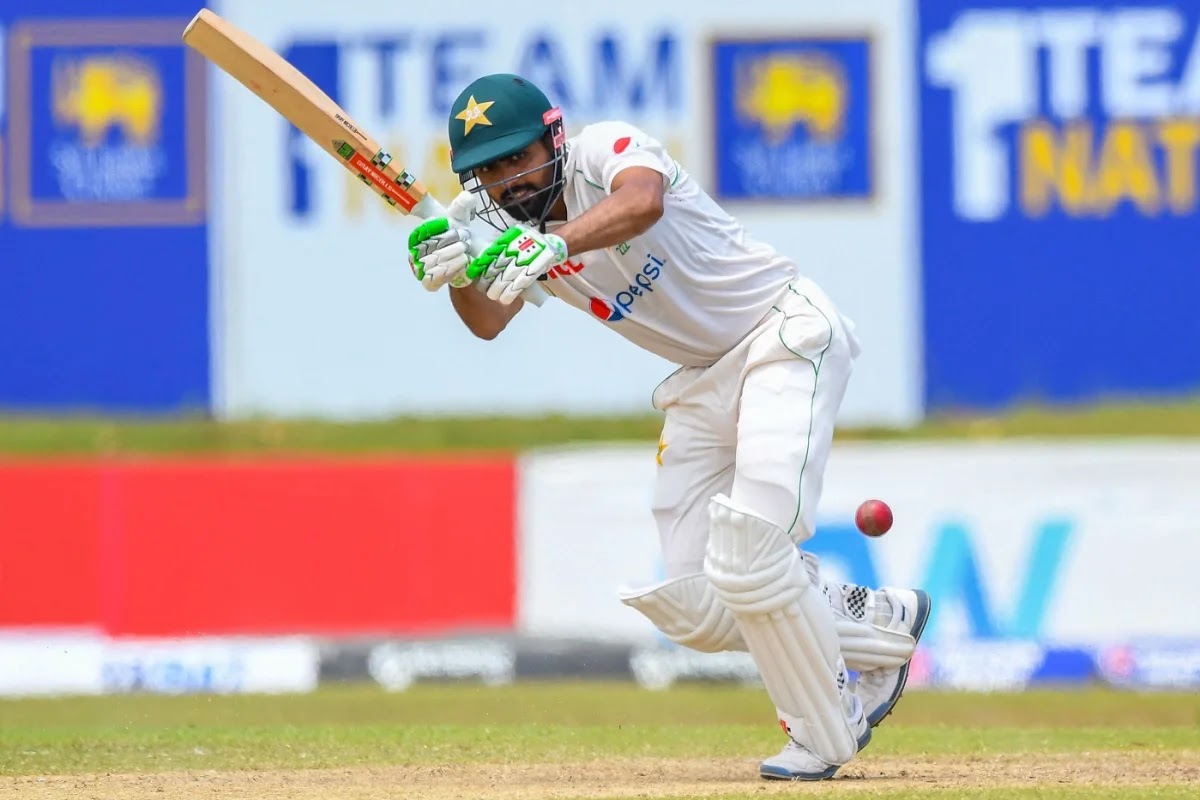
Babar’s elegance with the bat is undeniable. His drives through the backward point and cover regions are a masterclass in timing, reminiscent of Kohli’s own artistry. The front-foot precision, the late adjustments, and the middle-of-the-bat connection are signatures of a player destined for greatness. Yet, greatness in Test cricket demands more than aesthetic brilliance; it requires an unyielding temperament and the ability to script long, defiant innings under pressure.

For years, this temperament seemed elusive. The Smiths, Roots, and Williamsons of the world have thrived in adversity, while Babar’s Test career often hinted at unfulfilled potential. However, his appointment as captain appears to have unlocked a new dimension to his game. Leadership, it seems, has acted as a jeweler’s chisel, refining the raw diamond into a gem capable of shining on the grandest stage.

The Test of Temperament

The setting was quintessentially Pakistani: 85 for 7 on a treacherous track offering both turn and bounce. The collapse was as familiar as the epic rearguards that have punctuated Pakistan’s cricketing history. As Babar stood at the non-striker’s end, watching his teammates fall like dominoes, the responsibility of salvaging the innings fell squarely on his shoulders.

With the pitch resembling a snake pit, Babar became the snake charmer. His footwork was precise, his timing impeccable, and his execution of the sweep shot a study in calculated risk. Most crucially, he displayed the awareness to shield a fragile tail.

When the score read 112 for 8, hope seemed a distant memory. At 148 for 9, it appeared the game was over. But this was Pakistan—a team that thrives in chaos and finds heroes when the odds are insurmountable.

The Last Stand

Enter Naseem Shah, a bowler with a Test batting average of 3.2. What followed was an extraordinary partnership that defied logic and epitomized the unpredictable spirit of Pakistan cricket. Naseem, like a man possessed, blocked everything hurled at him, while Babar orchestrated the strike rotation with clinical precision.

The 70-run stand for the last wicket was a testament to Babar’s leadership and ability to inspire resilience. Naseem’s contribution of 5 runs off 52 balls may seem meager, but it was invaluable in the context of the innings. Babar shielded his partner, farmed the strike, and shouldered the burden with the poise of a seasoned campaigner.

A Hundred for the Ages

Babar’s seventh Test century was not merely a personal milestone; it was a statement. On 99, he whipped a full toss from Theekshana wide of mid-on with authority. The following delivery saw him inside-edge a ball drifting towards leg, and he scampered through for a single that carried the weight of an entire team’s hopes.

This was not just a hundred; it was an epic vigil that showcased every facet of Babar’s evolution. The innings was marked by discipline, technical mastery, and an unwavering resolve to fight until the very end.

Knocking on the Door of Greatness

Babar’s knock was a reminder of Pakistan’s storied history of producing one-man armies—players who rise when all seems lost. It was also a glimpse into the mind of a player who is no longer content with being a limited-overs maestro.

Greatness in Test cricket is not conferred by a single innings, but by a body of work that reflects sustained excellence and the ability to perform under duress. Babar’s journey is still a work in progress, but this innings was a significant step towards cementing his place among the modern-day greats.

The knock at the door of greatness grows louder. It is not a matter of if, but when, Babar Azam will enter. For now, he stands on the threshold, a symbol of Pakistan’s cricketing resilience and a beacon of its future.

Thank You 

Faisal Caesar 

Monday, July 11, 2022

Italy's 1982 World Cup Triumph: A Nation Reborn Through Football

The 1982 FIFA World Cup victory marked a transformative moment in Italy's history, both on and off the pitch. Emerging from the turbulent ‘Years of Lead’—a period of political violence and societal division—Italy was a nation grappling with its identity. The scars of the past decade, marked by bombings, assassinations, and threats to democracy, were still fresh. Yet, by 1982, the country was on the cusp of renewal, poised for economic growth and a cultural renaissance that would see its fashion and football industries redefine global standards. The triumph in Spain symbolized more than just sporting excellence; it was a metaphor for national rejuvenation.

The Shadow of Scandal and Redemption

Italy entered the World Cup under a cloud of scepticism and disgrace, largely due to the Totonero scandal of 1980. The revelations of match-fixing and illegal gambling schemes implicated some of the nation’s most prominent clubs and players. AC Milan and Lazio were relegated to Serie B, while players like Paolo Rossi faced lengthy bans. Although Rossi’s suspension was reduced, allowing him to participate in the tournament, the scandal had left Italian football in disarray, its reputation tarnished.

Enzo Bearzot, Italy’s pipe-smoking coach, inherited a team burdened by divided loyalties and public cynicism. His tenure had shown glimpses of promise, with a fourth-place finish at the 1978 World Cup and Euro 1980. However, the team’s inability to secure silverware cast doubts on Bearzot’s leadership. The press was unrelenting, questioning his tactics, selections, and even his vision for the team. Yet, Bearzot’s unwavering belief in his philosophy and players would prove pivotal.

Tactical Evolution: Beyond Catenaccio

Italian football had long been synonymous with catenaccio, a defensive system prioritizing containment over creativity. Bearzot, while respecting this tradition, sought a more balanced approach. He envisioned a team capable of blending defensive resilience with moments of attacking brilliance. His tactical flexibility was evident in the 1982 World Cup, where he adapted strategies to neutralize formidable opponents while exploiting their weaknesses.

Central to Bearzot’s vision was his faith in Paolo Rossi. Despite Rossi’s lack of form and the controversy surrounding his inclusion, Bearzot recognized his potential to deliver in critical moments. This decision would prove inspired, as Rossi’s transformation from a maligned figure to a national hero became the defining narrative of the tournament.

The Road to Redemption: Group Stage Struggles

Italy’s group stage campaign was anything but convincing. Drawn against Poland, Peru, and Cameroon, the Azzurri managed only three uninspiring draws, advancing to the knockout stages on goal difference. The Italian media’s criticism reached a fever pitch, with calls for Bearzot’s resignation and demands for drastic changes. Yet, Bearzot’s steadfastness in his selections and strategy laid the foundation for what was to come.

The Knockout Stages: Tactical Mastery

The second round saw Italy placed in a daunting group alongside reigning champions Argentina and tournament favourites Brazil. Against Argentina, Bearzot’s tactical acumen shone. Claudio Gentile’s relentless marking of Diego Maradona neutralized the Argentine star, allowing Italy to secure a 2-1 victory. This win set the stage for a legendary encounter with Brazil.

The match against Brazil is often regarded as one of the greatest in World Cup history. Brazil, with their attacking flair led by Zico, Socrates, and Falcão, were overwhelming favourites. Bearzot’s strategy combined defensive discipline with swift counter-attacks, a plan executed to perfection by Paolo Rossi. Rossi’s hat-trick stunned the footballing world, propelling Italy to a 3-2 victory and solidifying his place in World Cup lore.

The Final Steps: Triumph in Madrid

Italy’s semi-final against Poland saw Rossi continue his remarkable form, scoring twice to secure a 2-0 victory. In the final against West Germany, Bearzot’s meticulous preparations paid off. Despite a tense first half, Italy’s attacking prowess emerged in the second half. Rossi opened the scoring, followed by Marco Tardelli’s iconic goal and celebration, and Alessandro Altobelli’s clincher. The 3-1 victory marked Italy’s first World Cup triumph since 1938, a moment of catharsis for a nation yearning for glory.

The Legacy: Beyond the Trophy

The 1982 World Cup victory had far-reaching implications for Italian football and society. Bearzot’s triumph was not just tactical but symbolic, representing the triumph of resilience and unity over adversity. The players’ decision to hoist Bearzot onto their shoulders in celebration underscored the respect and admiration he had earned.

Off the pitch, the victory catalyzed a golden era for Serie A. The league became the epicentre of world football, attracting stars like Michel Platini, Zico, and Diego Maradona. The tactical innovations and confidence born from the 1982 triumph influenced a generation of Italian football, culminating in Arrigo Sacchi’s revolutionary Milan side of the late 1980s.

The “Pertini effect,” named after Italy’s exuberant President Sandro Pertini, encapsulated the national mood. His visible joy during the final symbolized a collective pride and optimism that transcended sport. The victory provided a unifying moment for a nation emerging from a decade of turmoil, instilling a renewed sense of identity and purpose.

Conclusion: A Turning Point

The 1982 FIFA World Cup was more than a sporting achievement for Italy; it was a cultural and emotional watershed. Bearzot’s vision, resilience, and tactical ingenuity turned a beleaguered team into world champions, restoring pride to Italian football. The tournament’s impact extended beyond the pitch, influencing the nation’s cultural and economic trajectory. It was a moment that celebrated not just victory but renewal, a testament to the enduring power of sport to inspire and transform.

Thank You

Faisal Caesar